Almach
4-8 inch Telescope • Challenging Doubles
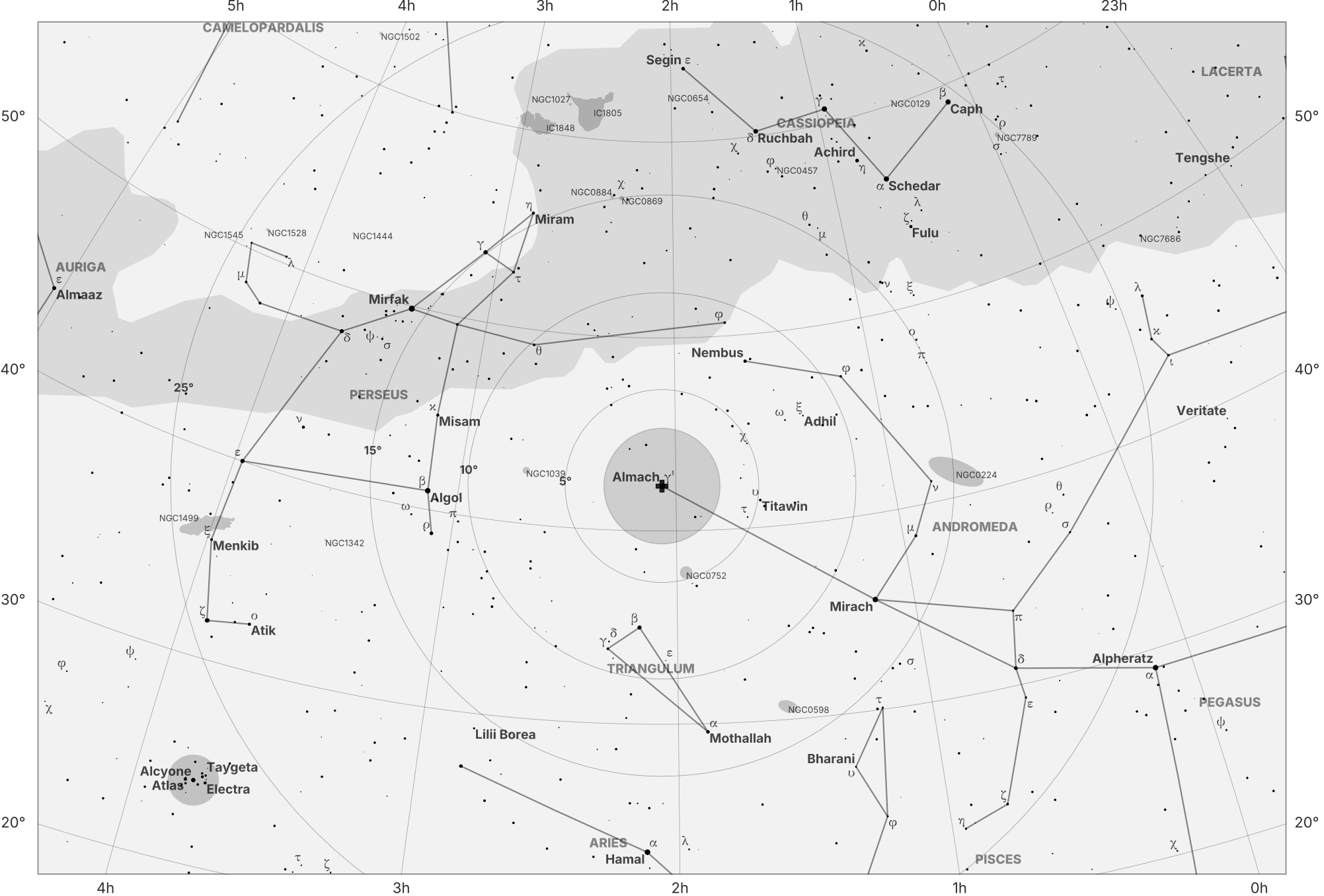
Finder map for Almach
Almach’s Arabic name is traditionally associated with al-‘anāq (a caracal-like animal), though the exact meaning is debated. Best observed when high above the horizon to minimize atmospheric turbulence, which improves the clarity of the split. The main A-B pair is easy to split. The challenge lies in appreciating the subtle color differences. Visually resolving the companion star B into its own components is impossible with amateur equipment.
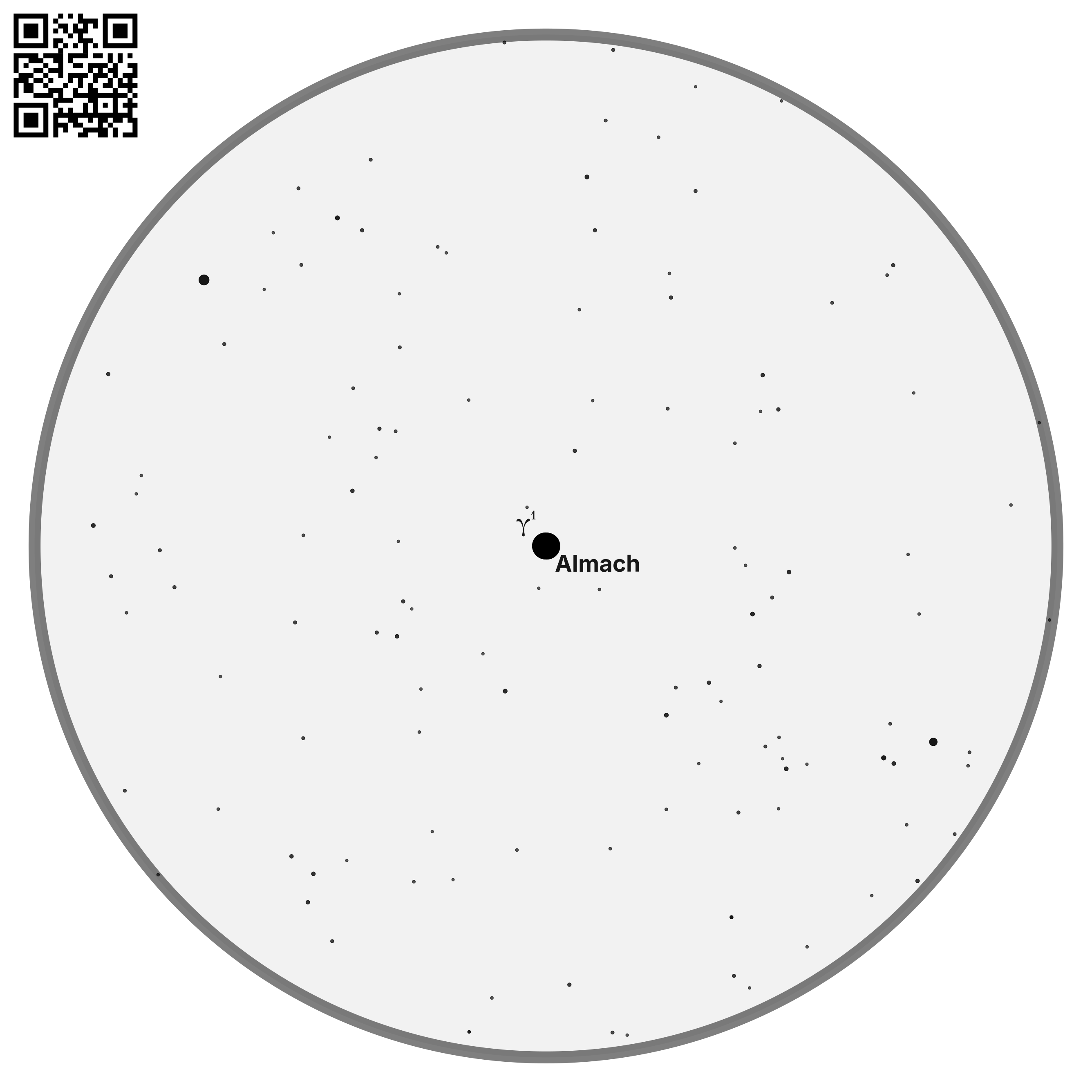
Finder scope & binocular view of Almach
| Property | Value |
|---|---|
| Common names | Gamma Andromedae, Almaak, Almak |
| Catalog names | - |
| Type | Star |
| Subtype | - |
| Coordinates | 2h 03m 53.95s, +42° 19’ 47.02” |
| Season | September - November |
| Best month | Mid-October |
| Beginner friendly | Yes |
| Visual reward | High |
| Filters required | None |
| LP tolerance | High |
| Minimum equipment | Small telescope |
| Optimal equipment | Medium telescope |
| Magnitude | 2.1 |
| Size | - |
| Constellation | Andromeda |
Observation Notes
Naked Eye
Visible as a single, bright star with a subtle warm or orange tint, marking the northeastern end of the main chain of stars in Andromeda.
Binoculars
Appears as a single point of light. Binoculars are useful for locating the star, but do not resolve the companion.
Small Telescope
Easily split at moderate magnification (around 50×), revealing a golden-yellow primary and a contrasting bluish secondary. The color contrast is immediately apparent.
Medium Telescope
Provides a striking and aesthetically pleasing view, with the color contrast appearing strong and well defined and the brightness difference between the components clearly visible.
Large Telescope
Produces a clean and wide split, but no further detail is resolved in the main pair. The bright primary can appear dazzling, and excessive magnification may reduce the apparent color of the fainter companion.