Alpha Crucis
4-8 inch Telescope • Challenging Doubles
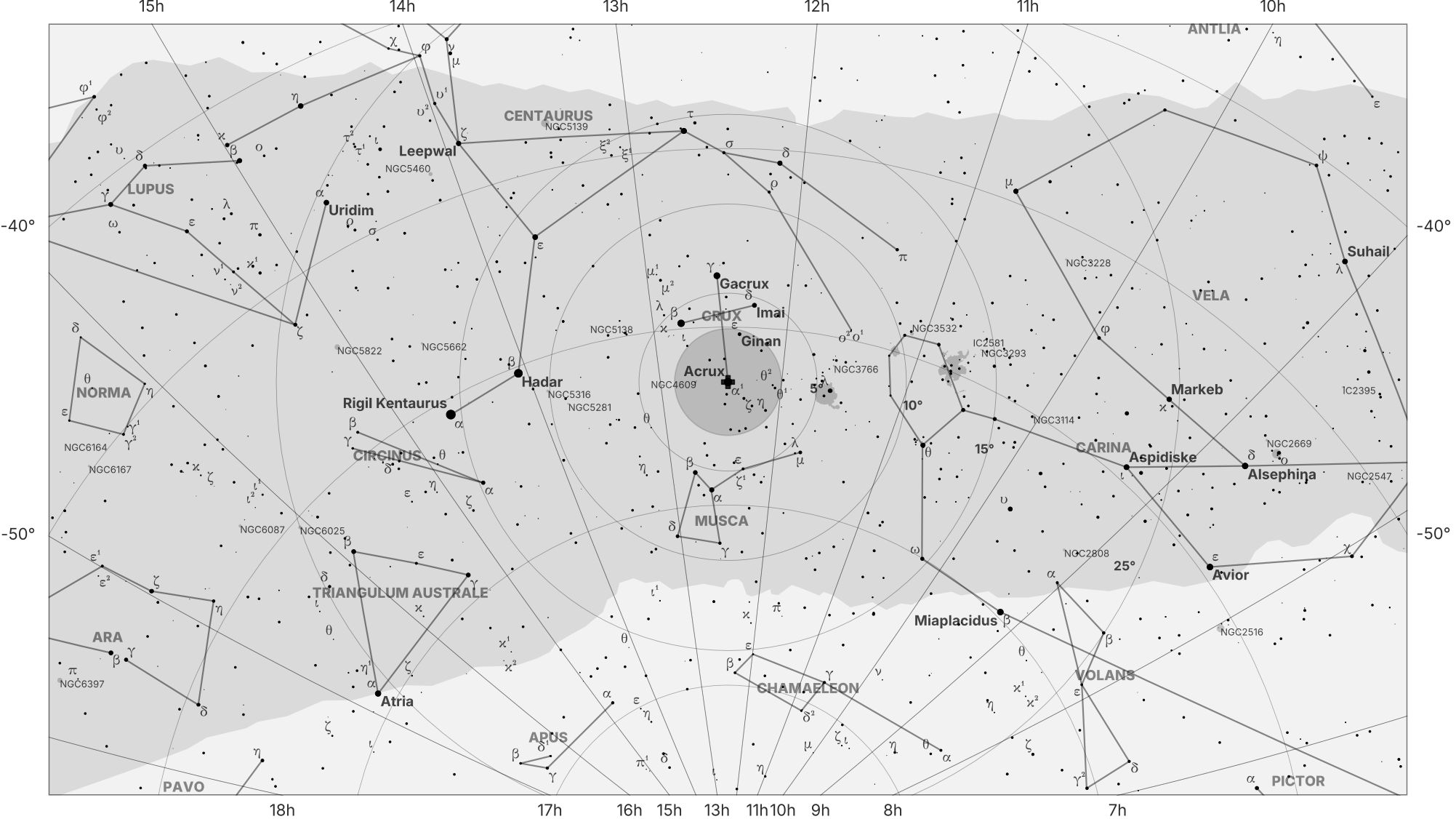
Finder map for Alpha Crucis
A major cultural icon in the Southern Hemisphere, Acrux forms the base of the Southern Cross. The constellation Crux appears on the national flags of Australia, New Zealand, Papua New Guinea, Samoa, and Brazil. High southern declination; invisible for most observers north of 27° N latitude. Requires a clear southern horizon for observers near the equator. Although the two main components are bright and readily split in small telescopes, their relatively close separation means that steady seeing improves the view, particularly at higher magnifications.
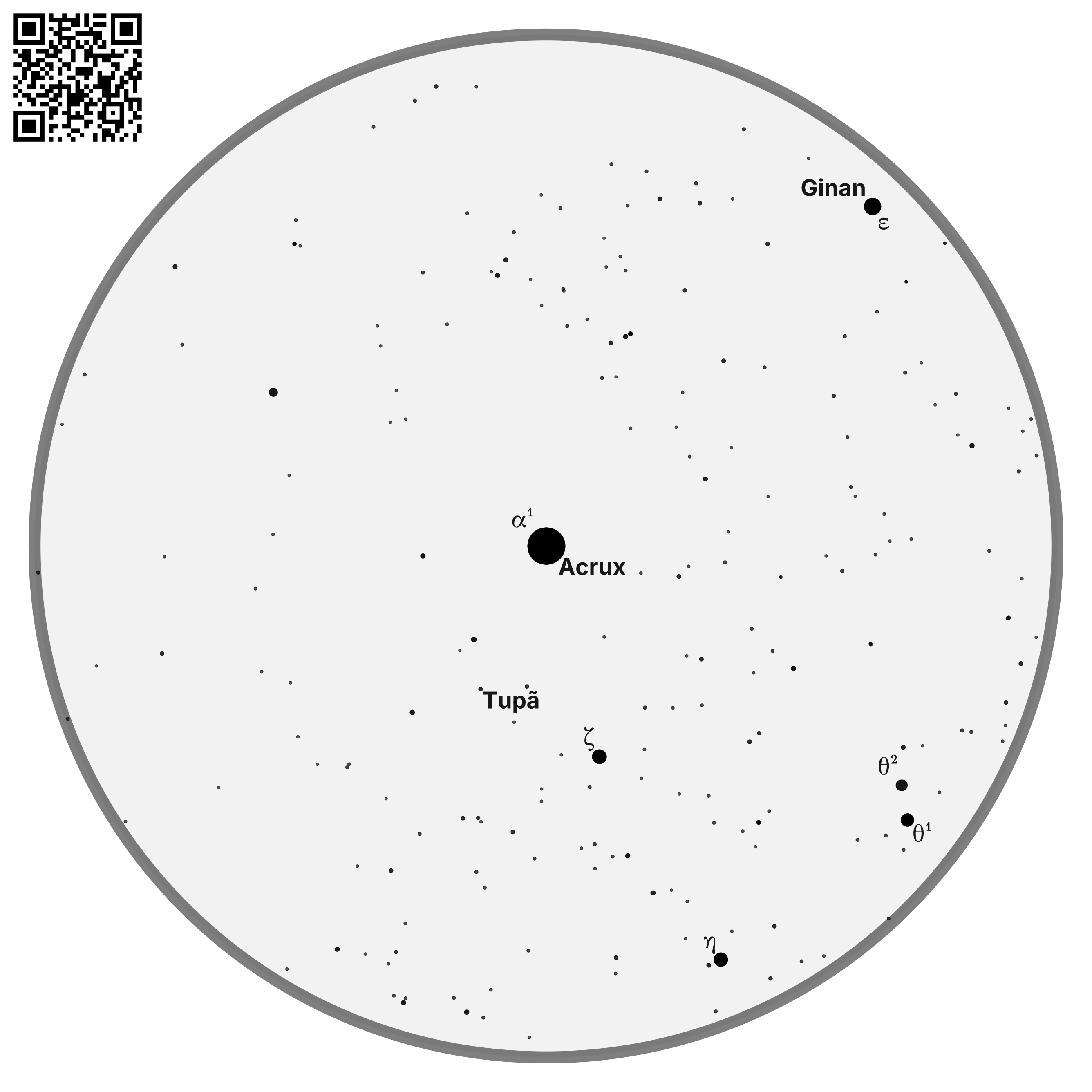
Finder scope & binocular view of Alpha Crucis
| Property | Value |
|---|---|
| Common names | Acrux |
| Catalog names | - |
| Type | Double Star |
| Subtype | Spectroscopic Binary |
| Coordinates | 12h 26m 35.90s, -63° 05’ 56.73” |
| Season | March - May |
| Best month | April |
| Beginner friendly | Yes |
| Visual reward | Moderate |
| Filters required | None |
| LP tolerance | High |
| Minimum equipment | Small telescope |
| Optimal equipment | Medium telescope |
| Magnitude | 0.8 |
| Size | - |
| Constellation | Crux |
Observation Notes
Naked Eye
A brilliant blue-white star forming the southern end of the Southern Cross. It is among the brightest stars in the night sky and serves as a key anchor of the Crux asterism.
Binoculars
Appears as a single, intensely bright star. Nearby, the Coalsack Nebula is visible under dark skies as a conspicuous dark void against the Milky Way.
Small Telescope
The close pair (A and B) can be resolved under steady seeing, though the split is seeing-dependent and not always easy in smaller apertures. At moderate magnification, the two bright blue-white components can be distinguished when conditions are favorable.
Medium Telescope
Cleanly resolves the close pair with a comfortable split, making Acrux one of the finest southern double stars. The components appear similar in color, with strong contrast against the dark sky.
Large Telescope
Offers a very clean separation of the close pair at high power. The wider companion (often referred to as Acrux C), about 90 arcseconds away and much fainter, is readily visible in the same low-power field and does not require a large aperture to detect.