Porrima
4-8 inch Telescope • Challenging Doubles
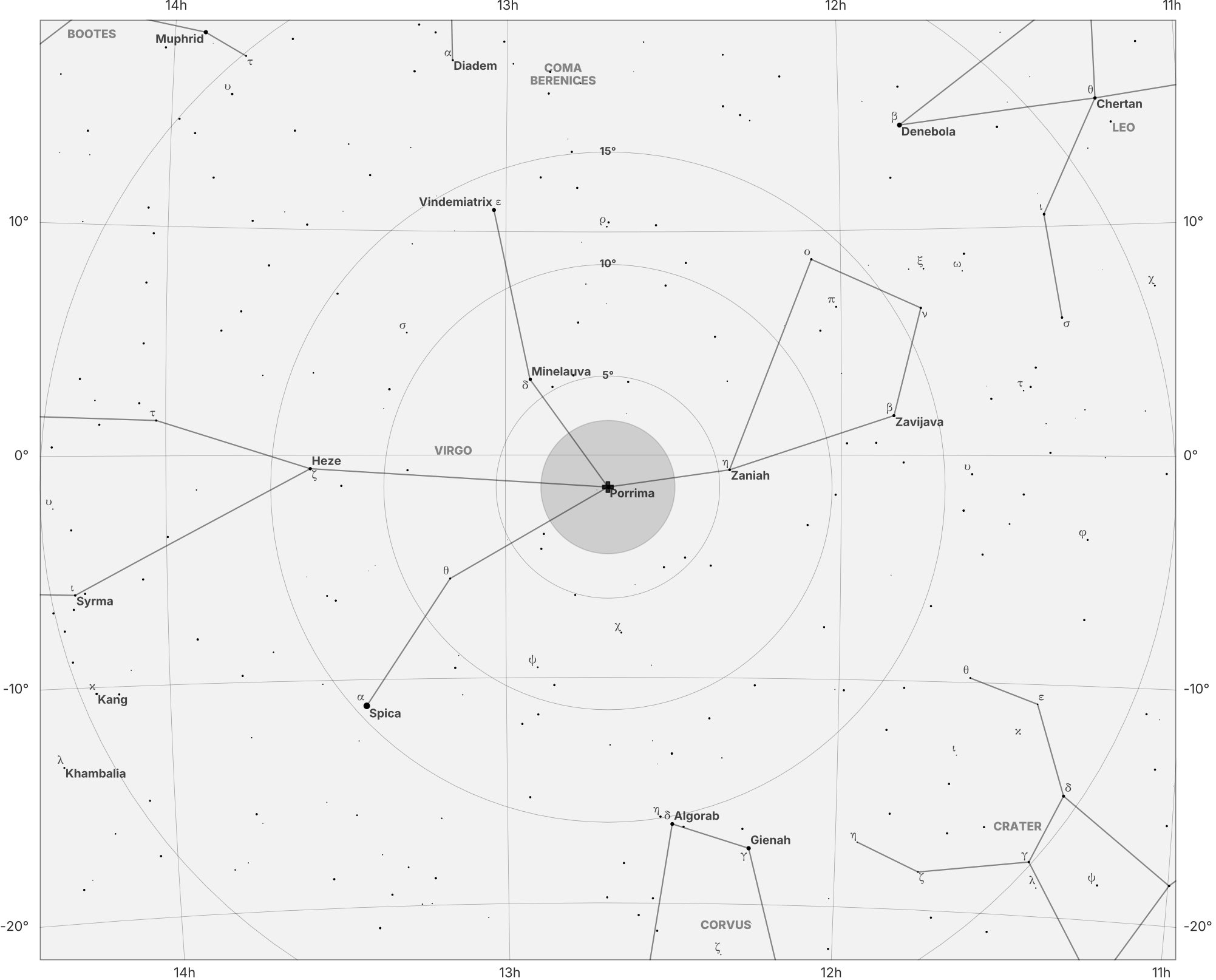
Finder map for Porrima
Named for a Roman goddess of prophecy. In Chinese astronomy, it is part of the ‘Left Wall of the Supreme Palace Enclosure’ asterism. Accessible from most latitudes. Best observed when high in the sky, where atmospheric seeing is most favorable for resolving a close binary. Splitting the two components is highly dependent on atmospheric seeing and requires sufficient magnification. The separation changes over its 169-year orbit; it was extremely challenging around its closest approach (periastron) in 2005.
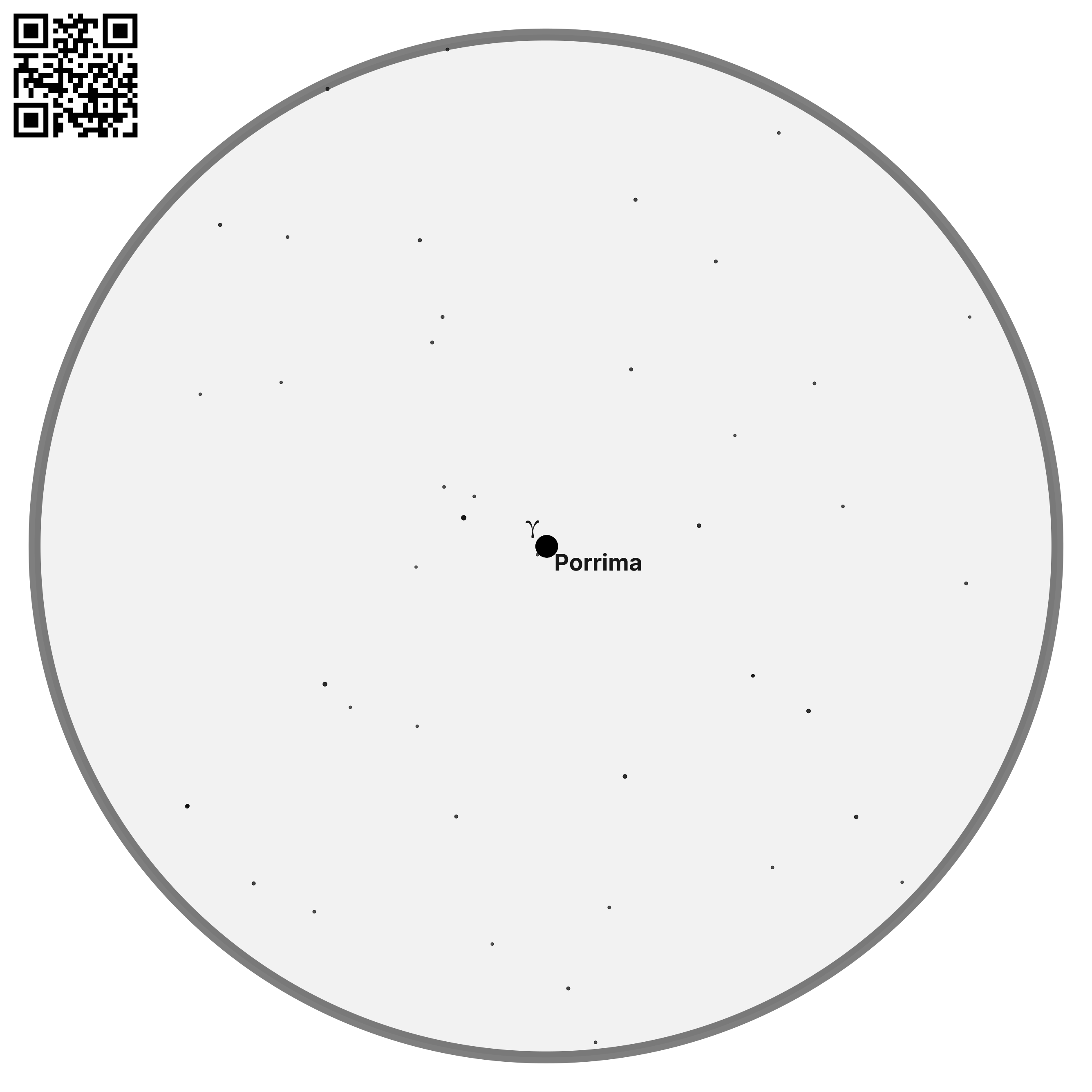
Finder scope & binocular view of Porrima
| Property | Value |
|---|---|
| Common names | Gamma Virginis, Arich |
| Catalog names | - |
| Type | Star |
| Subtype | High Proper Motion Star |
| Coordinates | 12h 41m 39.63s, -1° 26’ 57.85” |
| Season | March - May |
| Best month | April |
| Beginner friendly | No |
| Visual reward | Moderate |
| Filters required | None |
| LP tolerance | High |
| Minimum equipment | Medium telescope |
| Optimal equipment | Medium telescope |
| Magnitude | 2.7 |
| Size | - |
| Constellation | Virgo |
Observation Notes
Naked Eye
Appears as a single white star and is one of the brighter naked-eye stars in Virgo. No duplicity is visible without optical aid.
Binoculars
Remains unresolved as a single bright point. Binoculars are useful only for identification and location within the constellation.
Small Telescope
Resolution depends strongly on the current orbital separation and seeing conditions. When the pair is well separated, a 3–4 inch telescope at high magnification (around 150× or more) can split the stars into two very close, equal white points. Near minimum separation, a clean split may not be possible in small apertures.
Medium Telescope
A 5–8 inch telescope provides a more reliable split when separation is favorable, showing two nearly identical stars with a narrow but distinct dark gap under steady seeing.
Large Telescope
Easily resolves the pair when separation permits, offering a clean and comfortable view at a range of magnifications. The visual appeal lies in the near-equal brightness and symmetry of the pair rather than in color contrast or structural detail.