Polaris
4-8 inch Telescope • Challenging Doubles
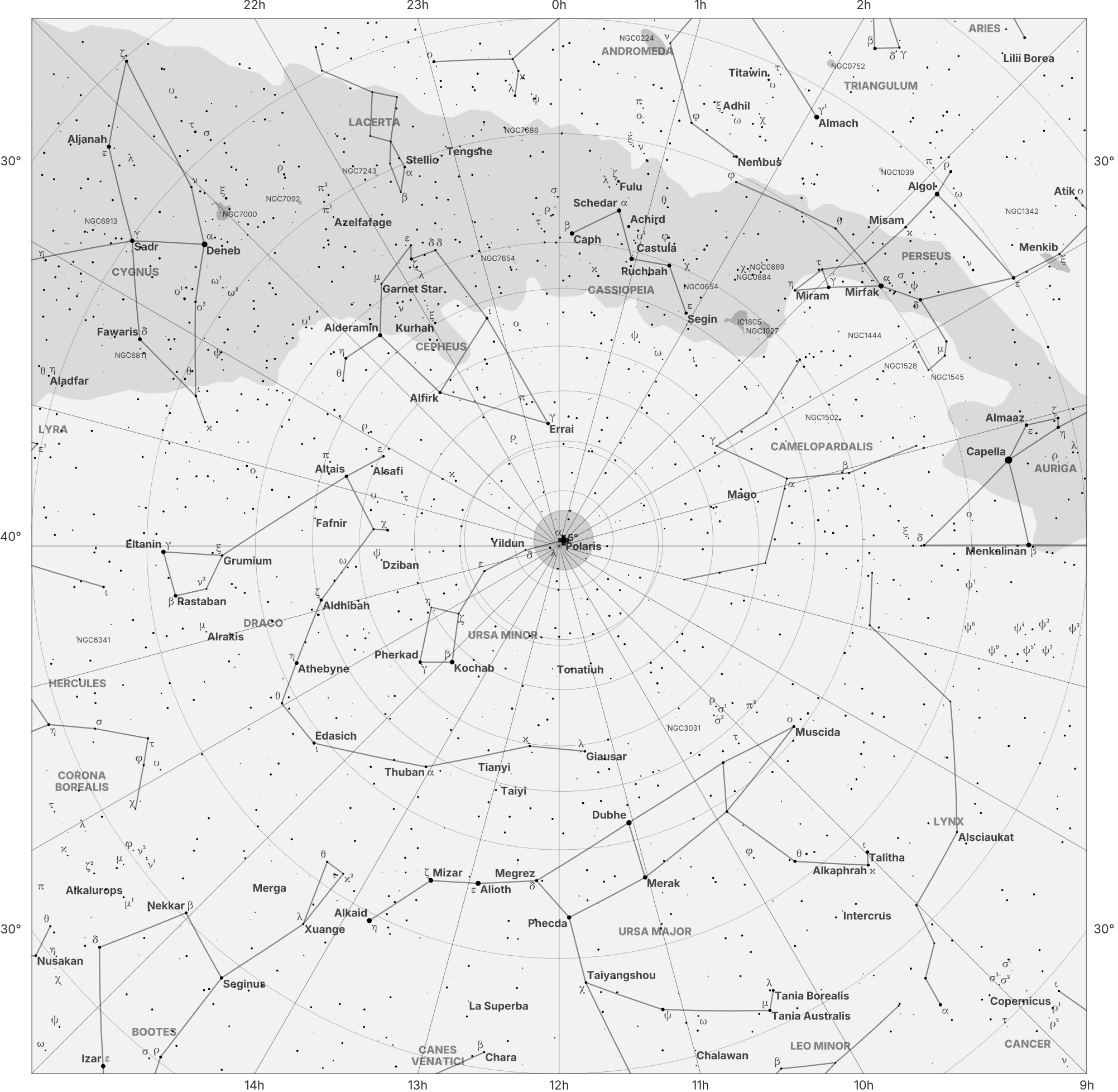
Finder map for Polaris
A long-standing symbol of guidance and constancy across many cultures, Polaris appears in historical literature, including references by Shakespeare. Visible year-round from the Northern Hemisphere. Its altitude above the northern horizon is almost exactly equal to the observer’s latitude. Resolving the 8.7 magnitude companion, Polaris B, which is separated by 18 arcseconds from the brilliant primary. The closer companion, Polaris Ab, is impossible to see visually.
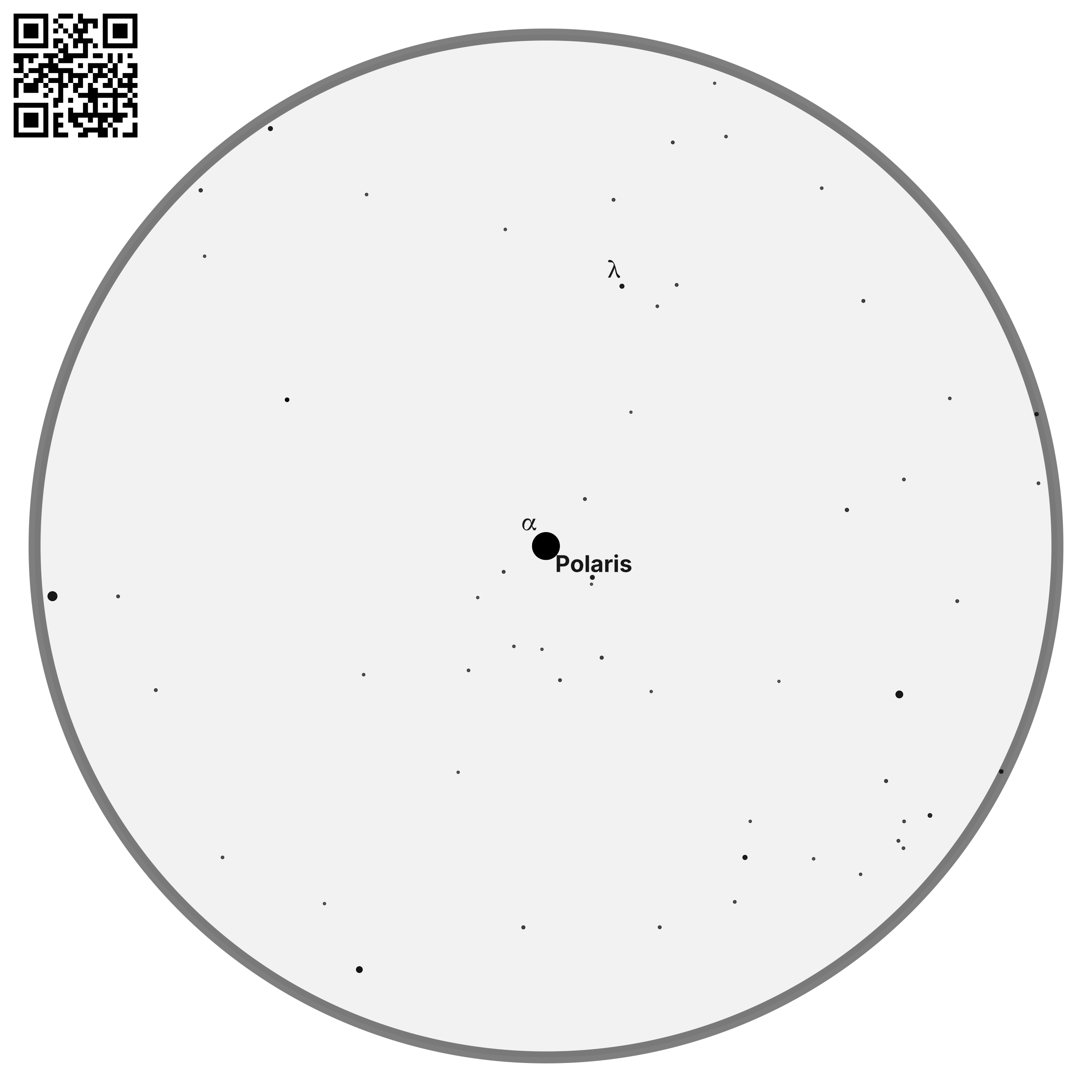
Finder scope & binocular view of Polaris
| Property | Value |
|---|---|
| Common names | North Star, Lode Star, Stella Maris |
| Catalog names | - |
| Type | Classical Cepheid |
| Subtype | Classical Cepheid |
| Coordinates | 2h 31m 49.09s, +89° 15’ 50.79” |
| Season | October - December |
| Best month | November |
| Beginner friendly | Marginal |
| Visual reward | Low |
| Filters required | None |
| LP tolerance | High |
| Minimum equipment | Medium telescope |
| Optimal equipment | Medium telescope |
| Magnitude | 2.0 |
| Size | - |
| Constellation | Ursa Minor |
Observation Notes
Naked Eye
A moderately bright star marking the north celestial pole. It appears nearly stationary throughout the night, with other stars seeming to circle around it.
Binoculars
Shows Polaris as a single yellowish-white star. Binoculars are insufficient to resolve any companions.
Small Telescope
In apertures around 3 inches, Polaris B is a difficult target. Under steady seeing and at high magnification, the faint companion may be glimpsed close to the primary’s glare, but success is not guaranteed.
Medium Telescope
A 6-inch or larger telescope under good seeing conditions provides a reliable split of Polaris B, which appears as a faint companion well separated from the primary. Any color contrast is subtle and often subdued by glare.
Large Telescope
Makes the A–B pair easy and comfortable to observe at a range of magnifications. The much closer and fainter spectroscopic companion (Polaris Ab) remains invisible visually.