Castor
4-8 inch Telescope • Challenging Doubles
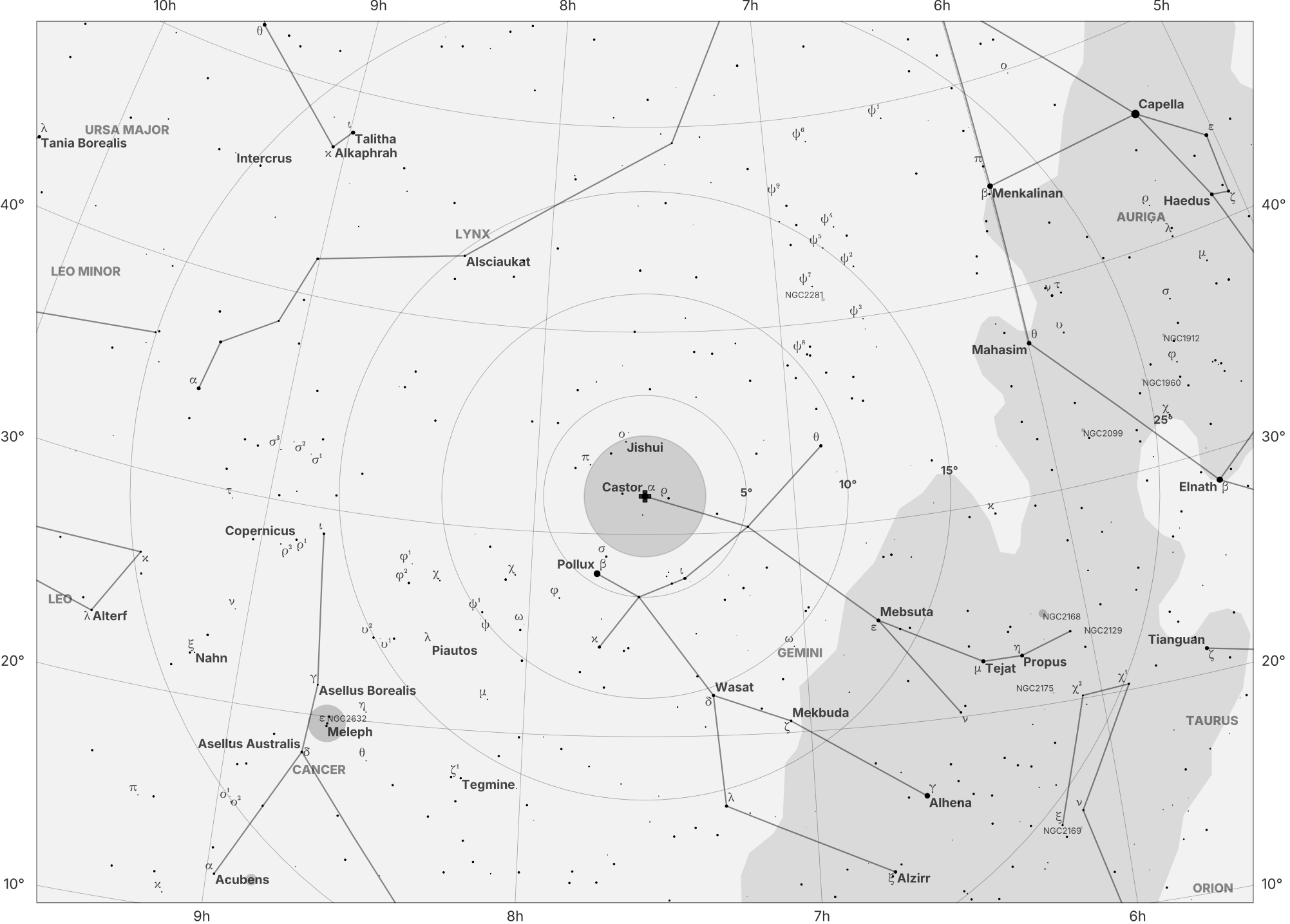
Finder map for Castor
Represents one of the Dioscuri twins in Greek mythology—Castor, the mortal horseman brother of the immortal Pollux. Together with Pollux, it has long been a prominent stellar pair in classical astronomy and seasonal sky lore. Best observed when high in the sky, where atmospheric seeing is typically most favorable for cleanly splitting the primary components. Resolving the A–B pair requires steady atmospheric seeing. The much fainter and more distant C component (YY Geminorum) lies beyond the practical visual reach of 4–8 inch telescopes and is primarily studied through photometric and spectroscopic methods.
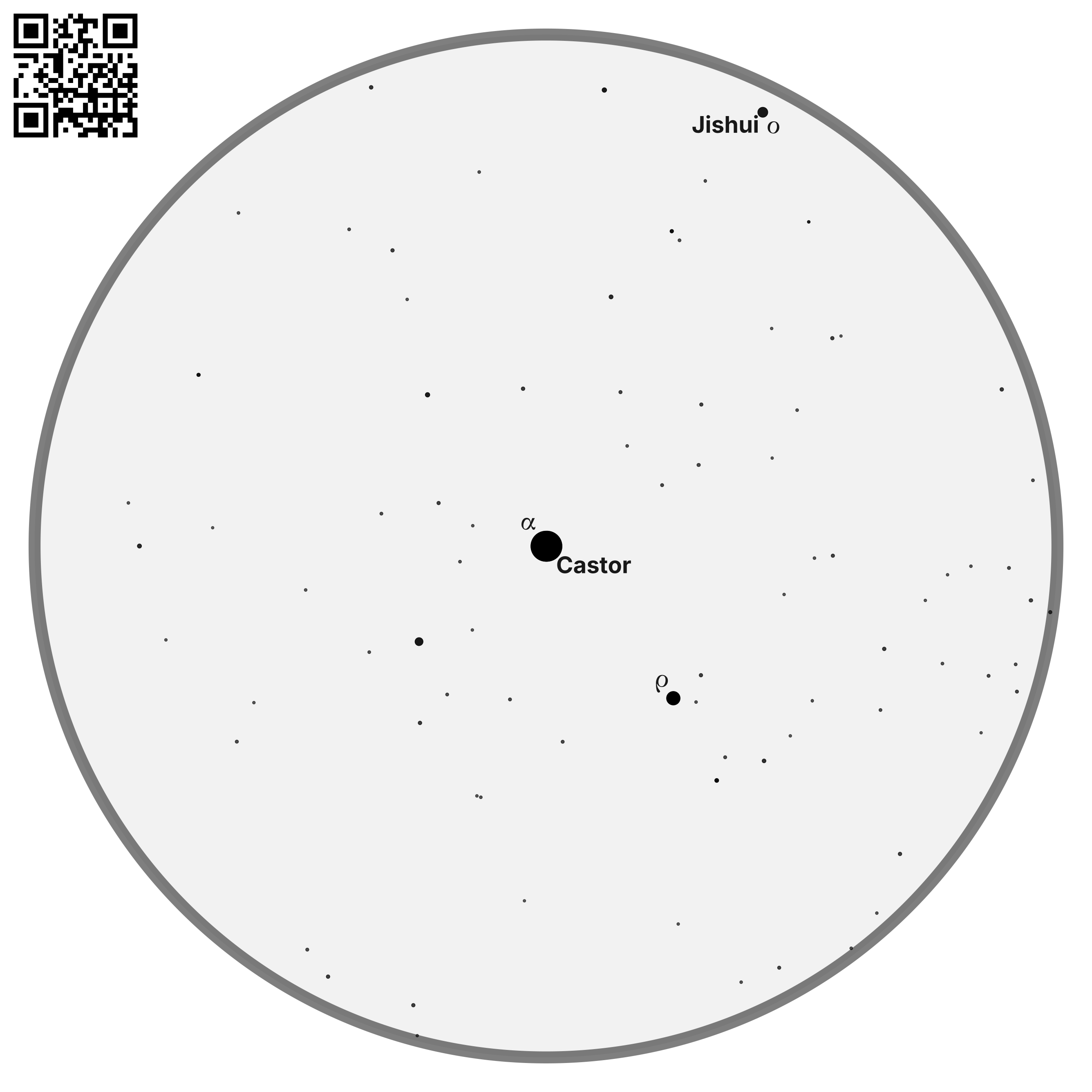
Finder scope & binocular view of Castor
| Property | Value |
|---|---|
| Common names | Alpha Geminorum, α Gem |
| Catalog names | - |
| Type | Star |
| Subtype | Double Star |
| Coordinates | 7h 34m 35.87s, +31° 53’ 17.82” |
| Season | December - February |
| Best month | Mid-January |
| Beginner friendly | Yes |
| Visual reward | Moderate |
| Filters required | None |
| LP tolerance | High |
| Minimum equipment | Small telescope |
| Optimal equipment | Medium telescope |
| Magnitude | 1.6 |
| Size | - |
| Constellation | Gemini |
Observation Notes
Naked Eye
A bright white star marking one of the two “heads” of the Gemini twins. Its color appears distinctly whiter when compared with the warmer orange tone of nearby Pollux, though the contrast is subtle.
Binoculars
Appears as a single bright star with no hint of duplicity.
Small Telescope
In apertures around 3–4 inches, the close A and B components can be cleanly split under good seeing. They appear as two nearly equal, white stars separated by a narrow but distinct gap.
Medium Telescope
Provides a comfortable and attractive separation of the A/B pair. Under dark skies, the much fainter companion Castor C (YY Geminorum), around 9th magnitude and roughly 70–75 arcseconds away, can be detected as a separate faint star, though its color is usually not pronounced.
Large Telescope
Offers an easy, sharp split of the A/B pair at a wide range of magnifications. Castor C is readily visible, emphasizing the system’s multiple-star nature, but no additional visual detail is revealed.