Alpha Centauri AB
4-8 inch Telescope • Challenging Doubles
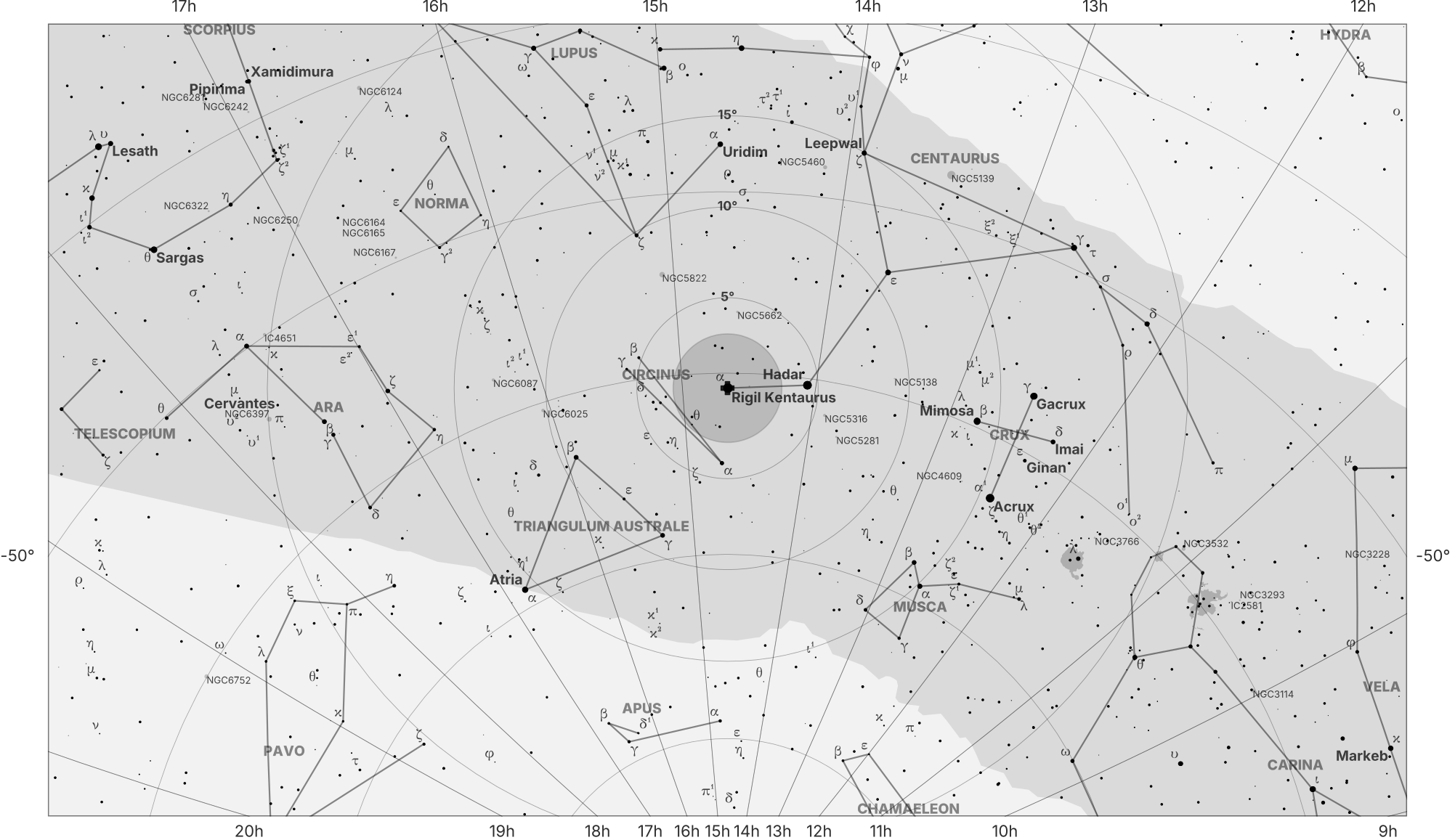
Finder map for Alpha Centauri AB
A prominent star system in several Southern Hemisphere indigenous astronomical traditions. In modern science fiction, its status as the nearest stellar system has made it a frequent and iconic destination for imagined interstellar journeys. High in the sky for Southern Hemisphere observers, where it is an easy and prominent target. From mid-northern latitudes it remains very low above the southern horizon, and it is unobservable from far-northern locations. Resolving the A–B pair becomes increasingly challenging as the system approaches minimum separation in the mid-2030s, with glare and atmospheric seeing becoming limiting factors for small apertures. Observation is further complicated for mid- and high-northern latitude observers by the system’s very low altitude.
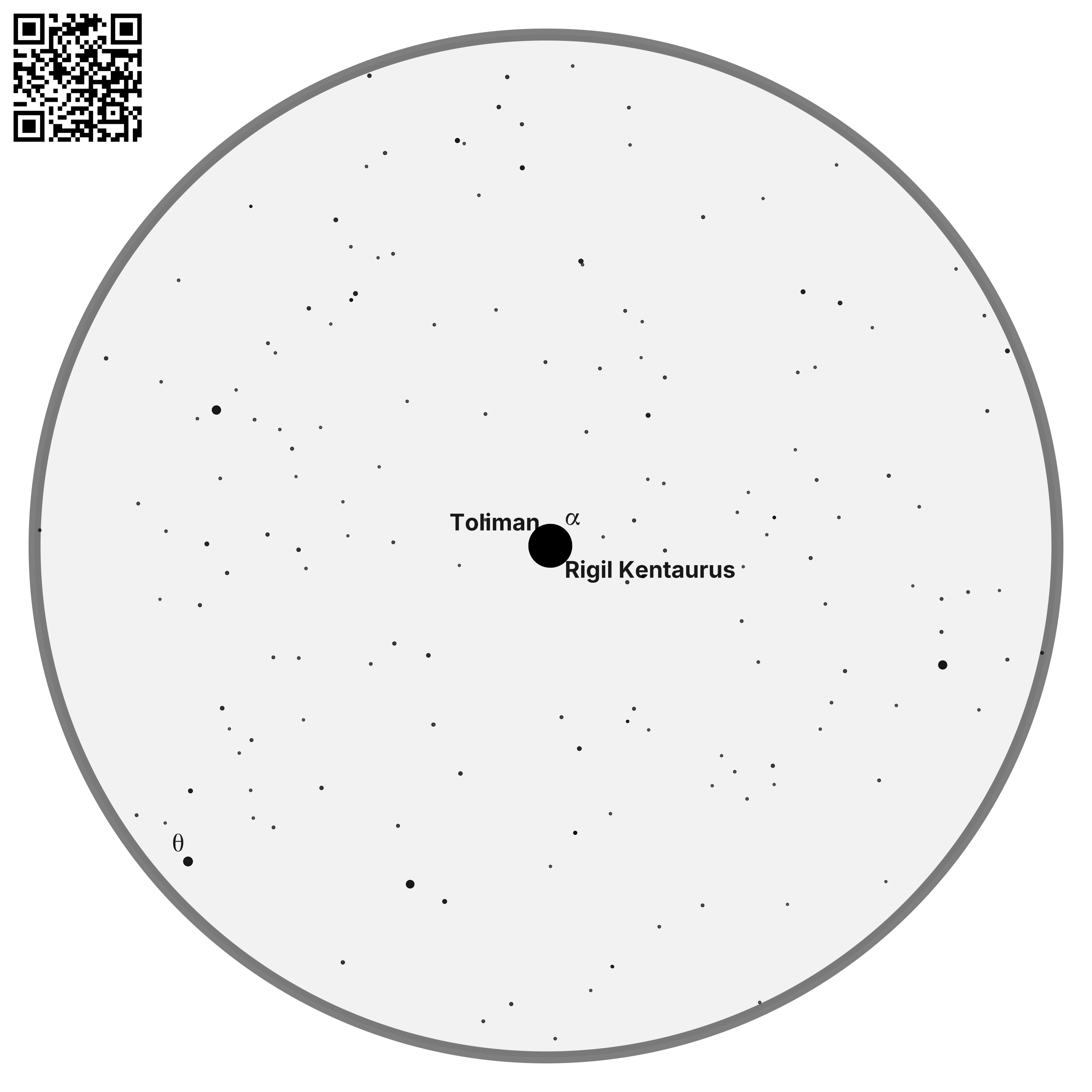
Finder scope & binocular view of Alpha Centauri AB
| Property | Value |
|---|---|
| Common names | Rigil Kentaurus, Toliman, Bungula |
| Catalog names | - |
| Type | Double Star |
| Subtype | Spectroscopic Binary |
| Coordinates | 14h 39m 36.49s, -60° 50’ 02.37” |
| Season | April - June |
| Best month | May |
| Beginner friendly | Yes |
| Visual reward | High |
| Filters required | None |
| LP tolerance | High |
| Minimum equipment | Small telescope |
| Optimal equipment | Medium telescope |
| Magnitude | 0.0 |
| Size | - |
| Constellation | Centaurus |
Observation Notes
Naked Eye
Appears as a single, intensely bright yellow-white star. As a system, it is the brightest stellar object in the night sky. Together with Beta Centauri, it forms the well-known “Pointers” leading to the Southern Cross.
Binoculars
Remains unresolved as a single brilliant point. Binoculars are useful for locating the star and appreciating its prominence in the southern sky, but show no duplicity.
Small Telescope
Splitting the pair depends strongly on their current separation and seeing. When widely separated, a small telescope may resolve Alpha Centauri into two close stars, though the split is not guaranteed at modest apertures. A subtle color contrast can be noticed, with the primary appearing yellow-white and the secondary slightly warmer.
Medium Telescope
Readily resolves the pair through most of their ~80-year orbit when separation is favorable. The unequal brightness and mild color contrast are clearly apparent under steady seeing.
Large Telescope
Provides a clean, sharp split even as the separation decreases, allowing high-magnification views with well-defined diffraction patterns. No additional components are visually detectable.