Gamma Delphini
4-8 inch Telescope • Challenging Doubles
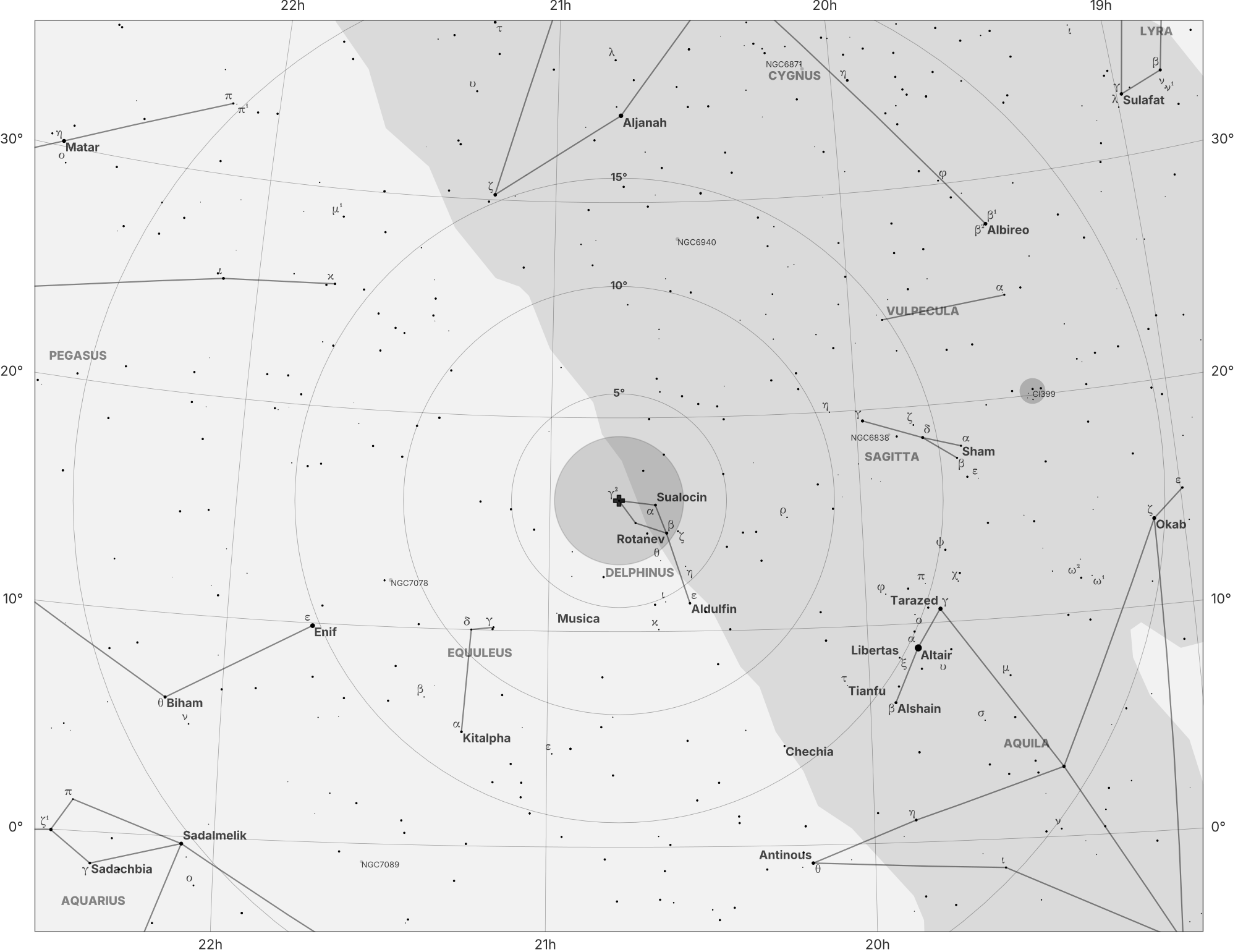
Finder map for Gamma Delphini
As part of Delphinus, it is associated with Greek myths of dolphins, particularly the story of the poet Arion. It forms a key part of the easily recognizable ‘Job’s Coffin’ asterism. Best viewed when high in the sky to minimize atmospheric turbulence (‘seeing’), which is crucial for a clean split of the components. The primary challenge is not splitting the pair, which is easy, but observing under steady atmospheric conditions to fully appreciate the color contrast and crispness of the stellar disks.
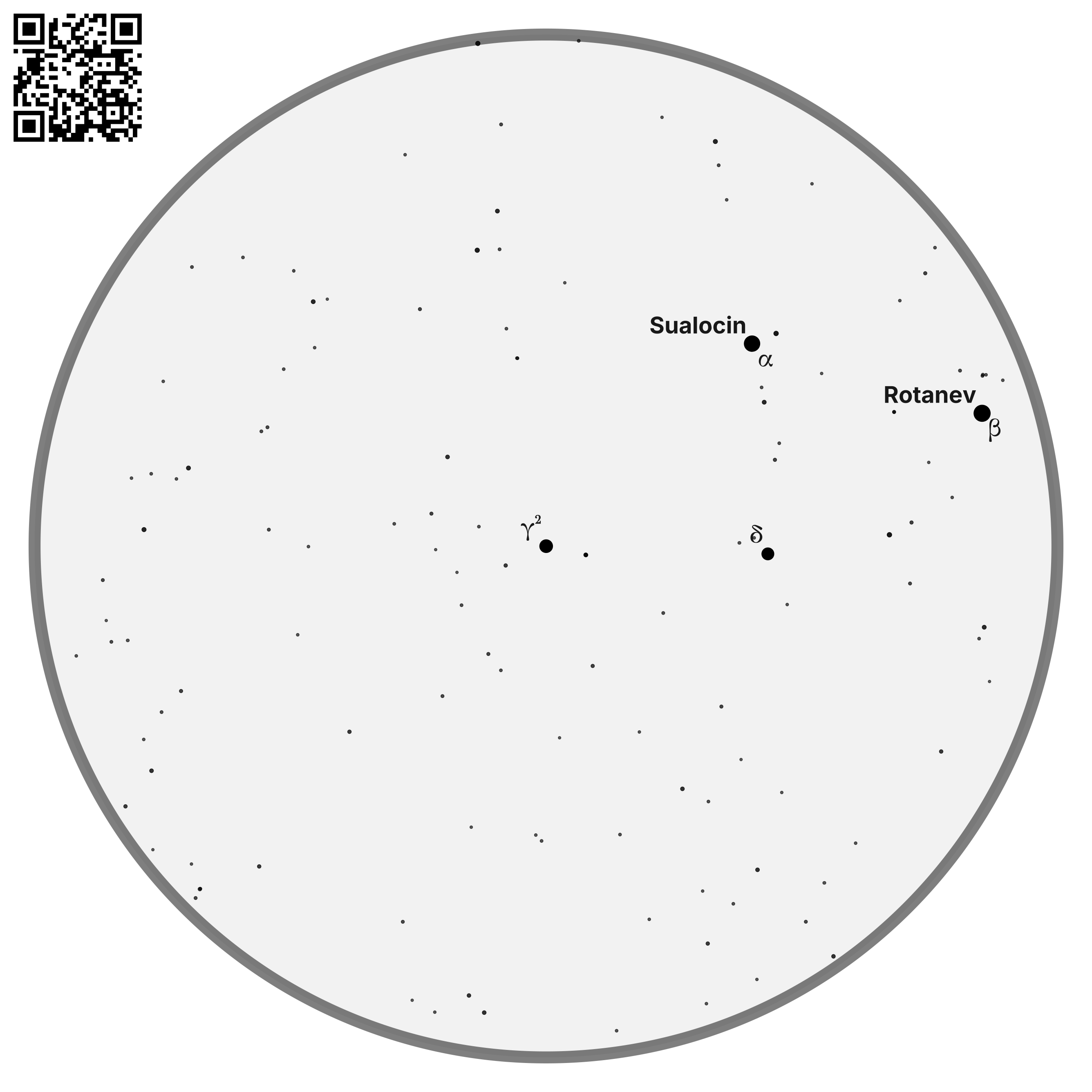
Finder scope & binocular view of Gamma Delphini
| Property | Value |
|---|---|
| Common names | γ Delphini, Gamma¹ Delphini & Gamma² Delphini |
| Catalog names | - |
| Type | Star |
| Subtype | Double Star |
| Coordinates | 20h 46m 39.39s, +16° 07’ 27.65” |
| Season | July - September |
| Best month | August |
| Beginner friendly | Marginal |
| Visual reward | Moderate |
| Filters required | None |
| LP tolerance | Medium |
| Minimum equipment | Small telescope |
| Optimal equipment | Small telescope |
| Magnitude | 5.1 |
| Size | - |
| Constellation | Delphinus |
Observation Notes
Naked Eye
Visible as a single, moderately bright star marking the nose of the dolphin and the northeastern corner of the “Job’s Coffin” asterism in Delphinus.
Binoculars
Appears as a single point of light and is not resolvable in binoculars.
Small Telescope
Easily split in small telescopes (60 mm and larger) at moderate magnification (around 50×), revealing a well-matched pair with a noticeable but subtle color difference.
Medium Telescope
Provides a clean and attractive view with a distinct dark gap between the components. The stars show gentle warm tones, often described as pale yellow and light orange.
Large Telescope
The separation appears very wide and relaxed. Lower to moderate magnifications usually give the most pleasing view, as excessive magnification can reduce the apparent color contrast.