Theta Serpentis
4-8 inch Telescope • Challenging Doubles
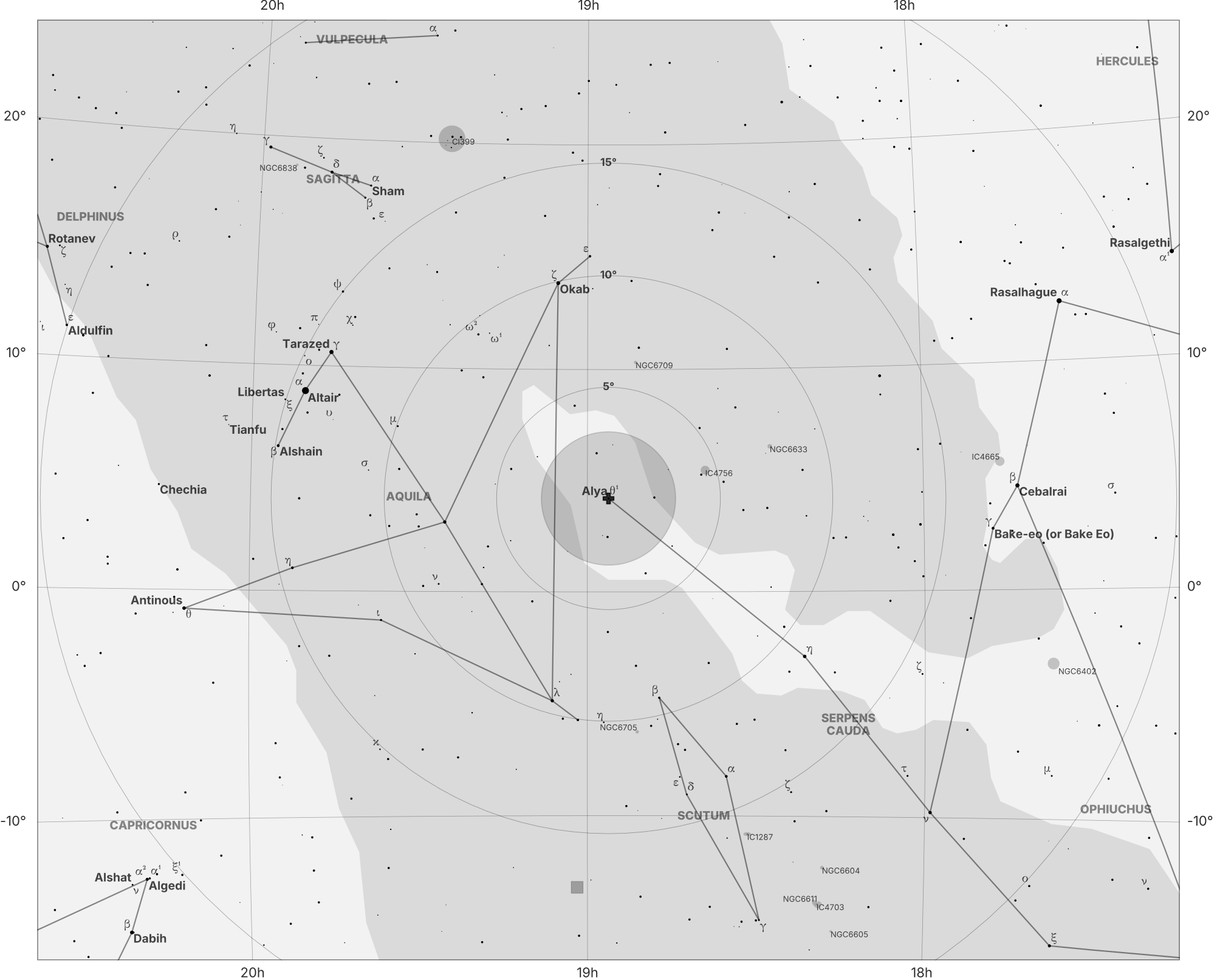
Finder map for Theta Serpentis
The proper name Alya is thought to derive from an Arabic term associated with a sheep’s tail, reflecting traditional Arabic star nomenclature for this region of the sky. It has no significant mythological role in Western astronomy. Best observed when high in the sky for the most pleasing view, although the wide separation of the components makes the pair accessible under a wide range of observing conditions. The challenge lies not in resolving the pair—which is easy in small telescopes—but in detecting any subtle brightness difference or faint color contrast between the nearly equal white components.
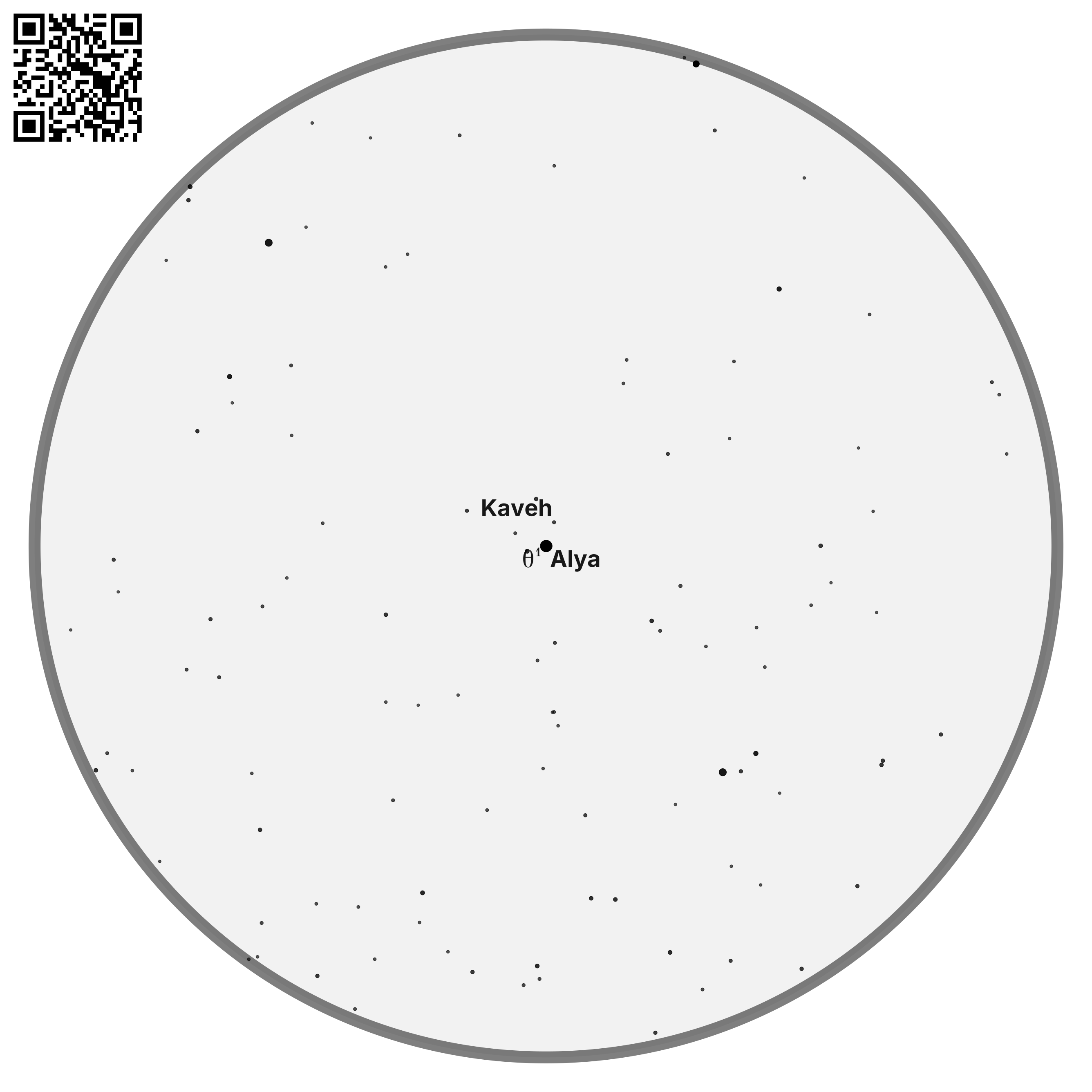
Finder scope & binocular view of Theta Serpentis
| Property | Value |
|---|---|
| Common names | Alya |
| Catalog names | tet1 Ser |
| Type | Star |
| Subtype | Double Star |
| Coordinates | 18h 56m 13.18s, +4° 12’ 12.90” |
| Season | June - August |
| Best month | July |
| Beginner friendly | Marginal |
| Visual reward | Moderate |
| Filters required | None |
| LP tolerance | High |
| Minimum equipment | Medium telescope |
| Optimal equipment | Medium telescope |
| Magnitude | 4.6 |
| Size | - |
| Constellation | Serpens |
Observation Notes
Naked Eye
Visible from moderately light-polluted skies as a single 4th-magnitude star in Serpens Cauda (the Serpent’s Tail). No duplicity is apparent without optical aid.
Binoculars
Appears as a single bright star. Binoculars do not reliably show elongation or separation of the components.
Small Telescope
An excellent and rewarding double-star target. A small telescope in the 60–80 mm range can split the pair at moderate magnification under steady seeing, revealing two nearly equal white stars with a clear separation.
Medium Telescope
Provides a clean, comfortable split with obvious dark space between the components. The slight difference in brightness becomes noticeable, though color contrast remains minimal.
Large Telescope
Resolves the pair effortlessly at a wide range of magnifications, showing two sharp stellar points. No additional components are visible.