Albireo
Binoculars • Colored Doubles
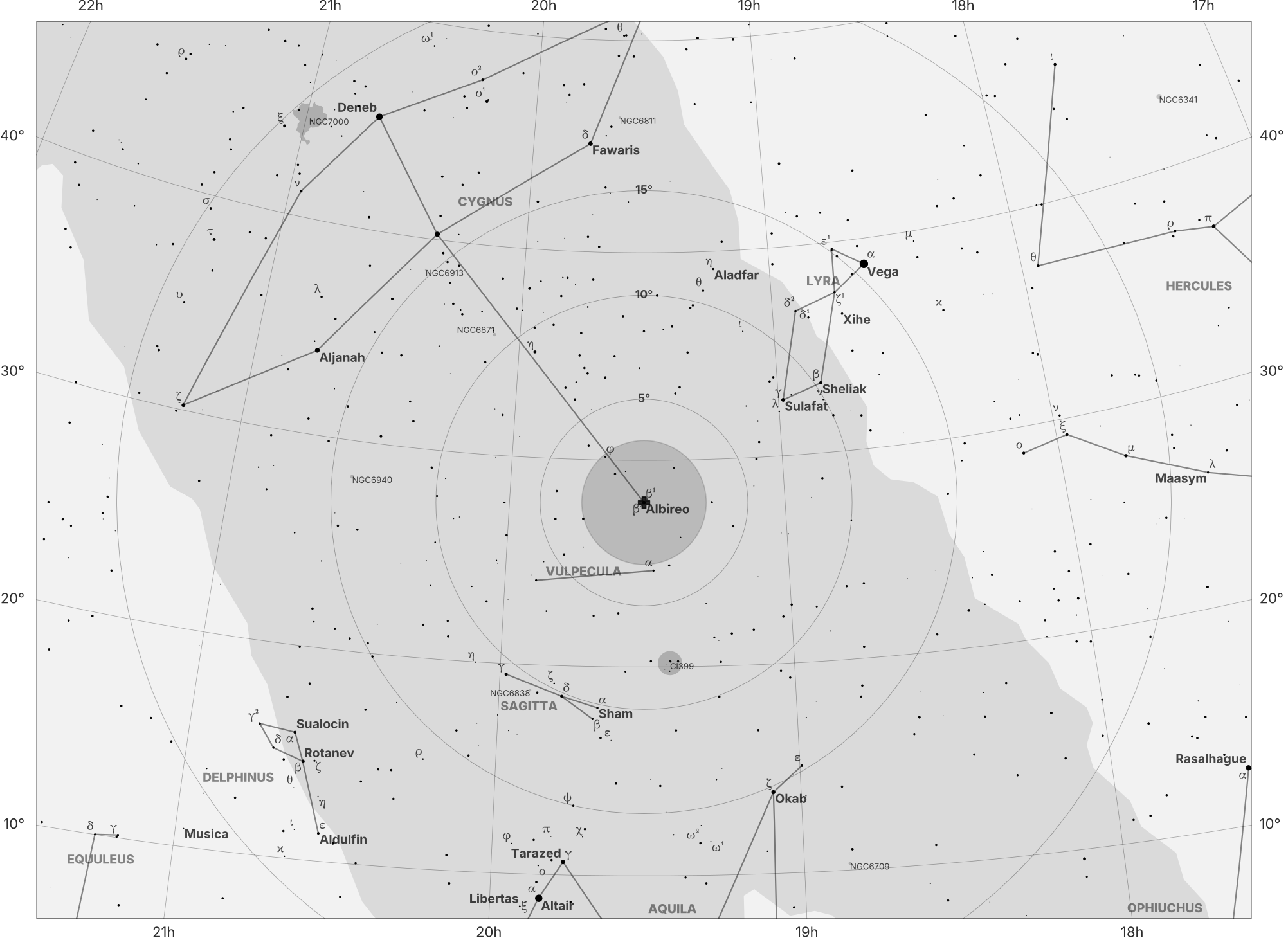
Finder map for Albireo
Universally regarded as the quintessential showpiece double star for amateur astronomers due to its ease of observation and stunning color contrast. It is a highlight of almost every summer star party. Best observed when high in the sky to minimize atmospheric distortion which can affect the perceived colors. The main ‘challenge’ is appreciating the subtle color contrast, which can be affected by atmospheric conditions (‘seeing’), telescope optics, and an individual observer’s color perception.
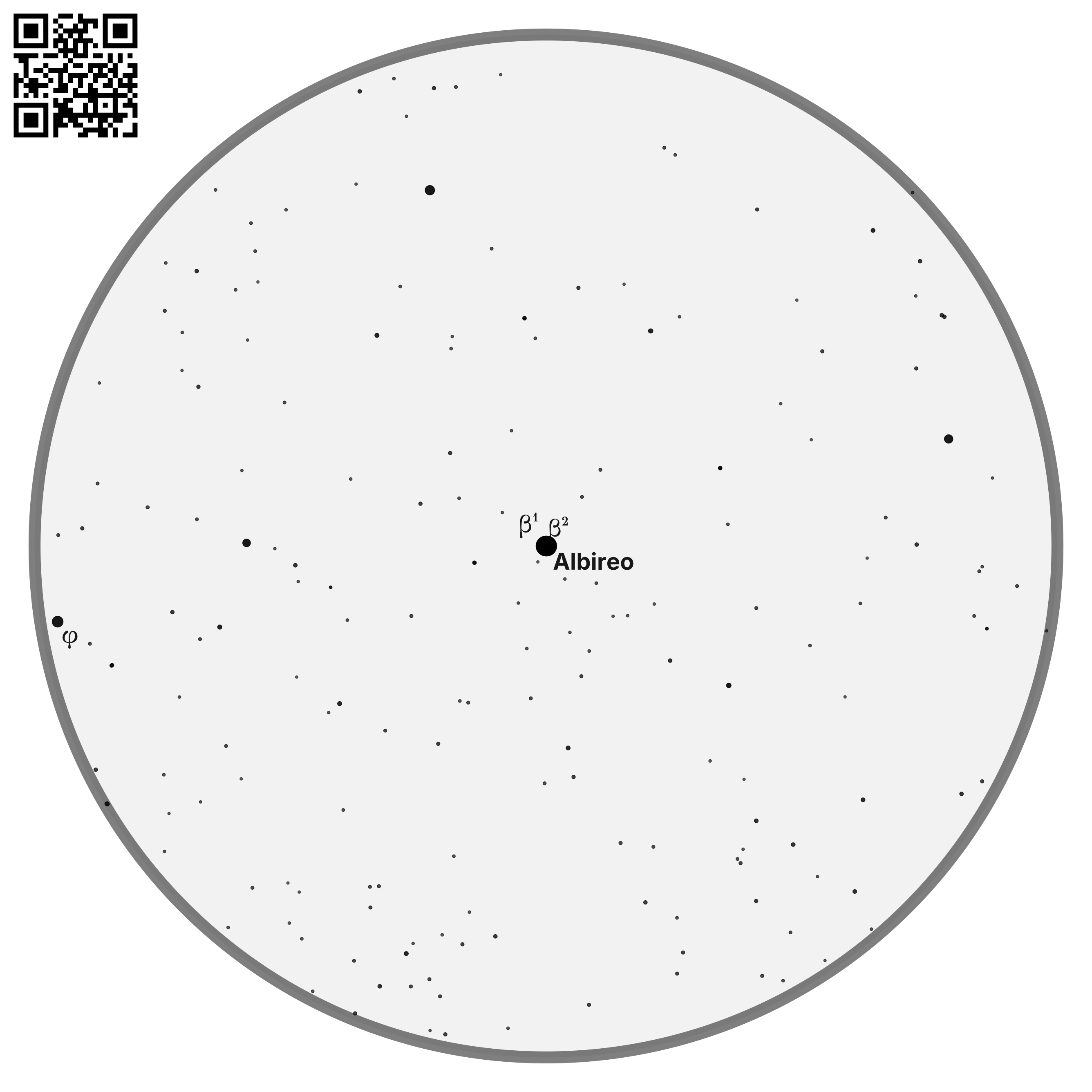
Finder scope & binocular view of Albireo
| Property | Value |
|---|---|
| Common names | Beta Cygni, The Swan’s Beak |
| Catalog names | - |
| Type | Star |
| Subtype | Double Star |
| Coordinates | 19h 30m 43.28s, +27° 57’ 34.83” |
| Season | June - August |
| Best month | Mid-July |
| Beginner friendly | Yes |
| Visual reward | High |
| Filters required | None |
| LP tolerance | High |
| Minimum equipment | Binoculars |
| Optimal equipment | Small telescope |
| Magnitude | 3.1 |
| Size | - |
| Constellation | Cygnus |
Observation Notes
Naked Eye
Visible as a single, moderately bright star marking the head of the swan and the base of the Northern Cross in Cygnus. It is easily located near the Summer Triangle.
Binoculars
Easily split in standard binoculars such as 7×50 or 10×50, revealing two distinct points of light. The color contrast is present but often subtle in binoculars.
Small Telescope
Easily resolved, revealing the famous golden-yellow primary and blue-green secondary. This is often considered the ideal aperture range for enjoying Albireo’s color contrast.
Medium Telescope
The color contrast is vivid and striking, with the wide separation providing a relaxed and aesthetically pleasing view.
Large Telescope
Produces an extremely wide and clean split. The primary often appears more orange than yellow, while the brightness difference between the components is very apparent. Increased aperture does not necessarily enhance color saturation.