Ras Algethi
4-8 inch Telescope • Challenging Doubles
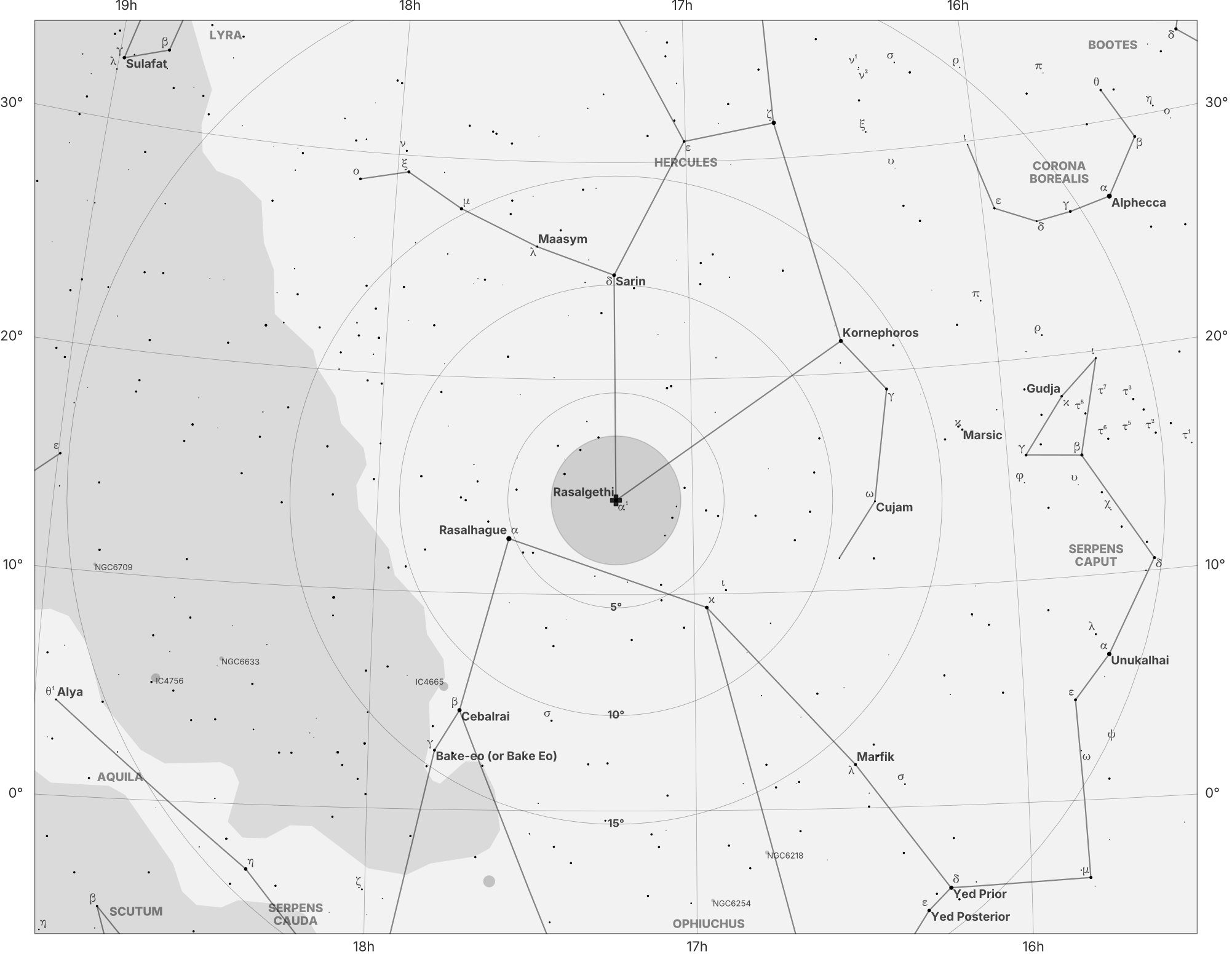
Finder map for Ras Algethi
Represents the head of the kneeling hero Hercules in Greek and Roman mythology. The name and position have been recognized for millennia across various cultures. Best observed when high above the horizon to minimize atmospheric turbulence, which is crucial for cleanly splitting the binary components. Cleanly splitting the binary and discerning the subtle color contrast, which can be affected by seeing conditions and telescope optics.
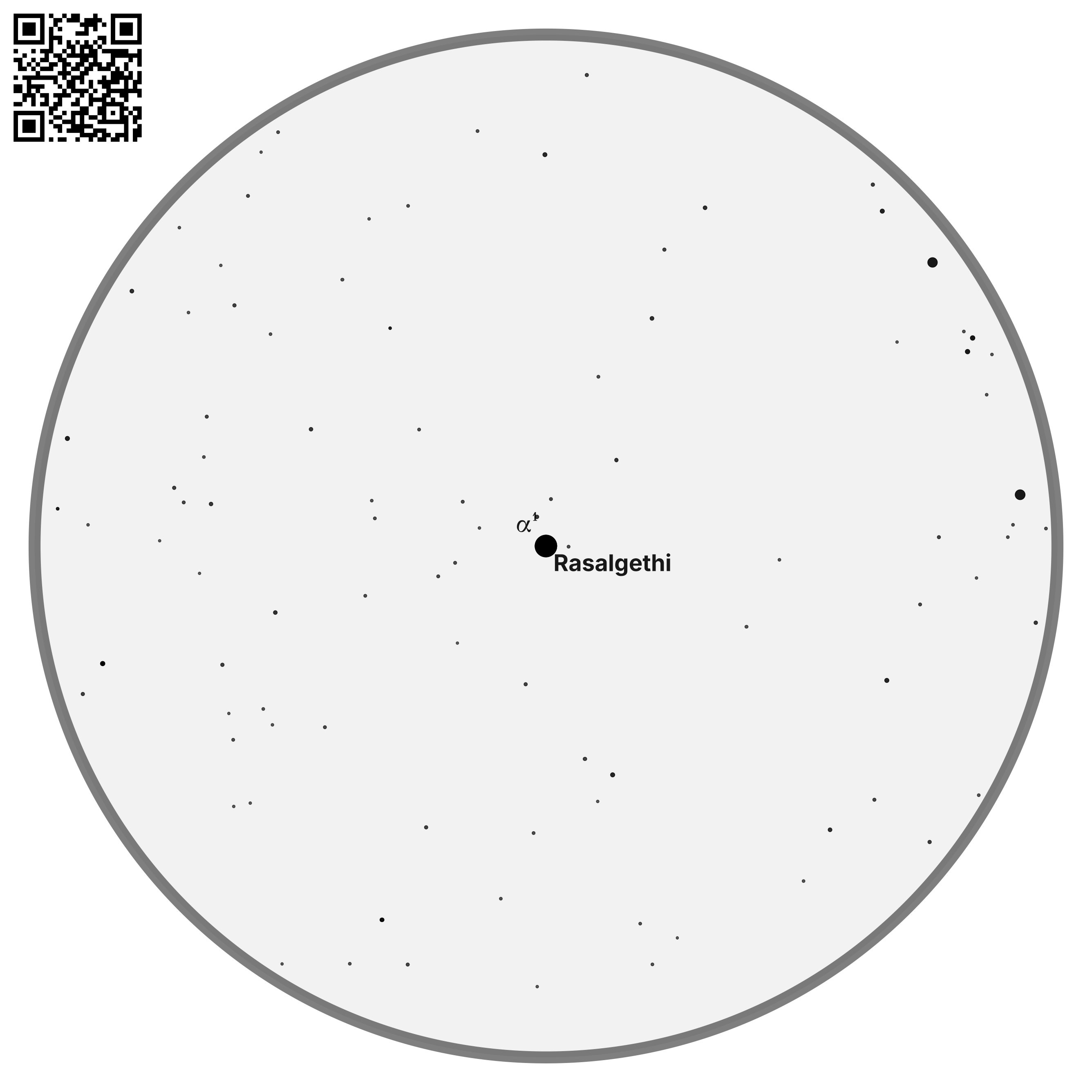
Finder scope & binocular view of Ras Algethi
| Property | Value |
|---|---|
| Common names | Alpha Herculis, Rasalgethi |
| Catalog names | - |
| Type | Star |
| Subtype | Double Star |
| Coordinates | 17h 14m 38.86s, +14° 23’ 25.23” |
| Season | May - July |
| Best month | Mid-June |
| Beginner friendly | Marginal |
| Visual reward | Moderate |
| Filters required | None |
| LP tolerance | High |
| Minimum equipment | Binoculars |
| Optimal equipment | Small telescope |
| Magnitude | 3.4 |
| Size | - |
| Constellation | Hercules |
Observation Notes
Naked Eye
Visible as a single, moderately bright star with a noticeable warm or reddish tint, marking the head of the constellation Hercules.
Binoculars
The reddish color of the primary becomes more apparent, but the star remains unresolved as a double.
Small Telescope
Under steady seeing, a 3-inch telescope at moderate to high magnification (around 75–100×) can resolve the pair, revealing a bright orange-red primary and a much fainter companion. Any color in the secondary is subtle and often appears pale or bluish-white.
Medium Telescope
A 6–8 inch telescope provides a clean and comfortable split. The color contrast is clearly noticeable, with the warm-toned primary contrasting against a cooler-toned companion, though the secondary’s color is usually delicate rather than vivid.
Large Telescope
Offers an easy and stable split even under average seeing conditions. Increased aperture does not reveal additional components or guarantee stronger color, and moderate magnification typically provides the most pleasing view.