Beta Monocerotis
4-8 inch Telescope • Challenging Doubles
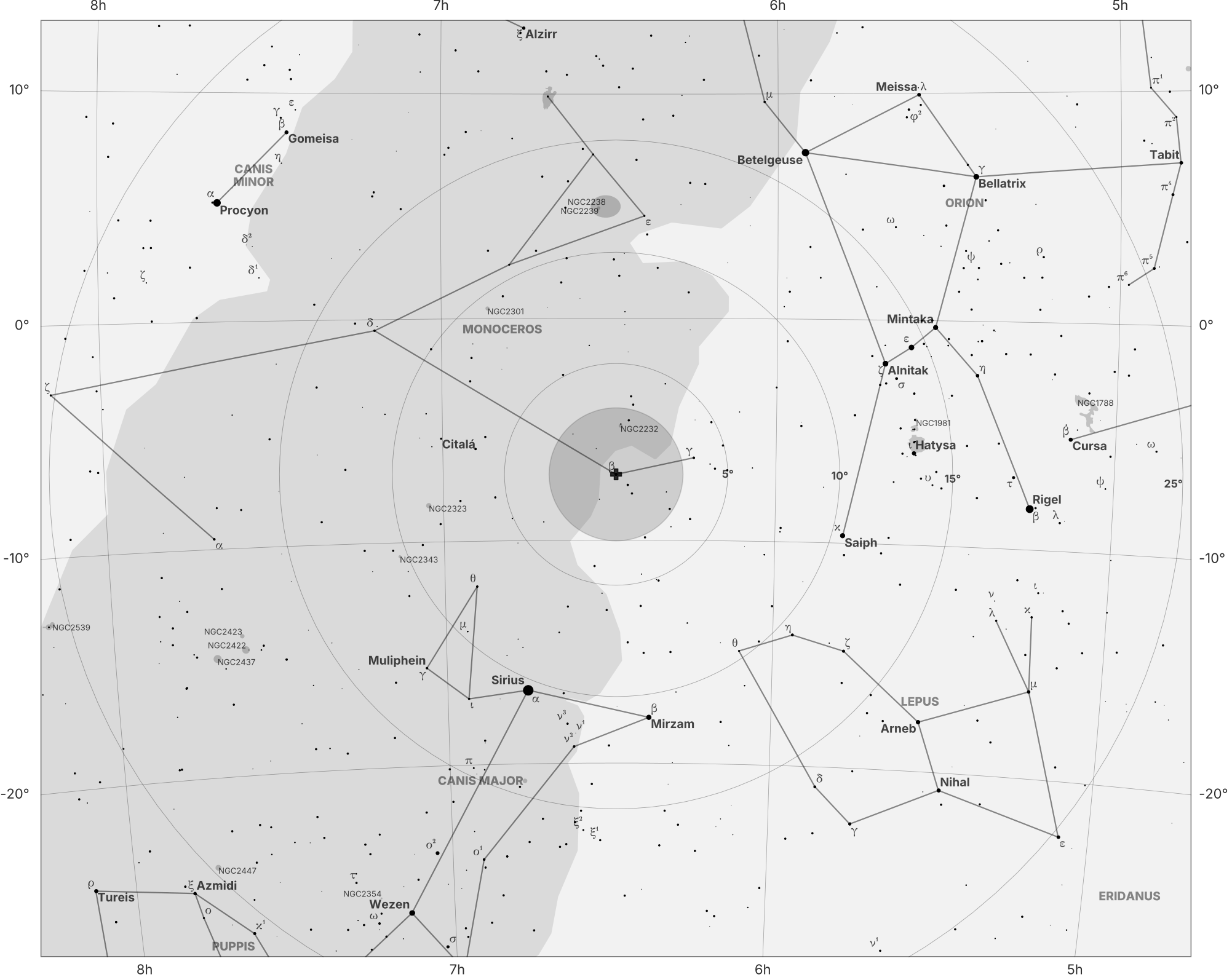
Finder map for Beta Monocerotis
While lacking ancient mythological significance, Beta Monocerotis is celebrated in amateur astronomy as one of the finest showpiece multiple stars, sometimes informally referred to as the “Wonder Star” because of its telescopic beauty. Best observed near culmination, when it is highest in the sky and atmospheric seeing is typically most favorable for resolving the close components. Resolving the tight B–C component pair (about 2.8 arcseconds separation) requires steady atmospheric conditions (good seeing) and typically a 4-inch (100 mm) or larger telescope
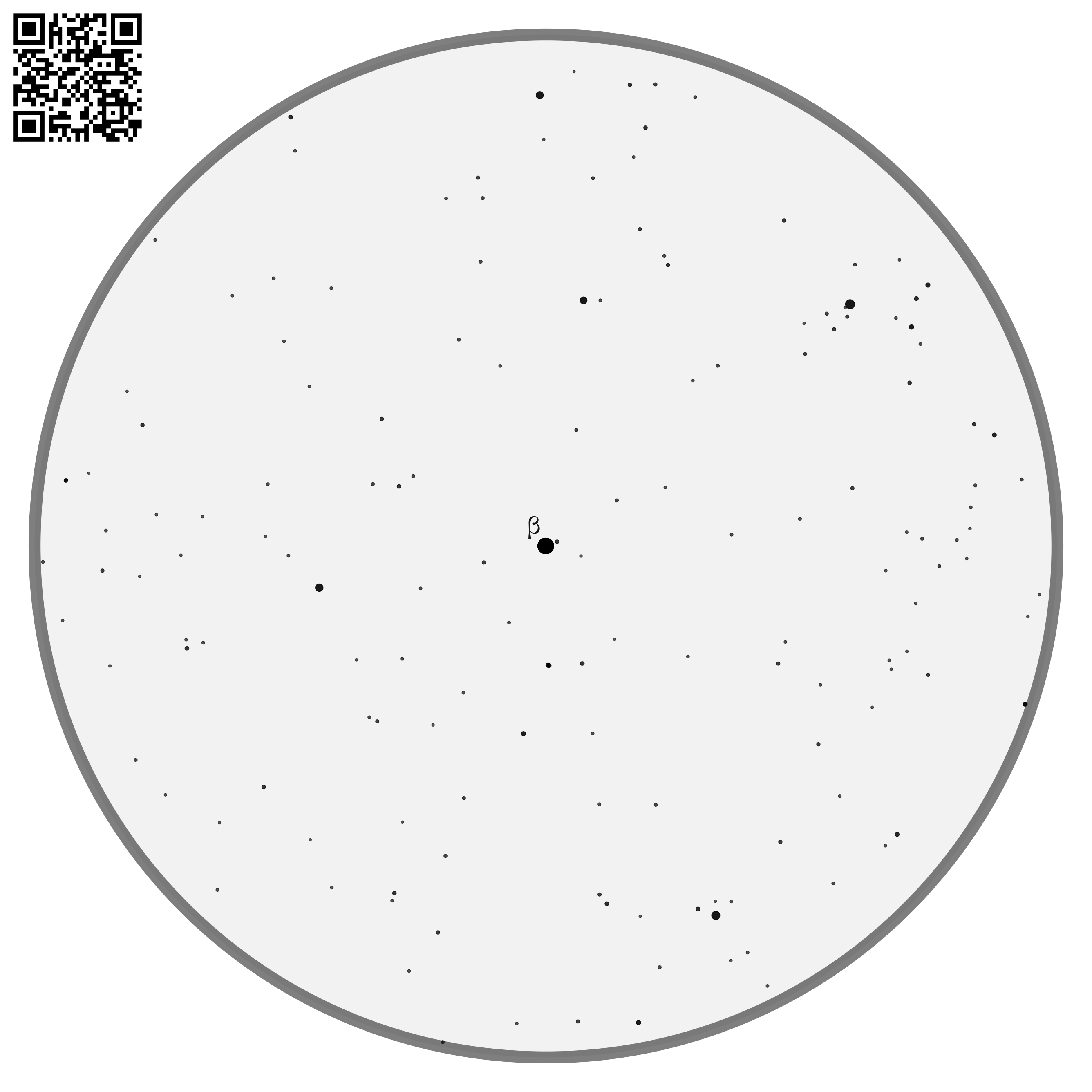
Finder scope & binocular view of Beta Monocerotis
| Property | Value |
|---|---|
| Common names | The Wonder Star |
| Catalog names | - |
| Type | Star |
| Subtype | Double Star |
| Coordinates | 6h 28m 49.07s, -7° 01’ 59.01” |
| Season | December - February |
| Best month | January |
| Beginner friendly | Yes |
| Visual reward | High |
| Filters required | None |
| LP tolerance | High |
| Minimum equipment | Small telescope |
| Optimal equipment | Medium telescope |
| Magnitude | 3.7 |
| Size | - |
| Constellation | Monoceros |
Observation Notes
Naked Eye
Appears as a single, moderately bright star in Monoceros, in the general winter Milky Way region east of Orion.
Binoculars
Remains unresolved as a single point of light. Any perceived color is subtle and not a primary feature at this scale.
Small Telescope
Under good seeing, a small telescope (around 3–4 inches) at moderate to high magnification can resolve the brighter A and B components as a close but distinct pair. The split is seeing-dependent and not guaranteed every night.
Medium Telescope
A 5–8 inch telescope reliably resolves all three components. The fainter C component becomes clearly visible, and the stars form a graceful, gently curved arrangement that makes this system a classic showpiece double.
Large Telescope
Provides a clean, comfortable separation of all three stars at a range of magnifications. The system appears crisp and well balanced, though the visual appeal lies in the geometry and separation rather than strong color contrast.