Iota Trianguli
4-8 inch Telescope • Challenging Doubles
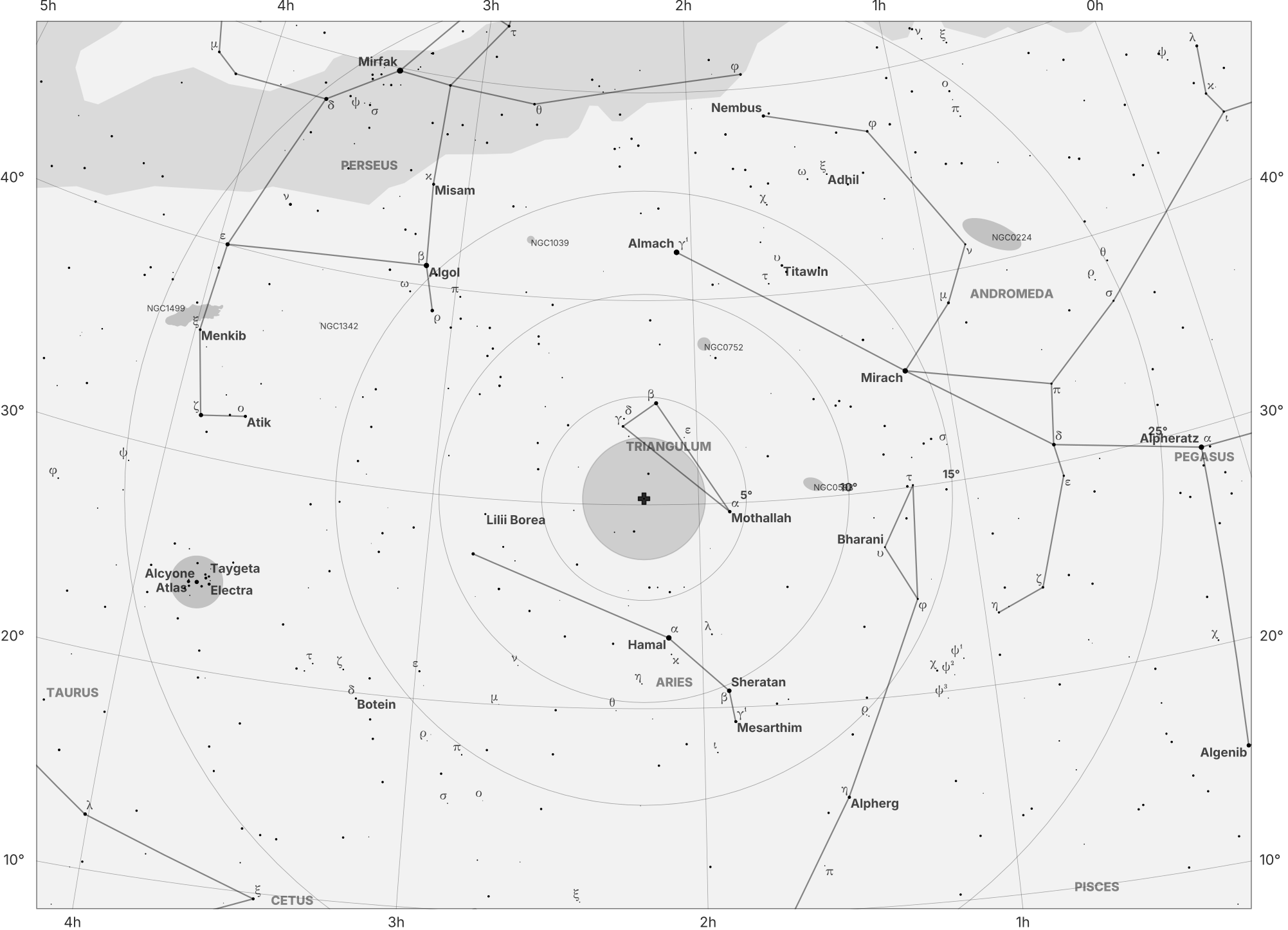
Finder map for Iota Trianguli
Best observed when high in the sky to minimize atmospheric distortion (seeing), which is crucial for splitting double stars. The magnitude difference of ~1.6 between the visual components can make the dimmer secondary appear washed out in the glare of the primary in smaller telescopes or poor seeing conditions.
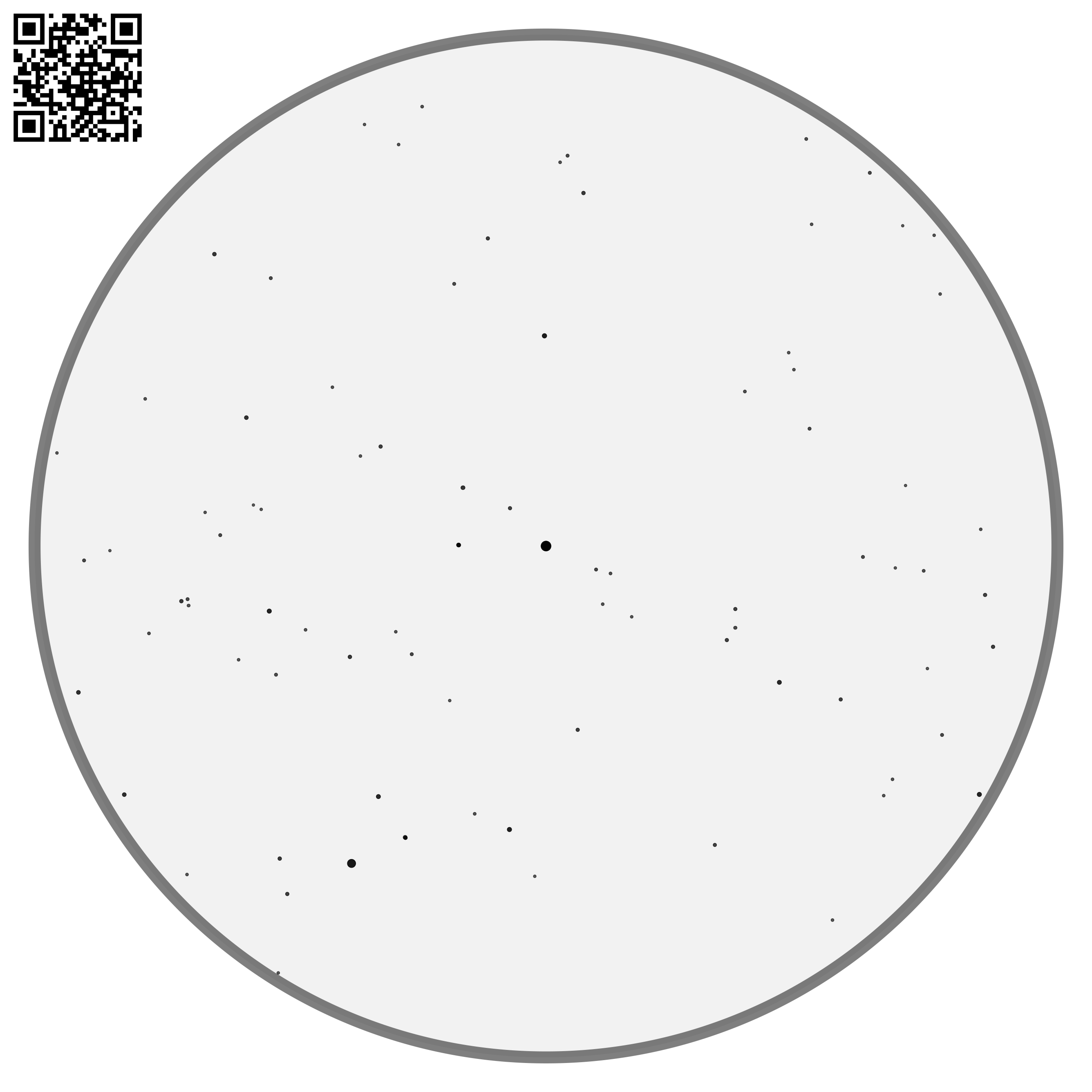
Finder scope & binocular view of Iota Trianguli
| Property | Value |
|---|---|
| Common names | 6 Trianguli |
| Catalog names | - |
| Type | Star |
| Subtype | Double Star |
| Coordinates | 2h 12m 22.28s, +30° 18’ 11.04” |
| Season | October - December |
| Best month | November |
| Beginner friendly | No |
| Visual reward | Moderate |
| Filters required | None |
| LP tolerance | Medium |
| Minimum equipment | Small telescope |
| Optimal equipment | Medium telescope |
| Magnitude | 5.0 |
| Size | - |
| Constellation | Triangulum |
Observation Notes
Naked Eye
Visible to the unaided eye (around 5th magnitude) as a single star located south of the main triangular asterism of Triangulum.
Binoculars
Appears as a single bright point of light. The binary nature is not resolvable in binoculars.
Small Telescope
Under steady seeing, a 3-inch telescope at moderate to high magnification (around 100×) can resolve the pair, revealing a brighter primary and a noticeably fainter companion. Any color contrast is subtle.
Medium Telescope
A 6-inch telescope provides a reliable and clean split under good conditions, making this a satisfying resolution target. The stars generally appear in warm or neutral tones rather than strongly contrasting colors.
Large Telescope
Offers an easy and stable split, but does not reveal additional detail or strong color contrast. Increased aperture mainly improves resolution reliability rather than enhancing color.