Epsilon Lyrae
4-8 inch Telescope • Challenging Doubles
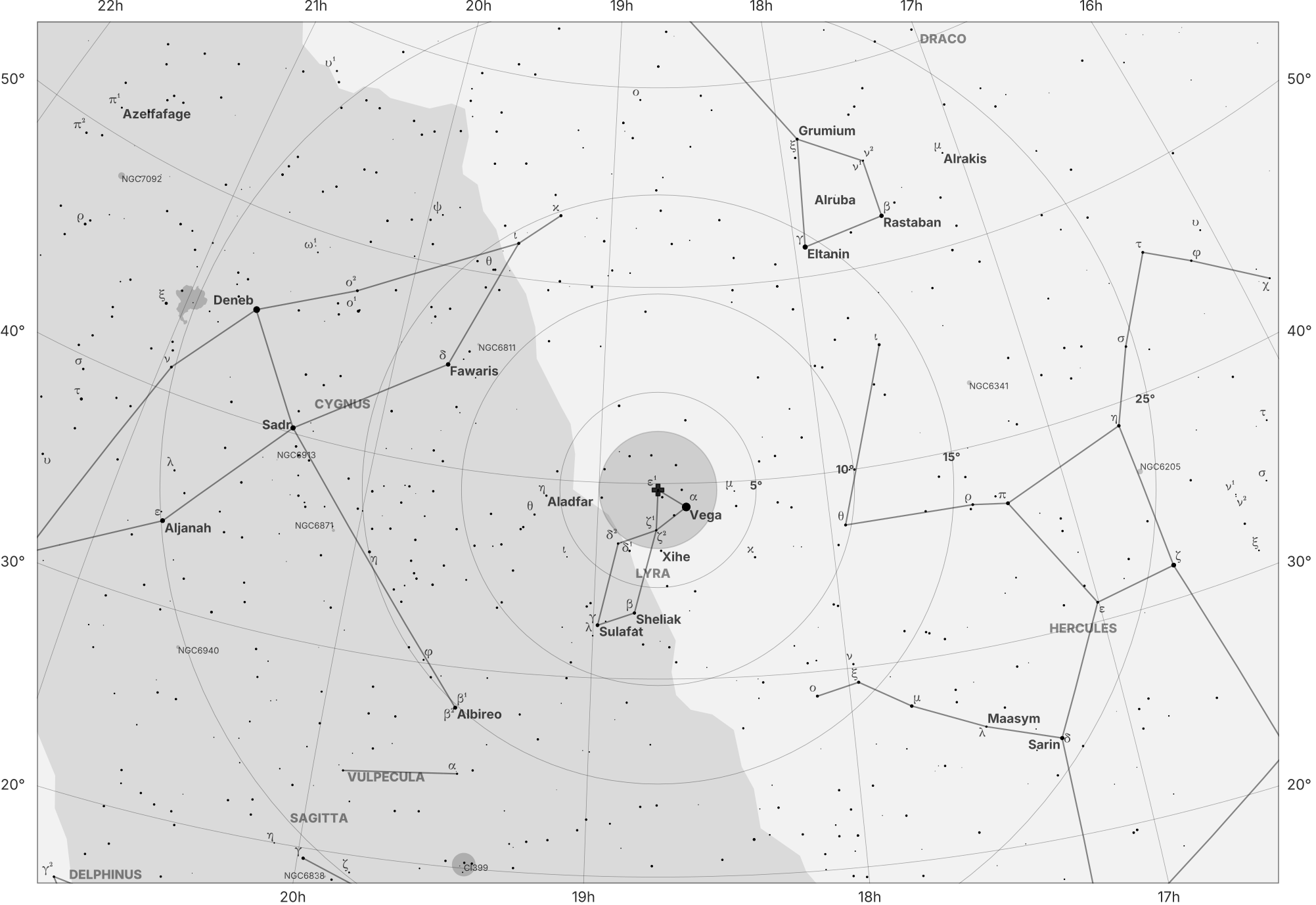
Finder map for Epsilon Lyrae
A quintessential showpiece object for amateur astronomers and public star parties. It is one of the most famous multiple star systems in the sky and is often used to introduce newcomers to the joys of telescopic observation. Best observed when high in the sky, where atmospheric seeing is most favorable for splitting the close pairs. Splitting the two close pairs, which have separations of ~2.6” and ~2.3”, requires excellent atmospheric seeing and good quality optics. The main challenge is atmospheric stability rather than aperture.
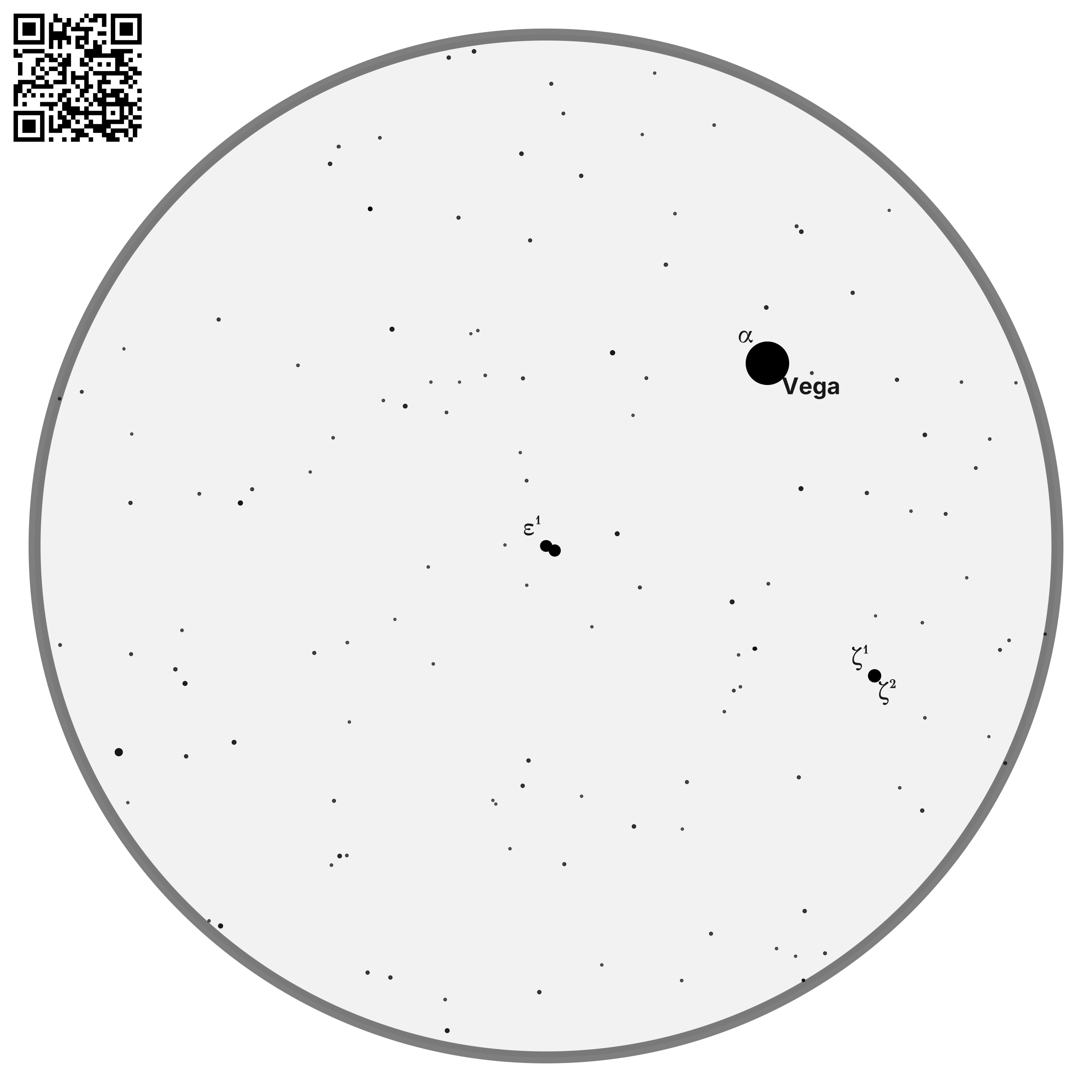
Finder scope & binocular view of Epsilon Lyrae
| Property | Value |
|---|---|
| Common names | The Double Double |
| Catalog names | eps01 Lyr |
| Type | Star |
| Subtype | Double Star |
| Coordinates | 18h 44m 20.35s, +39° 40’ 12.45” |
| Season | June - August |
| Best month | July |
| Beginner friendly | Marginal |
| Visual reward | Moderate |
| Filters required | None |
| LP tolerance | High |
| Minimum equipment | Medium telescope |
| Optimal equipment | Medium telescope |
| Magnitude | 4.7 |
| Size | - |
| Constellation | Lyra |
Observation Notes
Naked Eye
Under excellent seeing and very dark, transparent skies, keen-eyed observers may suspect a slight elongation, but true naked-eye resolution of the two main stars (ε¹ and ε²) is rare and should not be expected.
Binoculars
Cleanly resolves the pair into two stars of similar brightness separated by a small but obvious gap, making this a classic binocular double.
Small Telescope
With steady seeing, a 3–4 inch telescope at roughly 100–150× can split both ε¹ and ε² into their own close pairs, revealing the famous “Double Double” configuration. Success depends strongly on atmospheric steadiness.
Medium Telescope
A 6–8 inch telescope provides an excellent view, with all four stars cleanly separated and dark space visible between each pair. The stars appear sharp and nearly colorless.
Large Telescope
Offers a very comfortable and aesthetically pleasing split at a wide range of magnifications. Slight differences in brightness between the components of each pair become more apparent, but no additional visual structure is revealed.