Sombrero Galaxy
4-8 inch Telescope • Galaxies Structural
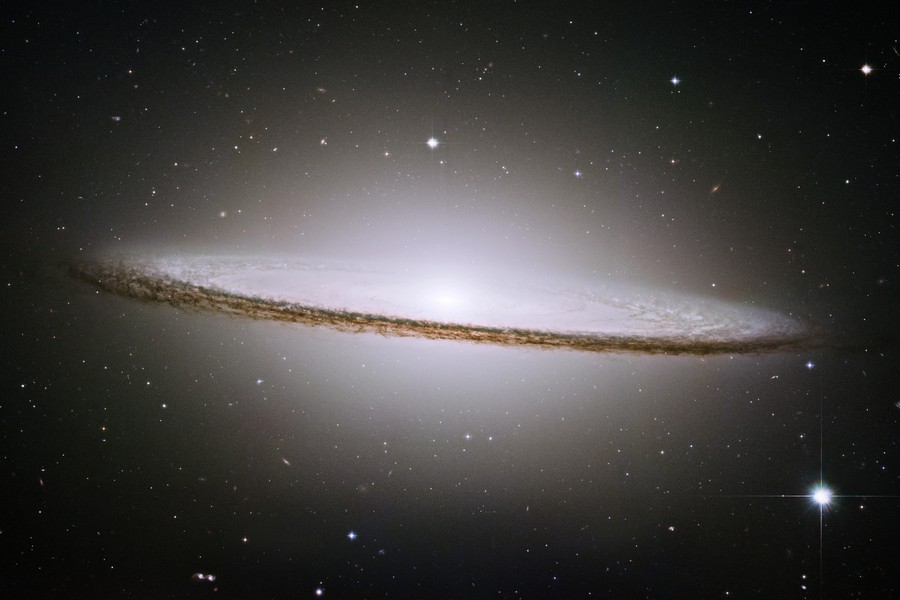
Image: NASA and The Hubble Heritage Team (STScI/AURA)
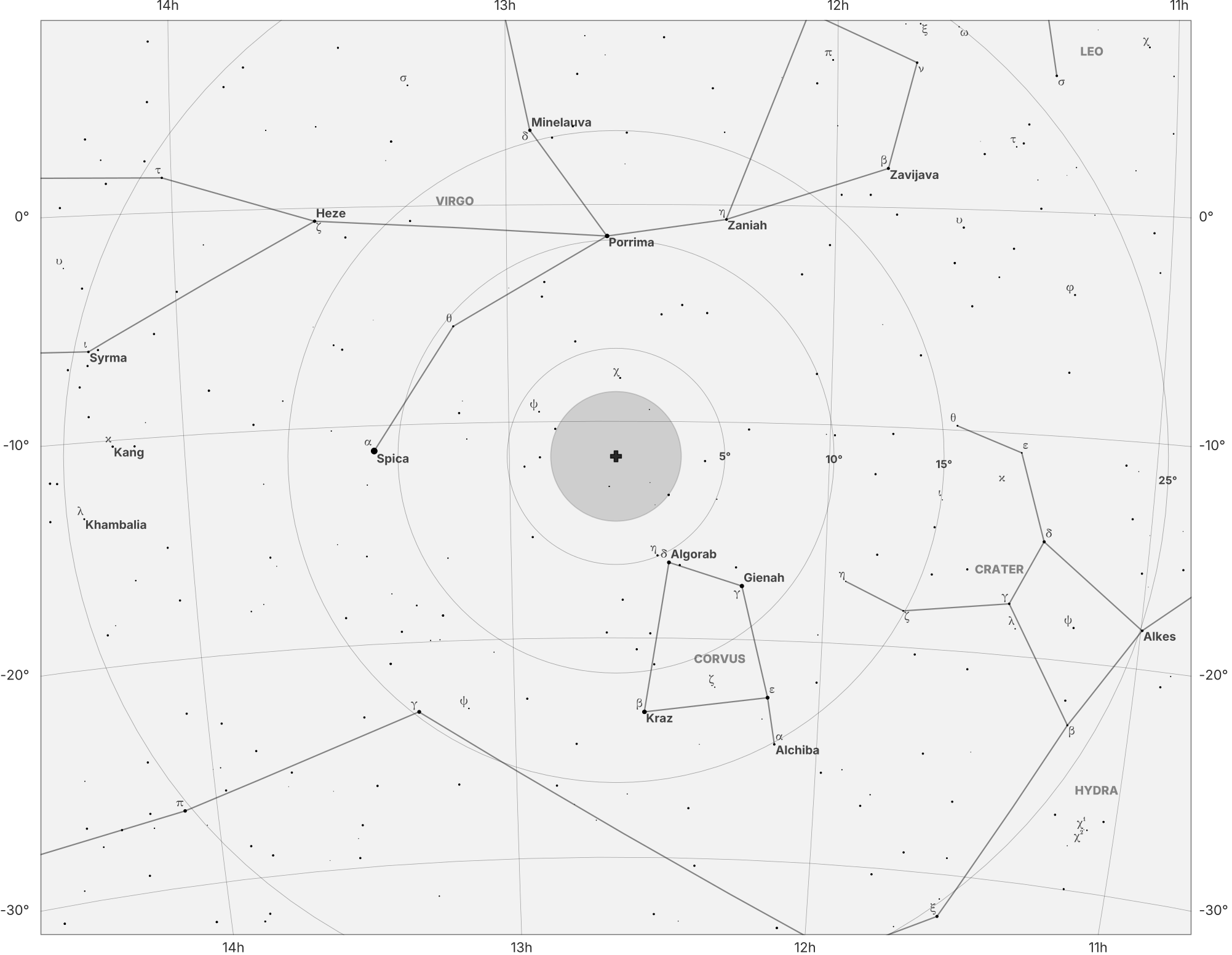
Finder map for Sombrero Galaxy
Its distinctive edge-on form has made NGC 4594 one of the most famous galaxies in popular astronomy, widely recognized through images and frequently featured in astronomy media. Best observed when well above the horizon to reduce atmospheric extinction and improve contrast. In 4–8 inch telescopes, the galaxy appears as a bright, elongated spindle with a prominent central bulge. Under dark skies and steady conditions, the dark dust lane may be suspected as a subtle asymmetry rather than clearly resolved.
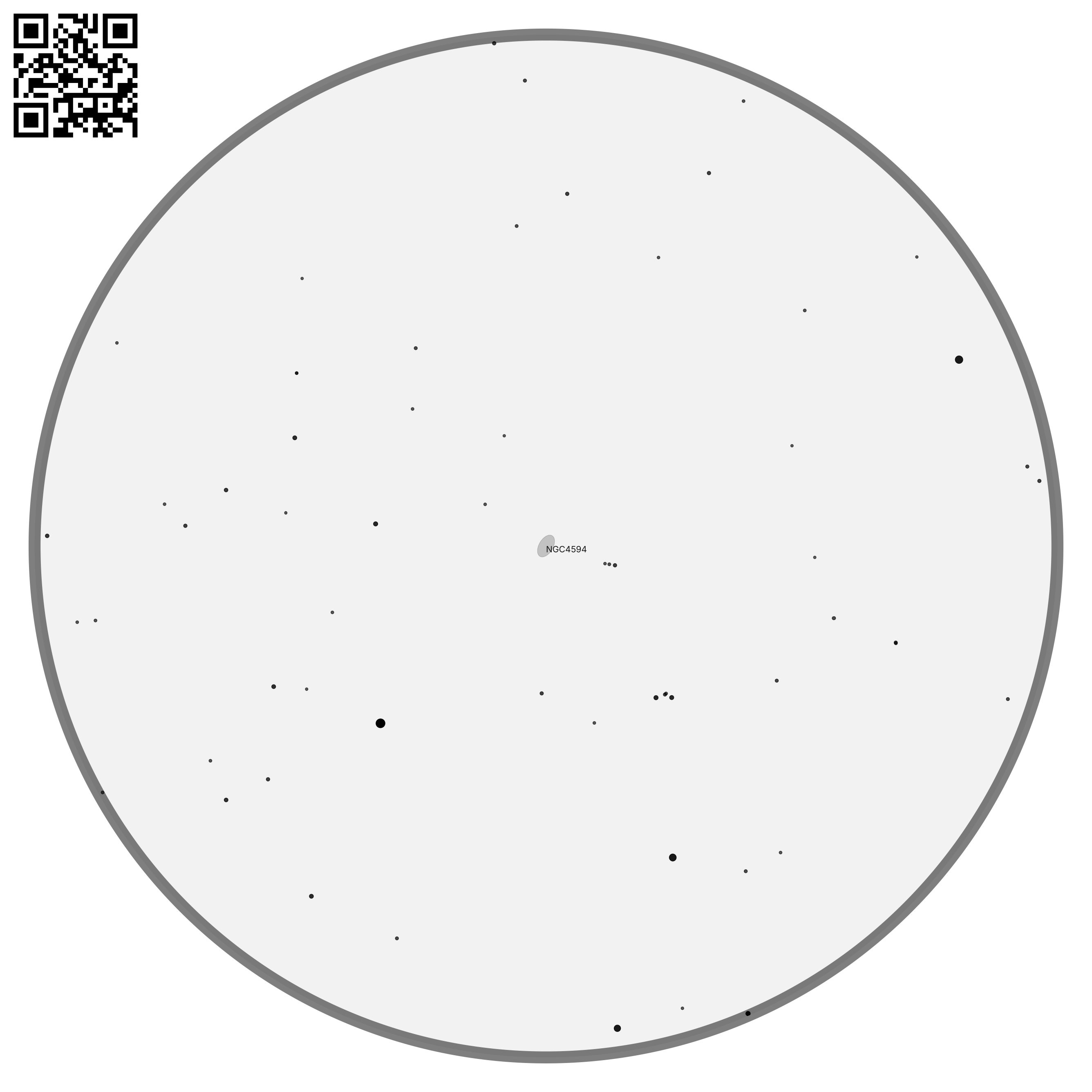
Finder scope & binocular view of Sombrero Galaxy
| Property | Value |
|---|---|
| Common names | Messier 104, M104 |
| Catalog names | M 104, NGC 4594, PGC 42407 |
| Type | Active Galactic Nucleus |
| Subtype | LINER Galaxy |
| Coordinates | 12h 39m 59.43s, -11° 37’ 23.00” |
| Season | March - May |
| Best month | April |
| Beginner friendly | Yes |
| Visual reward | High |
| Filters required | None |
| LP tolerance | High |
| Minimum equipment | Small telescope |
| Optimal equipment | Medium telescope |
| Magnitude | 8.0 |
| Size | 8.71 arcminutes x 3.54 arcminutes |
| Constellation | Virgo |
Observation Notes
Naked Eye
Not visible.
Binoculars
Under exceptionally dark, transparent skies, large binoculars (around 15×70 or larger) may barely suggest a very small, faint, non-stellar glow with a slightly brighter center; detection is difficult and not reliable.
Small Telescope
In 4–6 inch apertures, appears as a small, elongated oval smudge with a strongly condensed central bulge. The overall shape is clear, but the dust lane is not visible.
Medium Telescope
With 8–12 inches under dark skies, the elongated “sombrero” profile becomes apparent. Using averted vision, experienced observers may glimpse the dust lane as a very thin, low-contrast line crossing the bright bulge; the view is subtle and seeing-dependent.
Large Telescope
In apertures of roughly 14 inches and larger, the dust lane becomes a clear and defining feature dividing the bright central bulge. The nucleus appears strongly condensed rather than stellar, and the extended halo can be traced outward with averted vision; fine detail remains limited to contrast differences rather than sharp structure.