M51 (Whirlpool Galaxy)
4-8 inch Telescope • Galaxies Structural
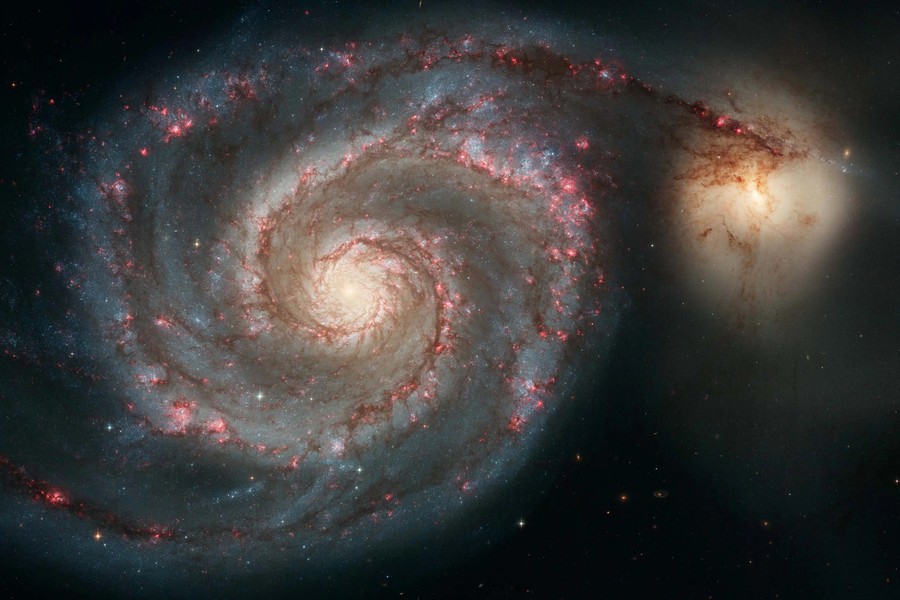
Image: NASA, ESA, S. Beckwith (STScI) and the Hubble Heritage Team (STScI/AURA)
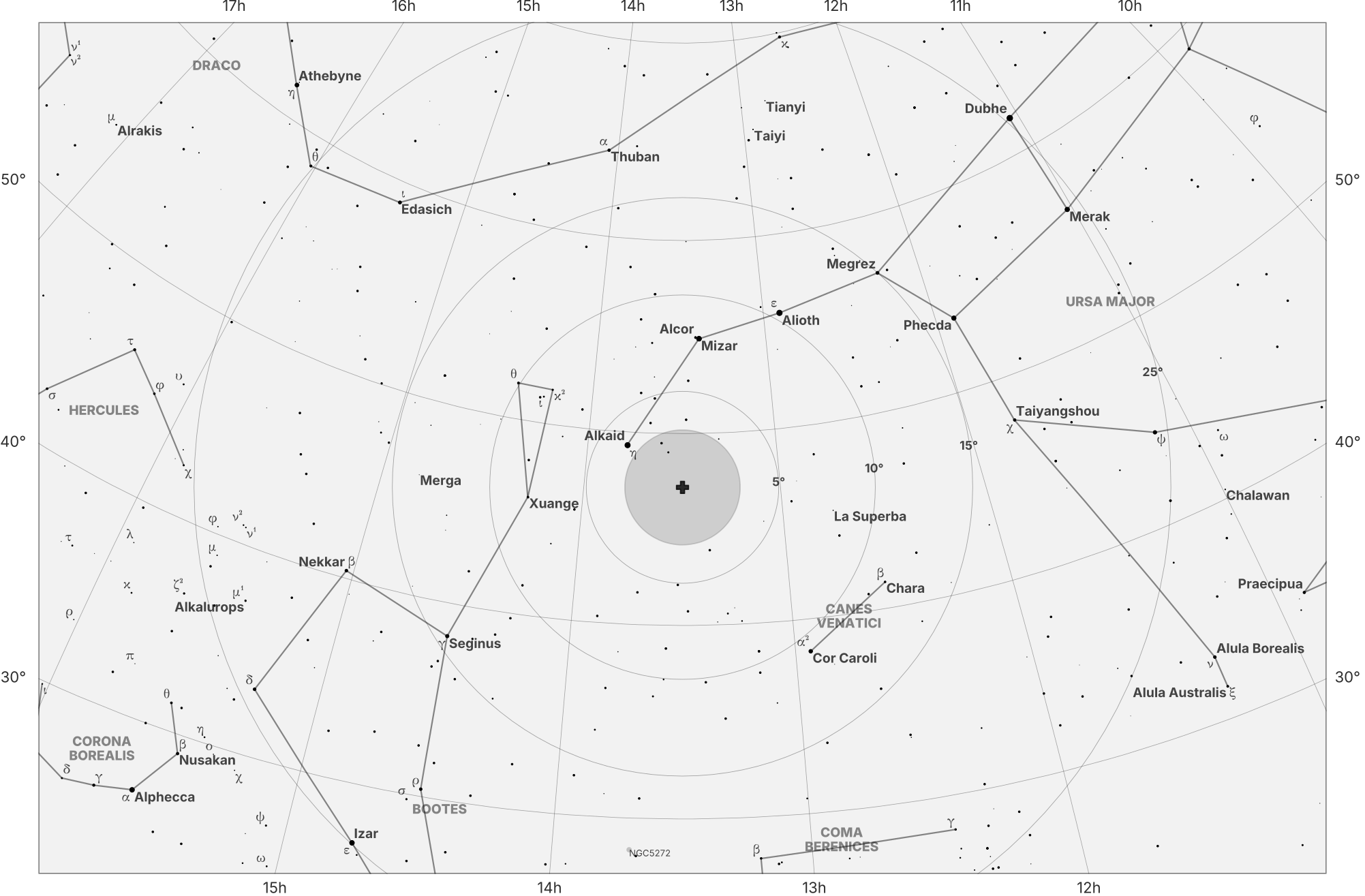
Finder map for M51 (Whirlpool Galaxy)
M51 is one of the most famous and widely recognized galaxies in the sky. Its iconic, face-on spiral appearance makes it a frequent subject for amateur and professional astrophotography and a textbook example of a spiral galaxy. High in the sky for Northern Hemisphere observers for best views. Remains at a very low altitude for most Southern Hemisphere locations, making it a difficult target. Detecting the galaxy’s spiral structure is the primary visual challenge, requiring dark skies and careful use of averted vision. The faint tidal bridge connecting to NGC 5195, prominent in images, lies beyond the visual reach of 4–8 inch telescopes.
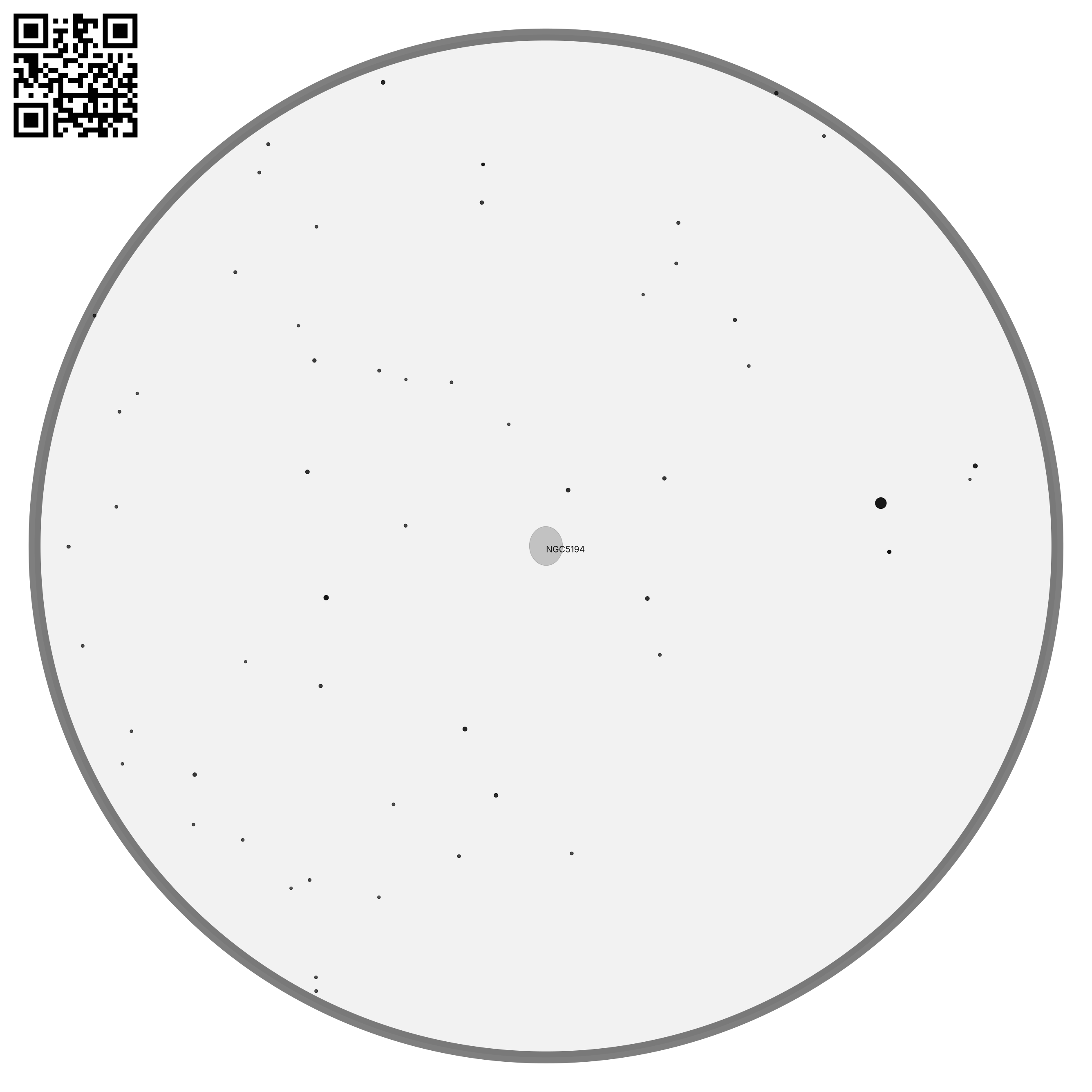
Finder scope & binocular view of M51 (Whirlpool Galaxy)
| Property | Value |
|---|---|
| Common names | Whirlpool Galaxy, Lord Rosse’s Galaxy, Question Mark Galaxy |
| Catalog names | M 51, NGC 5194, PGC 47404, UGC 8493, Arp 85, … |
| Type | Seyfert Galaxy |
| Subtype | Seyfert 2 Galaxy |
| Coordinates | 13h 29m 52.70s, +47° 11’ 42.93” |
| Season | March - May |
| Best month | Mid-April |
| Beginner friendly | Marginal |
| Visual reward | Moderate |
| Filters required | None |
| LP tolerance | Medium |
| Minimum equipment | Small telescope |
| Optimal equipment | Large telescope |
| Magnitude | 8.4 |
| Size | 11.22 arcminutes x 6.92 arcminutes |
| Constellation | Canes Venatici |
Observation Notes
Naked Eye
Not visible.
Binoculars
Under very dark, transparent skies, it can be detected with 10×50 or larger binoculars as a small, faint, diffuse patch; no structure is visible and the two galaxies are not separable.
Small Telescope
In 4–6 inch apertures, appears as a round to slightly oval haze with a modestly brighter central region. The companion galaxy, NGC 5195, is visible as a separate, smaller glow adjacent to the main galaxy.
Medium Telescope
With 8–12 inches under dark skies, the galaxy brightens considerably, and the spiral nature may be suggested as uneven light distribution and curved extensions with averted vision. The arms remain low contrast and impressionistic rather than clearly traced.
Large Telescope
In apertures of roughly 14 inches and larger, the spiral arms become evident as broad, curving features with dark dust lanes providing contrast. Bright star-forming regions appear as subtle condensations rather than discrete knots, and the tidal interaction with NGC 5195 may be suspected as a faint extension under excellent conditions.