Triangulum Galaxy
Binoculars • Galaxies
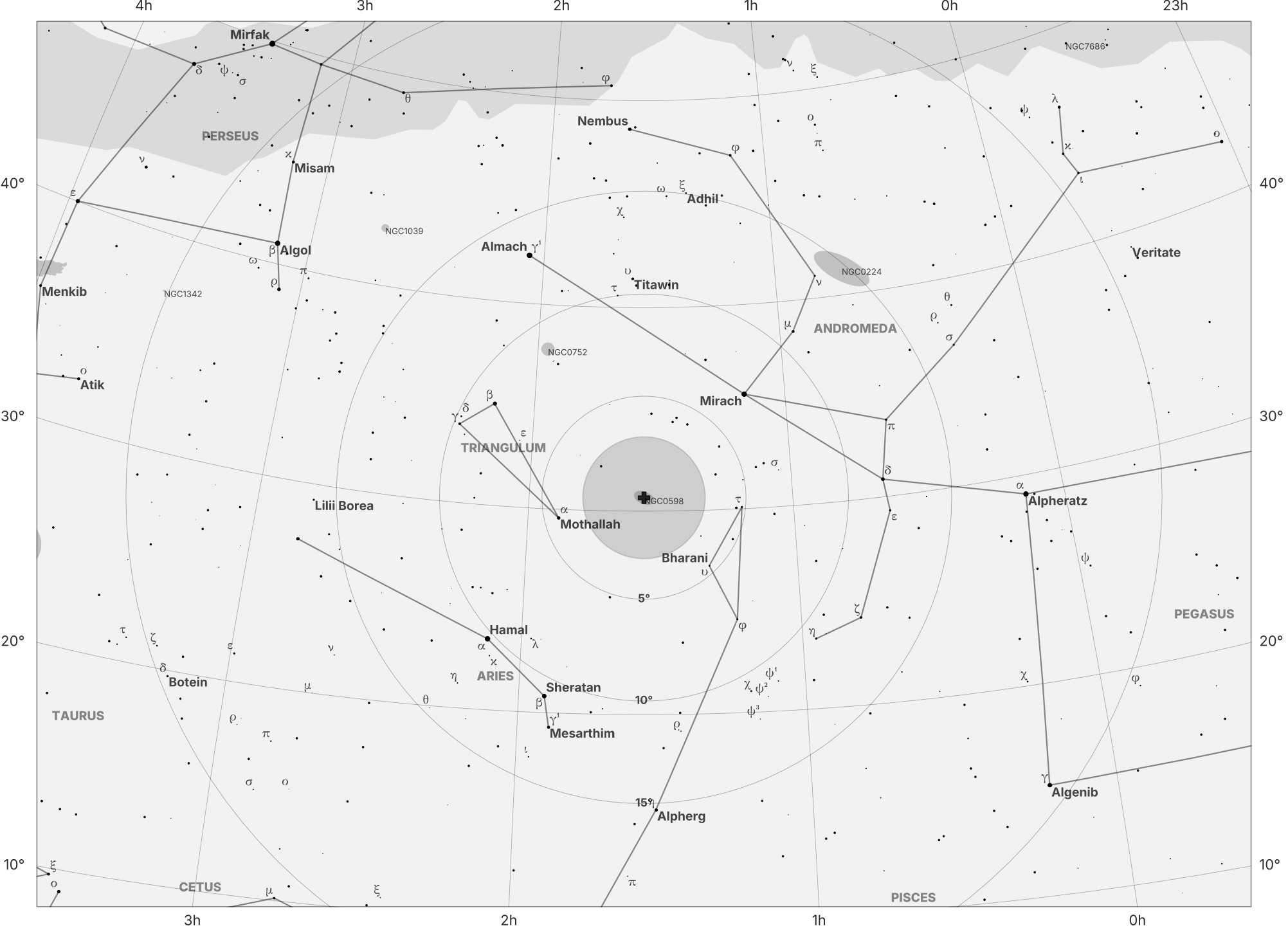
Finder map for Triangulum Galaxy
Edwin Hubble’s discovery of Cepheid variable stars in the Triangulum Galaxy in the mid-1920s helped confirm and extend the realization that spiral nebulae are separate galaxies beyond the Milky Way, refining humanity’s understanding of the true scale of the universe. Today, it remains a prized but challenging target for amateur observers. Requires high altitude for best viewing due to its very low surface brightness, which is easily obscured by atmospheric extinction. The extremely low surface brightness makes detecting the full extent of the galaxy and its spiral arms a significant visual challenge, requiring pristine, dark (Bortle 1-3) skies.
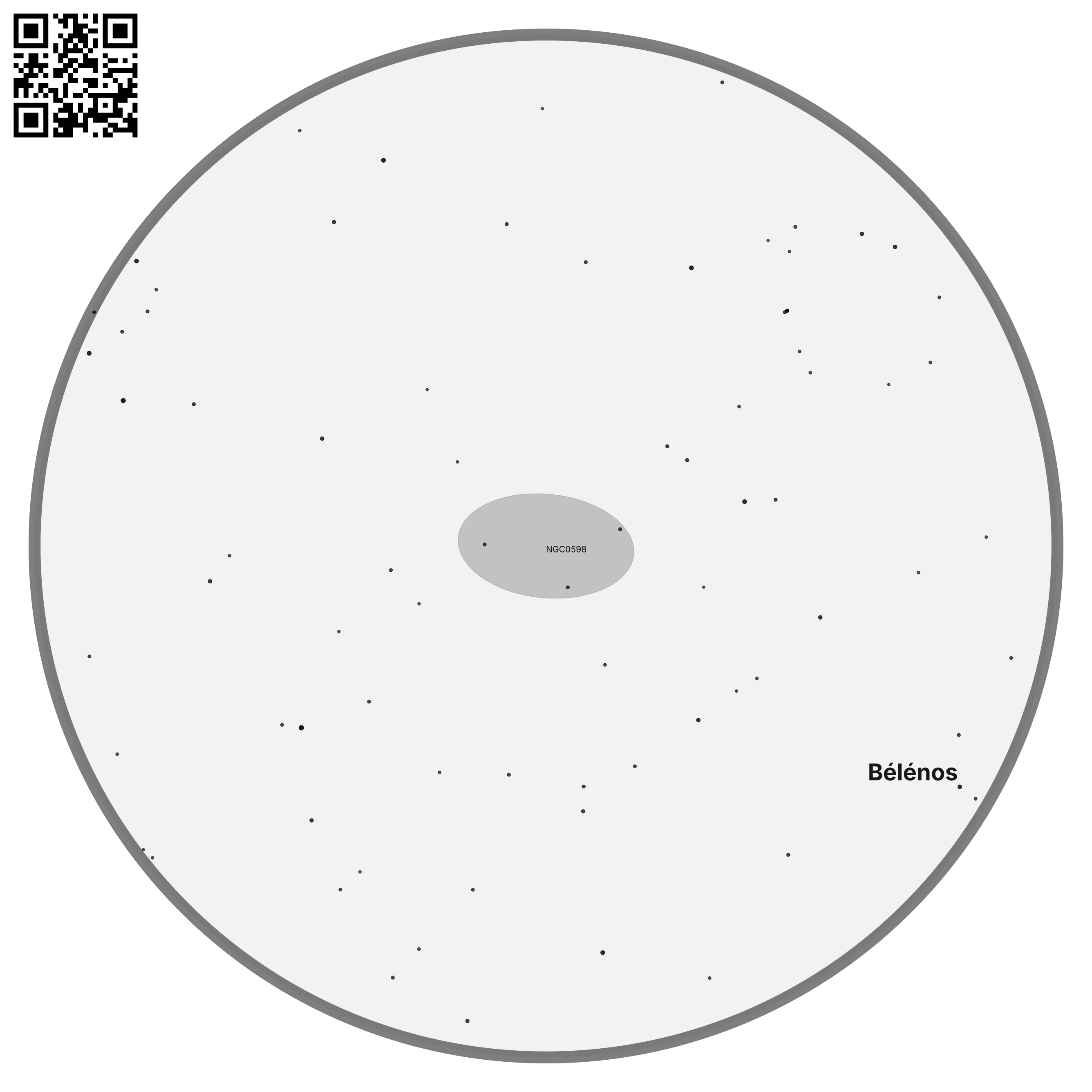
Finder scope & binocular view of Triangulum Galaxy
| Property | Value |
|---|---|
| Common names | M33, Pinwheel Galaxy |
| Catalog names | M 33, NGC 598, PGC 5818, UGC 1117 |
| Type | Galaxy |
| Subtype | Galaxy in Group |
| Coordinates | 1h 33m 50.90s, +30° 39’ 36.63” |
| Season | September - November |
| Best month | Mid-October |
| Beginner friendly | Marginal |
| Visual reward | Moderate |
| Filters required | None |
| LP tolerance | Low |
| Minimum equipment | Binoculars |
| Optimal equipment | Binoculars |
| Magnitude | 5.7 |
| Size | 70.8 arcminutes x 41.7 arcminutes |
| Constellation | Triangulum |
Observation Notes
Naked Eye
Only marginally detectable under exceptionally dark and transparent skies (Bortle 1–2). It may appear as a very faint, diffuse patch using averted vision, and many observers do not see it at all without optical aid.
Binoculars
Often the best instrument for appreciating its full extent. Appears as a large, oval, ghostly glow with a slightly brighter central region, emphasizing its unusually large angular size.
Small Telescope
Shows a brighter core surrounded by a broad, low-contrast haze. Very low magnification is essential. Under dark skies, the giant H II region NGC 604 may be glimpsed with difficulty as a tiny, non-stellar knot on the northeastern side of the galaxy.
Medium Telescope
From dark sites, very subtle brightness enhancements hint at the galaxy’s spiral structure, though the arms remain indistinct. NGC 604 is clearly non-stellar, and a few additional star-forming regions or associations may be suspected.
Large Telescope
Improves contrast and reveals a mottled texture across the disk, with several bright H II regions such as NGC 604 and NGC 595 standing out. The spiral pattern is suggested through uneven brightness rather than sharply defined arms. The galaxy’s globular clusters are extremely faint and are not identifiable visually.