M81
Binoculars • Galaxies
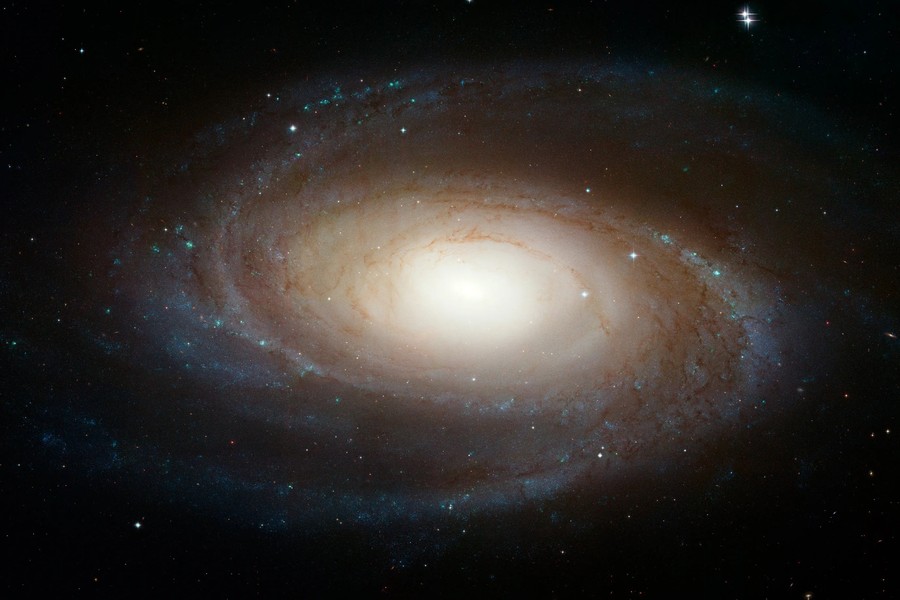
Image: NASA, ESA and the Hubble Heritage Team (STScI/AURA)
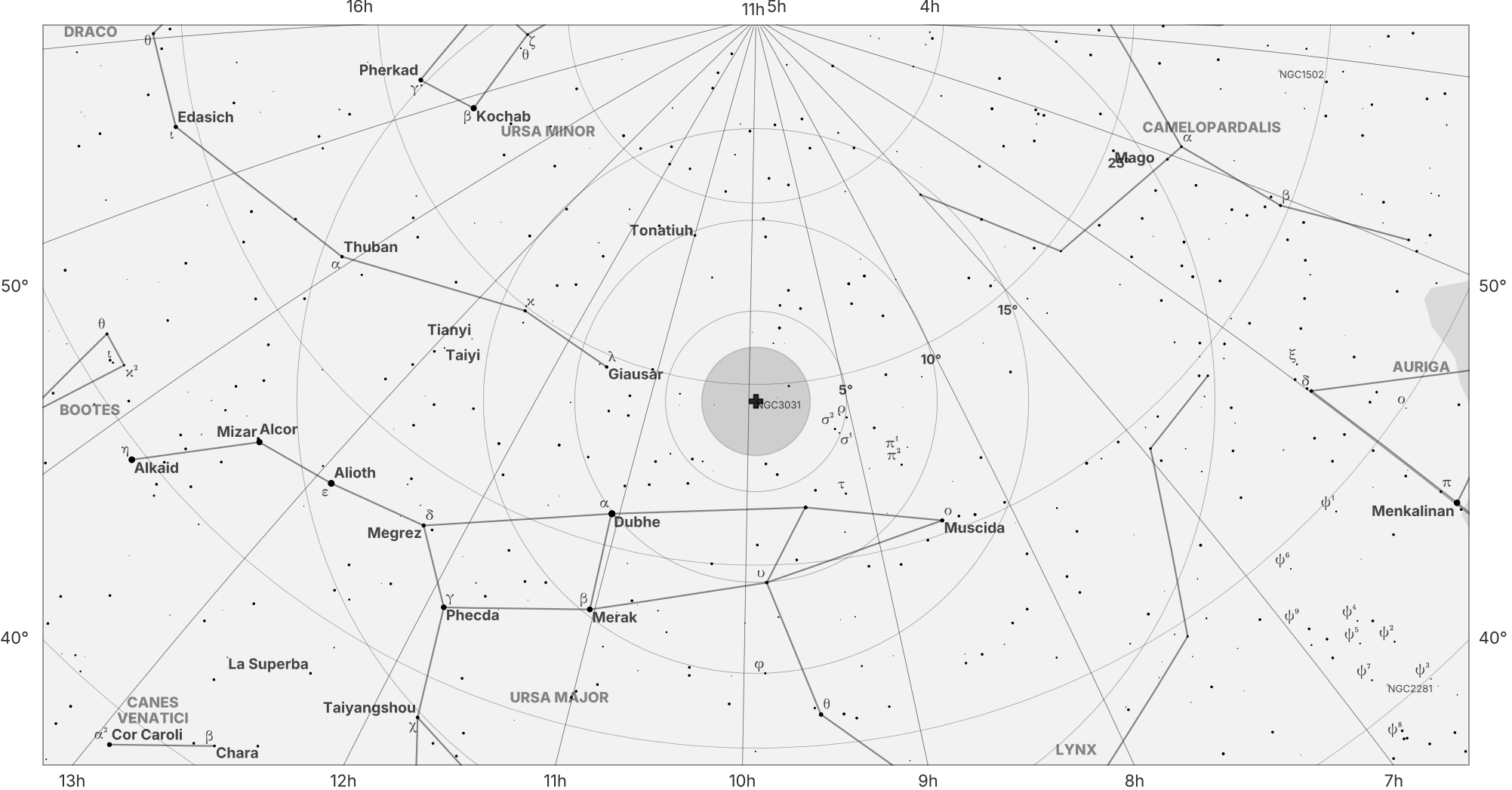
Finder map for M81
One of the most famous and frequently photographed galaxies in the night sky. It serves as a canonical example of a ‘grand design’ spiral galaxy in countless textbooks and documentaries. Circumpolar for observers north of +21° latitude, making it visible year-round. Difficult to impossible to see from most of the Southern Hemisphere. Detecting the galaxy’s low-surface-brightness outer disk beyond the bright core is challenging under all but dark skies. Finer details such as well-defined spiral arms and individual H II regions require larger apertures and remain beyond typical binocular views.
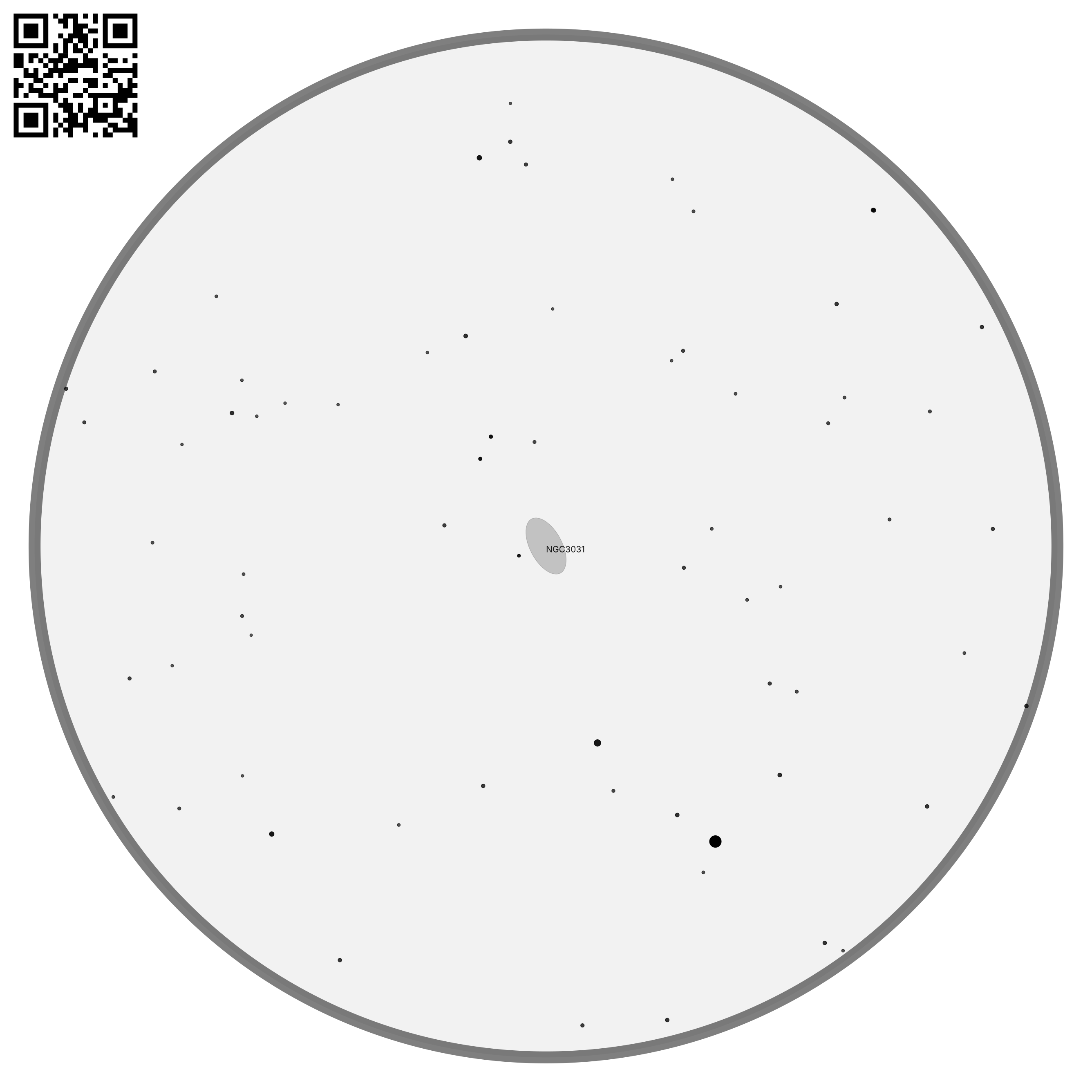
Finder scope & binocular view of M81
| Property | Value |
|---|---|
| Common names | Bode’s Galaxy, Bode’s Nebula |
| Catalog names | M 81, NGC 3031, PGC 28630, UGC 5318 |
| Type | Seyfert Galaxy |
| Subtype | Seyfert 2 Galaxy |
| Coordinates | 9h 55m 33.17s, +69° 03’ 55.06” |
| Season | January - March |
| Best month | Mid-February |
| Beginner friendly | Yes |
| Visual reward | Moderate |
| Filters required | None |
| LP tolerance | Medium |
| Minimum equipment | Binoculars |
| Optimal equipment | Small telescope |
| Magnitude | 6.9 |
| Size | 26.92 arcminutes x 14.13 arcminutes |
| Constellation | Ursa Major |
Observation Notes
Naked Eye
Not visible to the unaided eye. Optical aid is required even under the darkest skies.
Binoculars
Easily visible as a small, bright, oval patch with a concentrated central region. The nearby edge-on galaxy M82 is usually visible in the same binocular field, forming a classic galaxy pair.
Small Telescope
The bright galactic core is immediately apparent, surrounded by an elongated halo. The contrast between M81 and the more irregular M82 makes this pairing especially striking.
Medium Telescope
Under dark skies, subtle irregularities and faint extensions in the outer regions hint at spiral structure, though the arms remain delicate and low-contrast. The galaxy’s apparent size increases noticeably compared to smaller instruments.
Large Telescope
Improves contrast and reveals a mottled texture across the disk, with uneven brightness suggesting spiral structure rather than sharply defined arms. A few bright H II regions may be suspected as extremely faint knots with careful averted vision under excellent conditions.