Messier 106
4-8 inch Telescope • Galaxies Structural
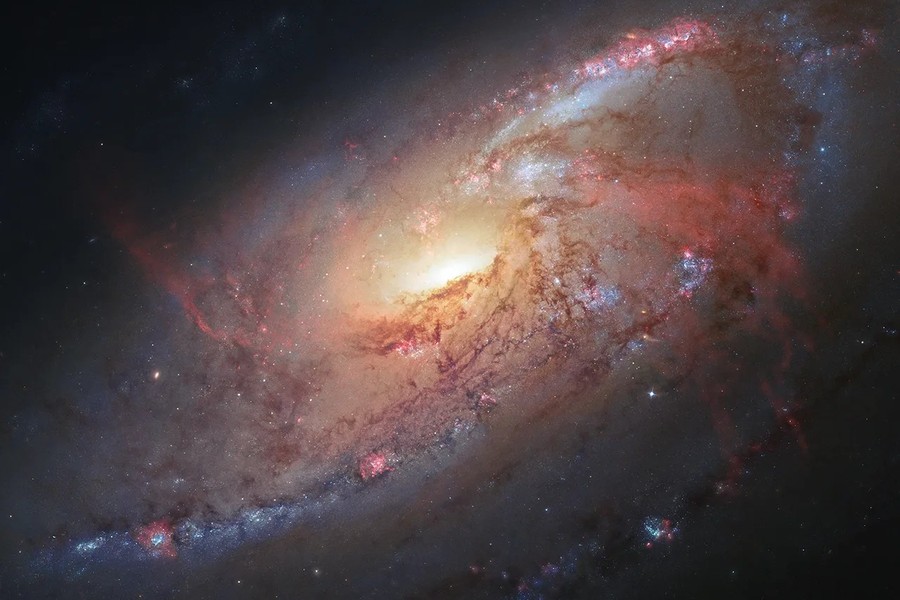
Image: NASA, ESA, the Hubble Heritage Team (STScI/AURA) and R. Gendler (for the Hubble Heritage Team)
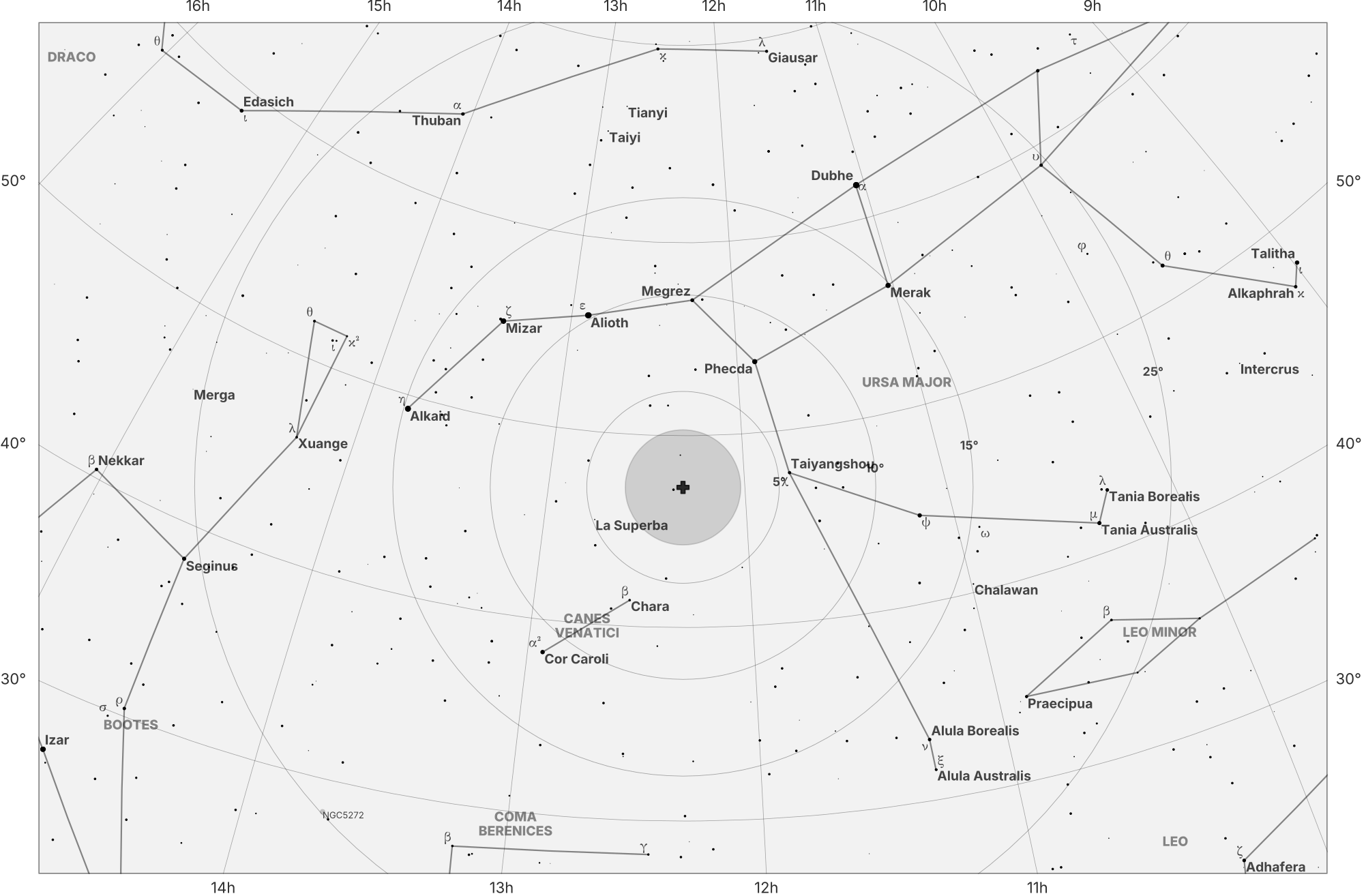
Finder map for Messier 106
Well placed for Northern Hemisphere observers, reaching high altitude from mid-northern latitudes. It remains low and difficult from much of the Southern Hemisphere. In 4–8 inch telescopes, NGC 4258 appears as a bright, elongated galaxy with an extended halo and subtle brightness irregularities. Clearly resolving spiral structure generally lies beyond this aperture class, while the galaxy’s anomalous arms are detectable only through imaging.
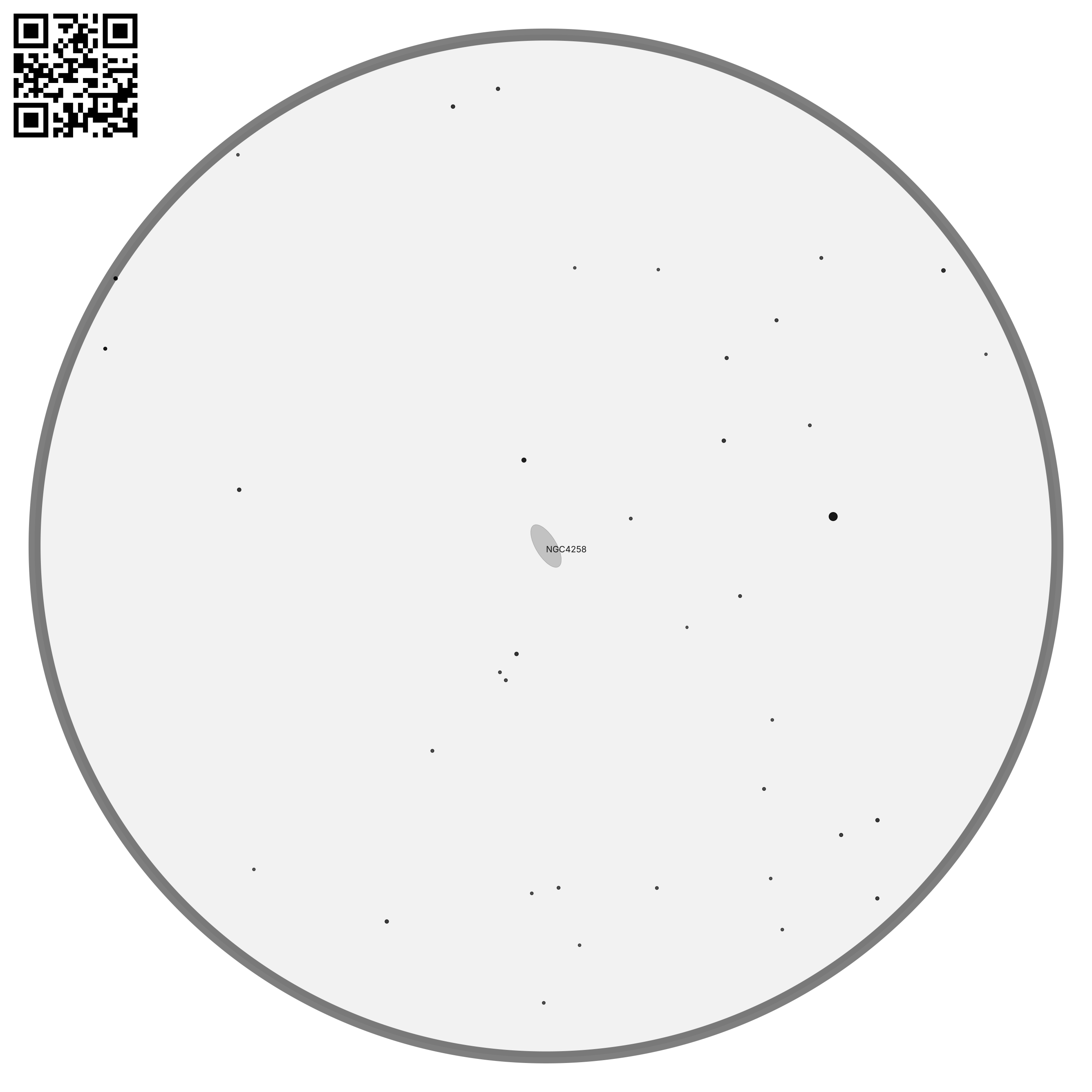
Finder scope & binocular view of Messier 106
| Property | Value |
|---|---|
| Common names | M106 |
| Catalog names | M 106, NGC 4258, PGC 39600, UGC 7353, VV 448 |
| Type | Seyfert Galaxy |
| Subtype | Seyfert 2 Galaxy |
| Coordinates | 12h 18m 57.62s, +47° 18’ 13.39” |
| Season | March - May |
| Best month | April |
| Beginner friendly | Marginal |
| Visual reward | Moderate |
| Filters required | None |
| LP tolerance | High |
| Minimum equipment | Small telescope |
| Optimal equipment | Medium telescope |
| Magnitude | 8.4 |
| Size | 18.62 arcminutes x 7.24 arcminutes |
| Constellation | Canes Venatici |
Observation Notes
Naked Eye
Not visible.
Binoculars
Generally not visible; under exceptional dark, transparent skies and with very large binoculars (around 15×70 or larger), it may be suspected as an extremely faint, diffuse, elongated glow, but detection is uncertain and not routine.
Small Telescope
In 4–6 inch apertures, appears as a moderately bright, elongated oval glow with a clearly condensed but non-stellar central region. The overall shape is evident, but no spiral structure or dust features are visible.
Medium Telescope
With 8–12 inches under dark skies, the bright core embedded in an elongated halo is well defined. Subtle unevenness or mottling along the disk may be suspected with averted vision, but spiral arms are not cleanly resolved.
Large Telescope
In apertures of roughly 14 inches and larger, the elongated disk is prominent. Under excellent conditions, experienced observers may perceive hints of spiral structure as gentle variations in surface brightness; dust features remain very low contrast and seeing-dependent.