NGC 2903
4-8 inch Telescope • Galaxies Structural
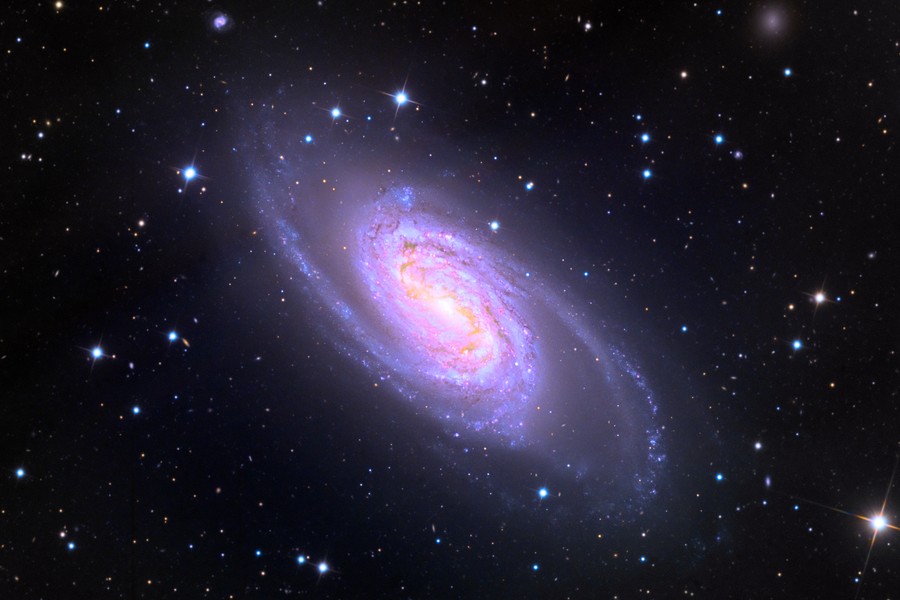
Image: Jschulman555
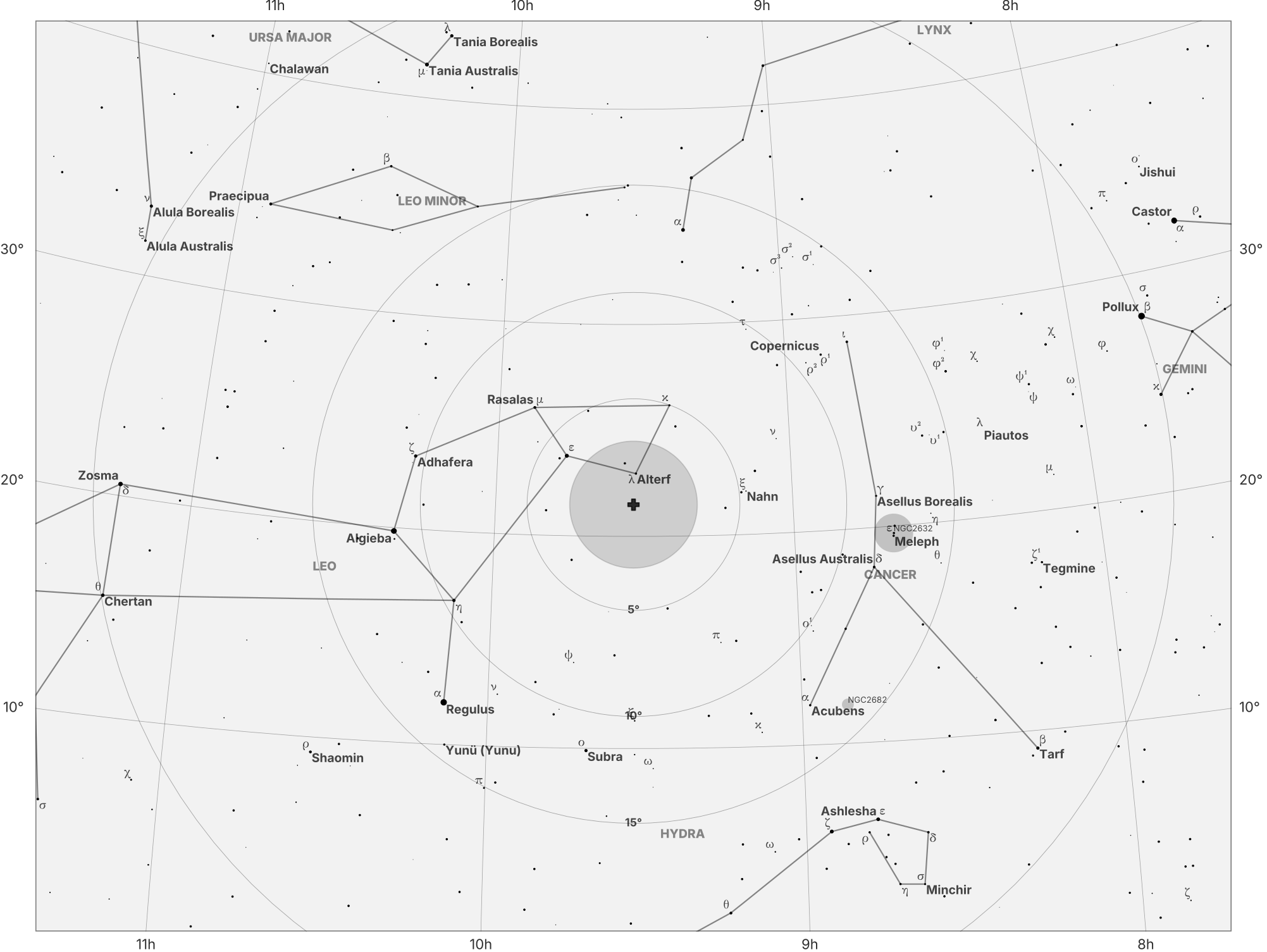
Finder map for NGC 2903
Widely regarded by amateur astronomers as one of the finest deep-sky objects not included in the Messier catalog. Often referred to as ‘the other Leo galaxy’ after the famous Leo Triplet. Best observed near culmination when it is high in the sky. Well placed for Northern Hemisphere observers in spring; it remains lower in altitude for Southern Hemisphere observers during their autumn. The challenge lies in detecting the galaxy’s elongated central bar and subtle brightness variations along the disk, which suggest spiral structure under dark skies. Resolving individual H II regions or tracing the faint outer extensions visible in images lies beyond the visual reach of 4–8 inch telescopes.
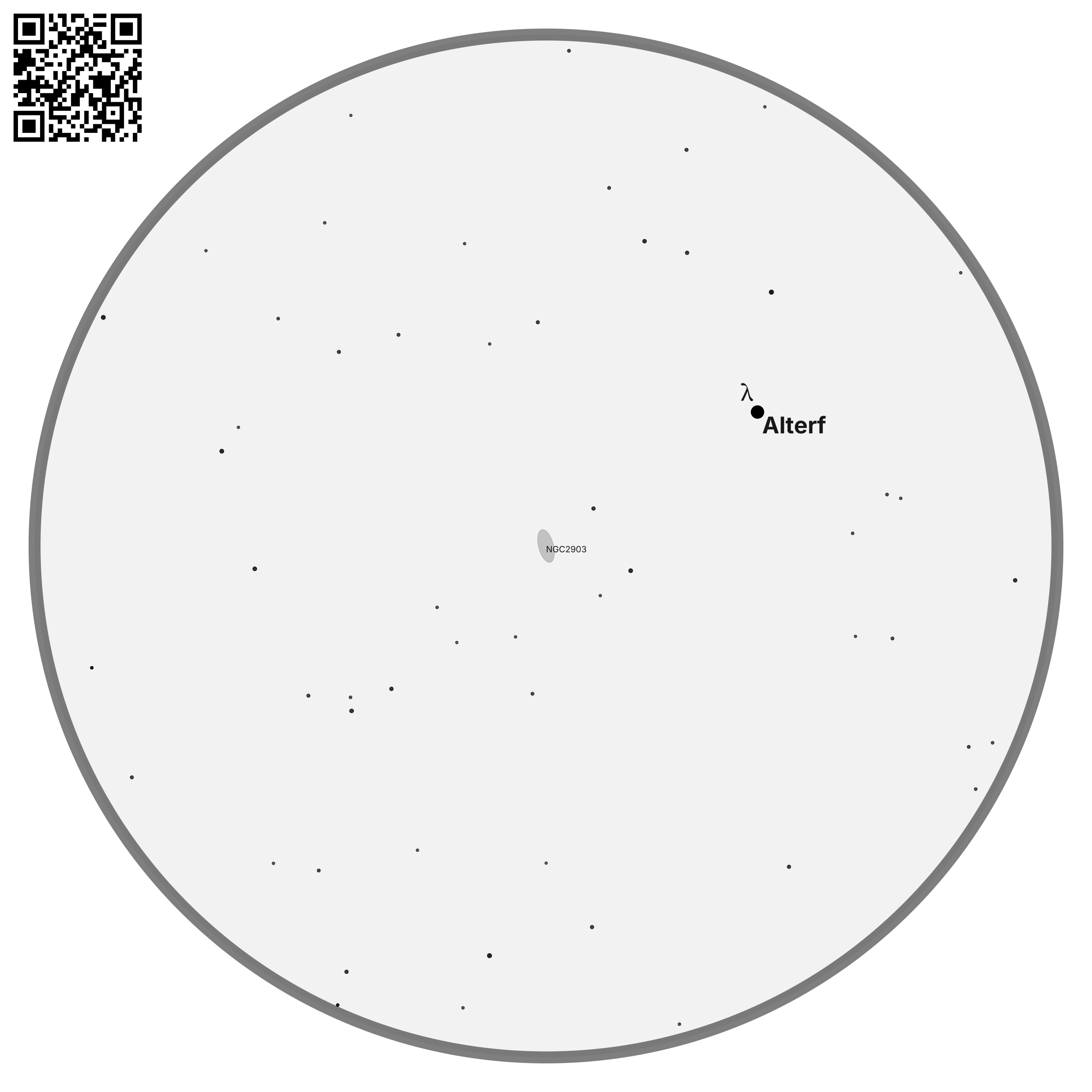
Finder scope & binocular view of NGC 2903
| Property | Value |
|---|---|
| Common names | - |
| Catalog names | NGC 2903, PGC 27077, UGC 5079 |
| Type | Galaxy |
| Subtype | Active Galactic Nucleus |
| Coordinates | 9h 32m 10.11s, +21° 30’ 02.99” |
| Season | January - March |
| Best month | Mid-February |
| Beginner friendly | Marginal |
| Visual reward | Moderate |
| Filters required | None |
| LP tolerance | Medium |
| Minimum equipment | Small telescope |
| Optimal equipment | Medium telescope |
| Magnitude | 9.0 |
| Size | 12.59 arcminutes x 6.03 arcminutes |
| Constellation | Leo |
Observation Notes
Naked Eye
Not visible.
Binoculars
Under exceptionally dark, transparent skies, it may be suspected as a very faint, small, diffuse patch in large binoculars, but detection is uncertain and not routine.
Small Telescope
In 4–6 inch apertures, appears as a distinct, elongated oval haze with a brighter, condensed but non-stellar central region. The elongation is readily apparent.
Medium Telescope
With 8–12 inches under dark skies, the central region brightens markedly, and uneven texture becomes noticeable across the disk. A subtle bar-like brightening and hints of surrounding spiral structure may be suspected with averted vision, but detail remains low contrast.
Large Telescope
In apertures of roughly 14 inches and larger, the galaxy shows pronounced mottling and broad, curving spiral features as variations in surface brightness. Star-forming regions appear only as gentle condensations, and the core remains strongly condensed rather than stellar; overall structure is contrast-based rather than sharply defined.