M94
4-8 inch Telescope • Galaxies Structural
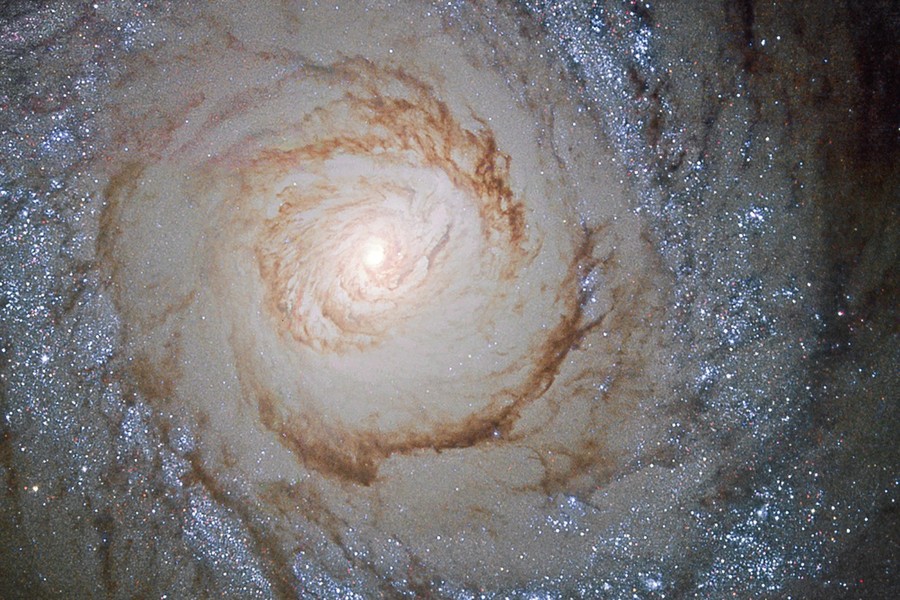
Image: ESA/Hubble & NASA
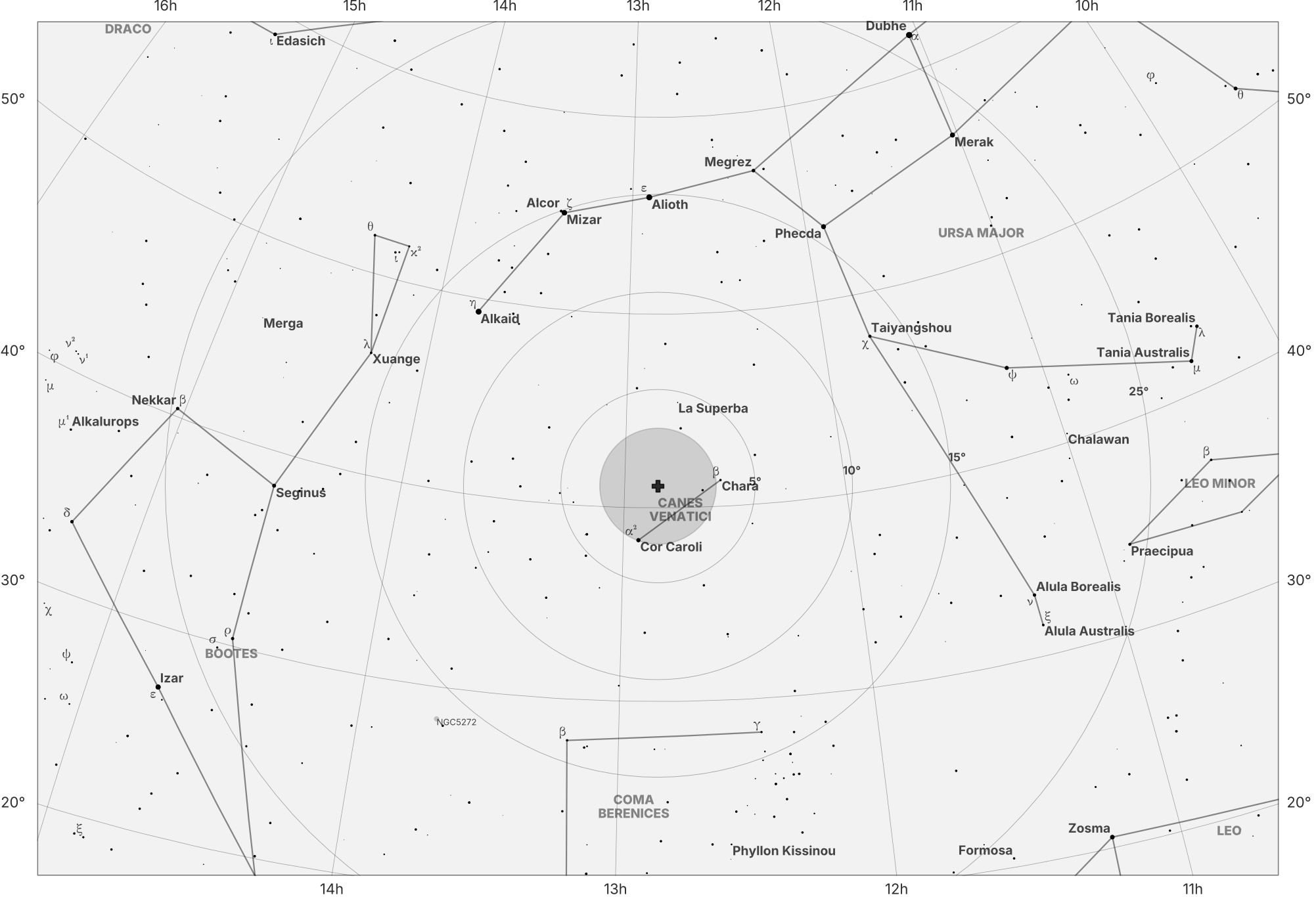
Finder map for M94
Best observed when well above the horizon, ideally above about 30°, to reduce atmospheric extinction and improve contrast. The primary visual challenge is distinguishing the bright, condensed core from the surrounding inner halo, which can give the impression of a ring under good conditions. The much fainter outer disk and outer ring seen in images lie beyond the visual reach of 4–8 inch telescopes.
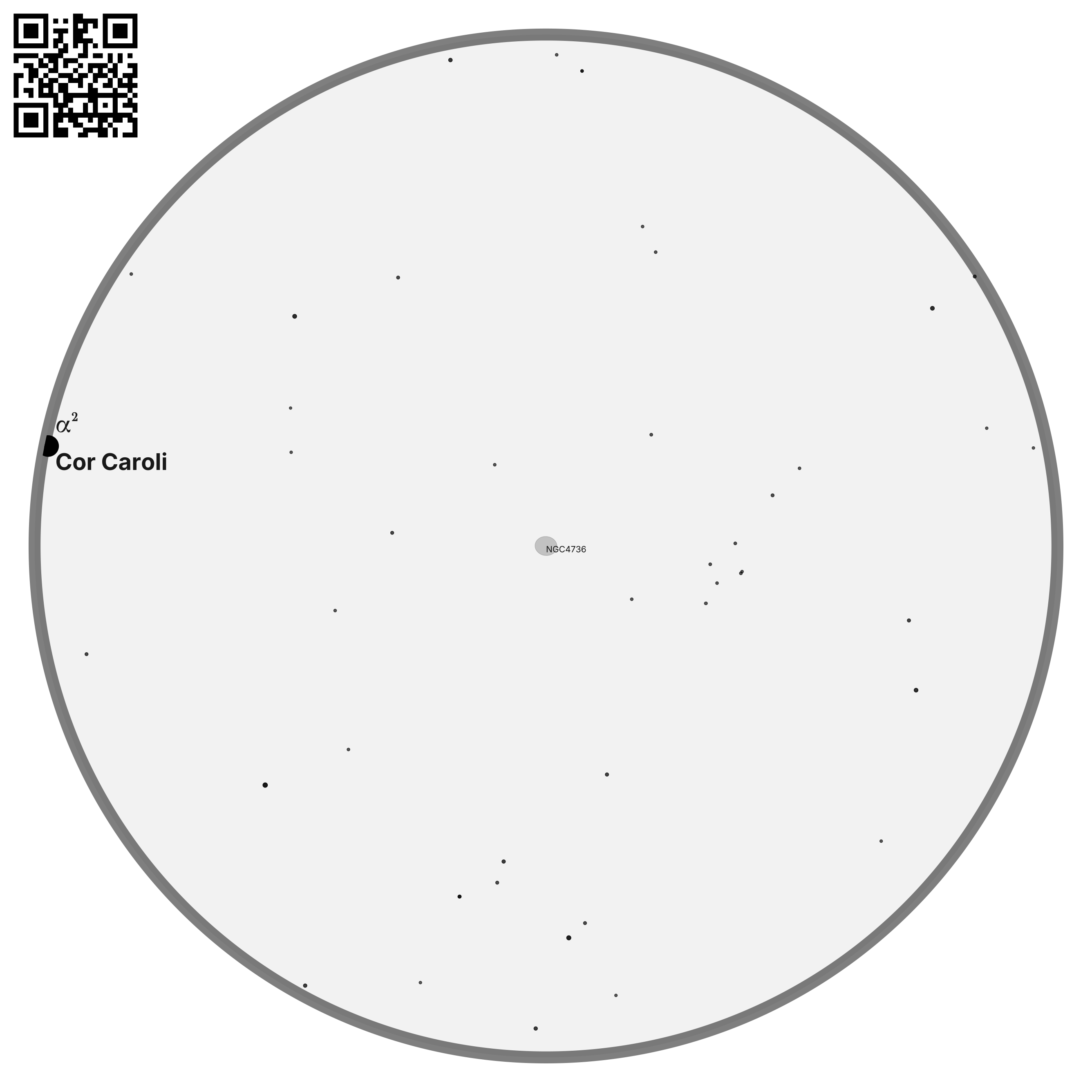
Finder scope & binocular view of M94
| Property | Value |
|---|---|
| Common names | Messier 94, Cat’s Eye Galaxy, Croc’s Eye Galaxy |
| Catalog names | M 94, NGC 4736, PGC 43495, UGC 7996 |
| Type | Active Galactic Nucleus |
| Subtype | Seyfert Galaxy |
| Coordinates | 12h 50m 53.07s, +41° 07’ 12.90” |
| Season | March - May |
| Best month | April |
| Beginner friendly | Marginal |
| Visual reward | Moderate |
| Filters required | None |
| LP tolerance | Medium |
| Minimum equipment | Small telescope |
| Optimal equipment | Medium telescope |
| Magnitude | 8.2 |
| Size | 11.22 arcminutes x 9.12 arcminutes |
| Constellation | Canes Venatici |
Observation Notes
Naked Eye
Not visible.
Binoculars
Under very dark, transparent skies, large binoculars (around 15×70 or larger) may show the galaxy as a very small, faint, diffuse glow; it can appear almost point-like at low power but remains non-stellar.
Small Telescope
In 4–6 inch apertures, appears as a bright, compact, non-stellar nucleus surrounded by a small, round halo of haze. The strong central concentration is immediately apparent.
Medium Telescope
With 8–12 inches under dark skies, the brilliant nucleus dominates the view, and the surrounding disk becomes more extended. A subtle brightening around the core may be suspected with averted vision, hinting at the inner ring without clearly resolving it.
Large Telescope
In apertures of roughly 14 inches and larger, the contrast between the bright nucleus and the surrounding inner ring becomes more apparent, and the main disk is easily traced as a soft glow. The faint outer ring remains an extremely challenging visual target, requiring excellent transparency, very dark skies, and careful use of averted vision.