Andromeda Galaxy
Binoculars • Galaxies
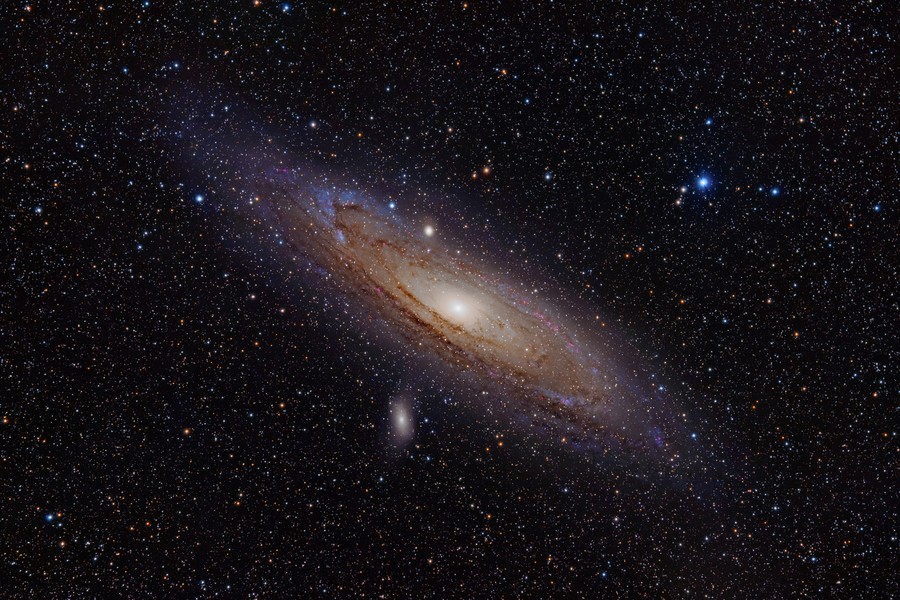
Image: Adam Evans
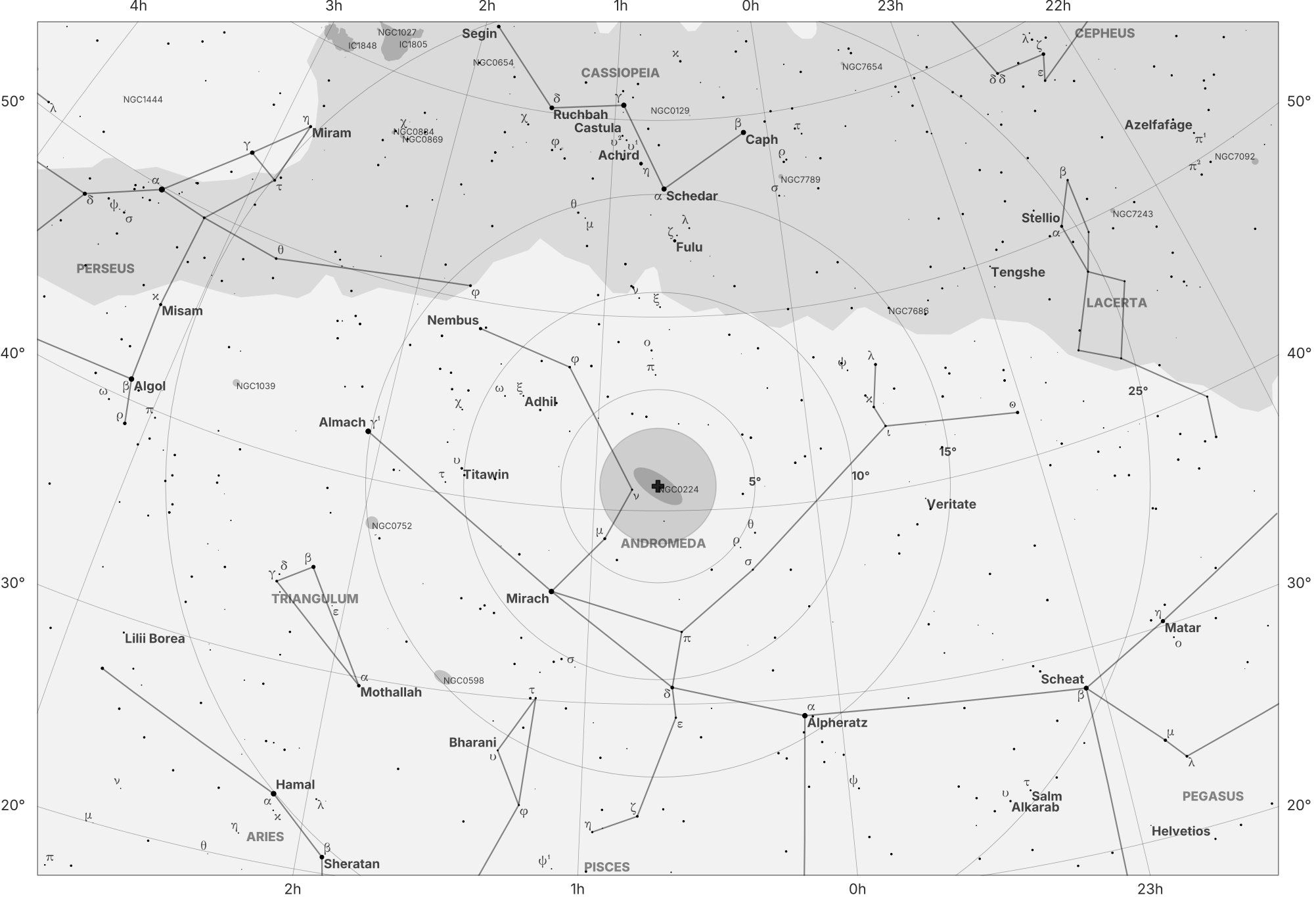
Finder map for Andromeda Galaxy
A key object in the 1920 Great Debate between Shapley and Curtis. Its discovery as a separate galaxy fundamentally altered our perception of the universe’s scale and our place within it. Best observed when high in the sky. Difficult to impossible for far southern latitudes. Detecting the galaxy’s vast angular extent beyond its bright core and noticing asymmetries and dust features along the disk under dark skies. Appreciating the full scale and structure of the galaxy visually is challenging, with finer details such as star clouds, globular clusters, and H II regions remaining the domain of larger telescopes and imaging.
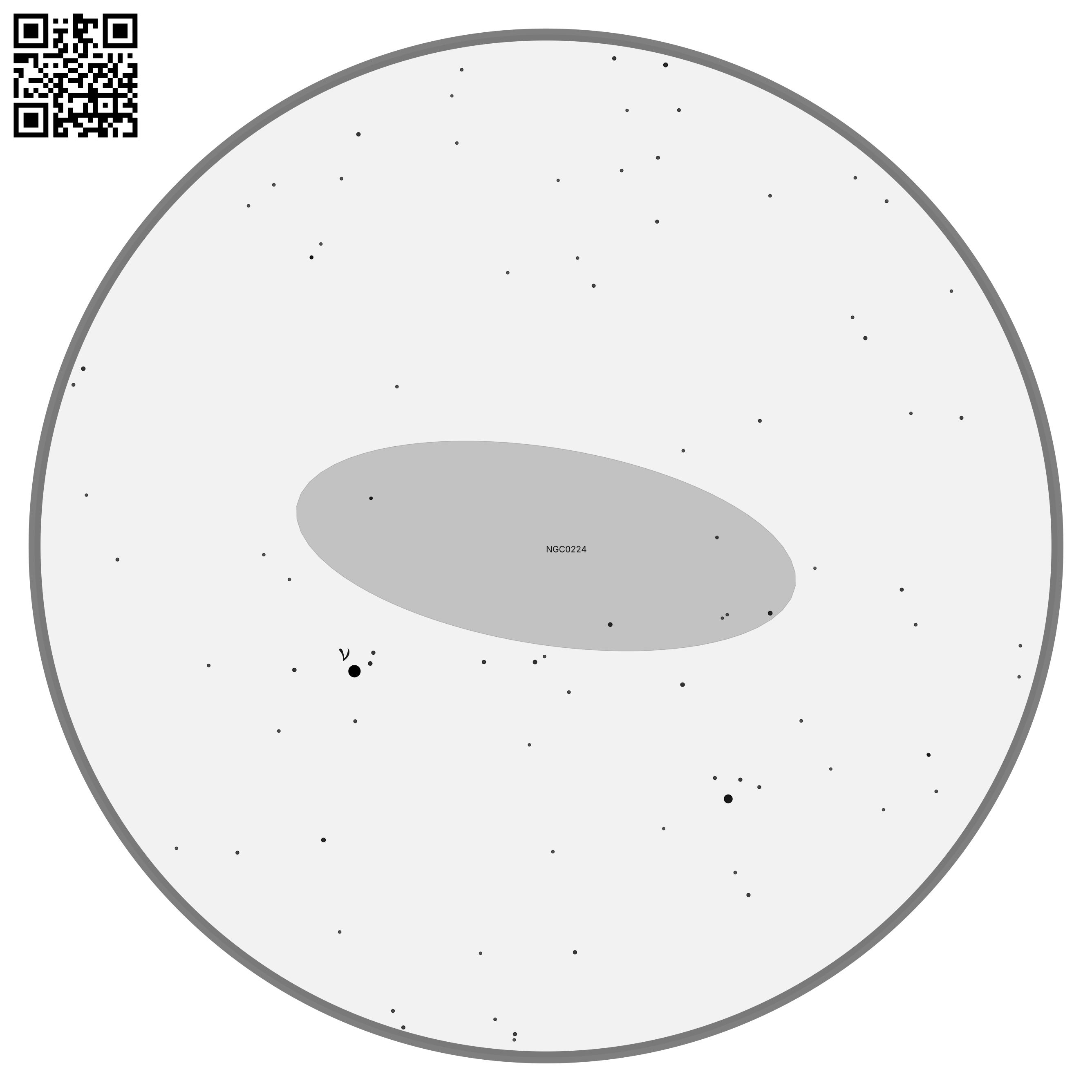
Finder scope & binocular view of Andromeda Galaxy
| Property | Value |
|---|---|
| Common names | Andromeda Nebula |
| Catalog names | M 31, NGC 224, PGC 2557, UGC 454 |
| Type | Galaxy |
| Subtype | Active Galactic Nucleus |
| Coordinates | 0h 42m 44.33s, +41° 16’ 07.50” |
| Season | September - November |
| Best month | October |
| Beginner friendly | Yes |
| Visual reward | High |
| Filters required | None |
| LP tolerance | Medium |
| Minimum equipment | Naked eye |
| Optimal equipment | Binoculars |
| Magnitude | 3.4 |
| Size | 190.55 arcminutes x 61.74 arcminutes |
| Constellation | Andromeda |
Observation Notes
Naked Eye
Visible from dark skies as an elongated, misty patch of light distinct from surrounding stars. The bright central region is most apparent, while the galaxy’s true extent is much larger and extremely diffuse, making it easy to mistake for a faint cloud.
Binoculars
Shows a bright, oval core with an extended glow stretching outward. The companion galaxy M32 is readily visible as a small, compact smudge, while M110 appears larger and more diffuse and may be difficult under less-than-ideal skies.
Small Telescope
The bright core dominates the view, and the galaxy’s full extent far exceeds the field of view even at low power. M32 appears sharp and concentrated, while M110 remains a faint, low-surface-brightness patch.
Medium Telescope
Under dark skies, one or both prominent dust lanes near the core may be detected with averted vision. The faint star cloud NGC 206 can sometimes be glimpsed as a subtle brightening within the disk.
Large Telescope
Improves the visibility of dust lanes and subtle brightness variations within the disk, though all features remain low contrast. NGC 206 may show a slightly grainy appearance, and the bright globular cluster G1 (Mayall II) can be detected only as a very faint, star-like point under excellent conditions.