M82
Binoculars • Galaxies
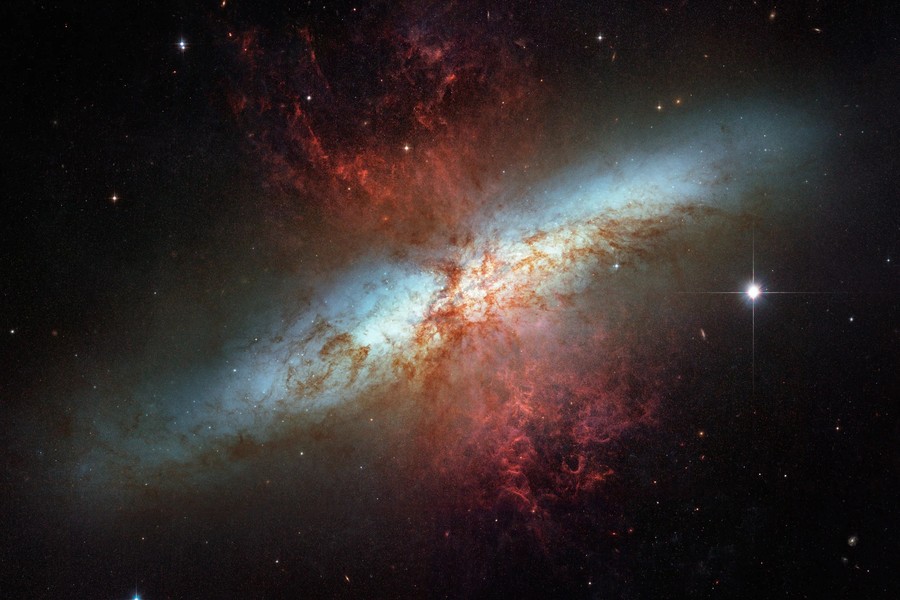
Image: NASA, ESA and the Hubble Heritage Team (STScI/AURA)
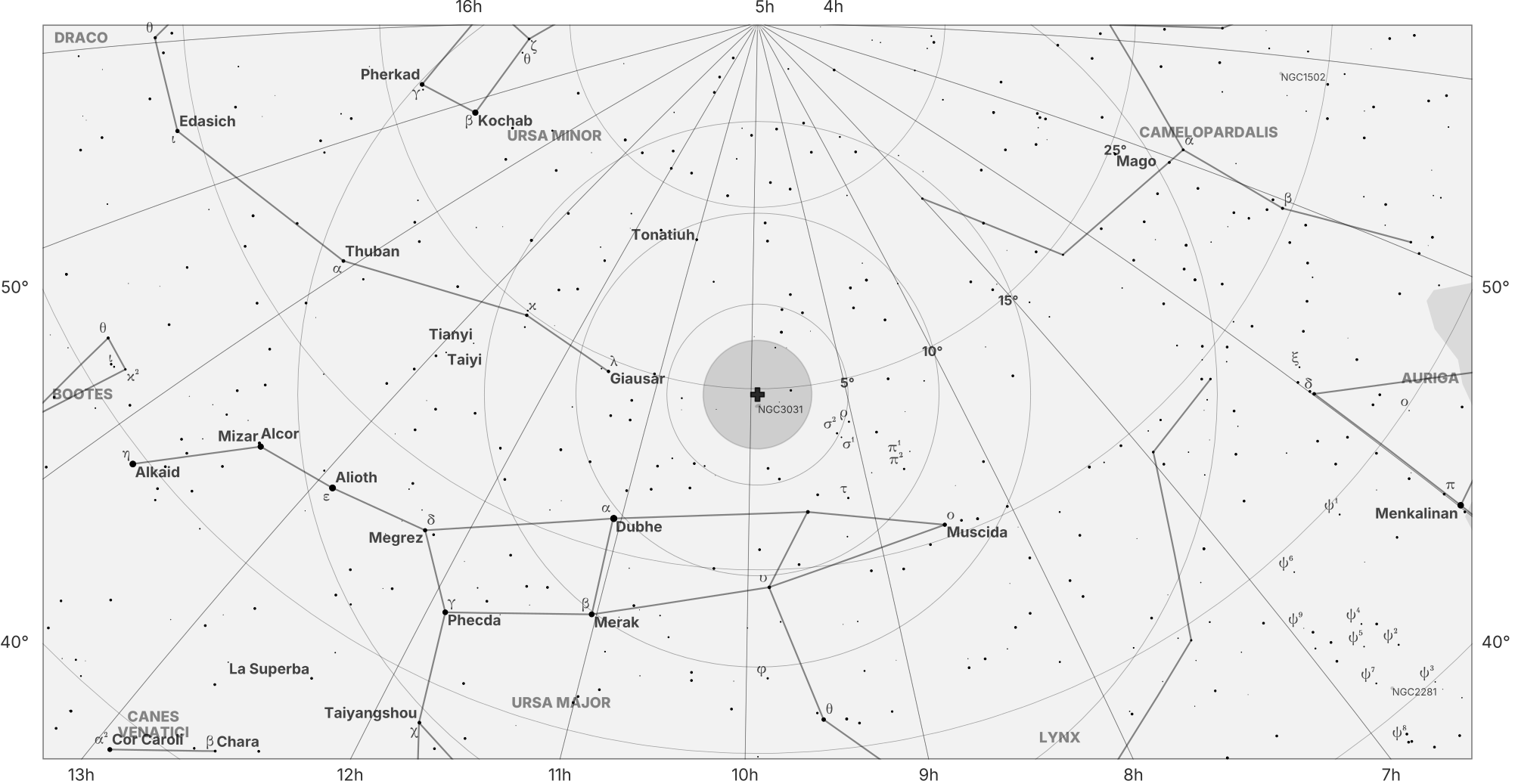
Finder map for M82
An iconic and frequently photographed object in amateur astronomy, famed for its unique shape and its pairing with M81. High altitude preferred to resolve detail; circumpolar for many northern latitudes. Noticing the mottled appearance and prominent dark rifts that give the galaxy its disturbed look. Finer details, such as the filamentary structure of the starburst-driven superwind, require large apertures or imaging and lie beyond typical binocular views.
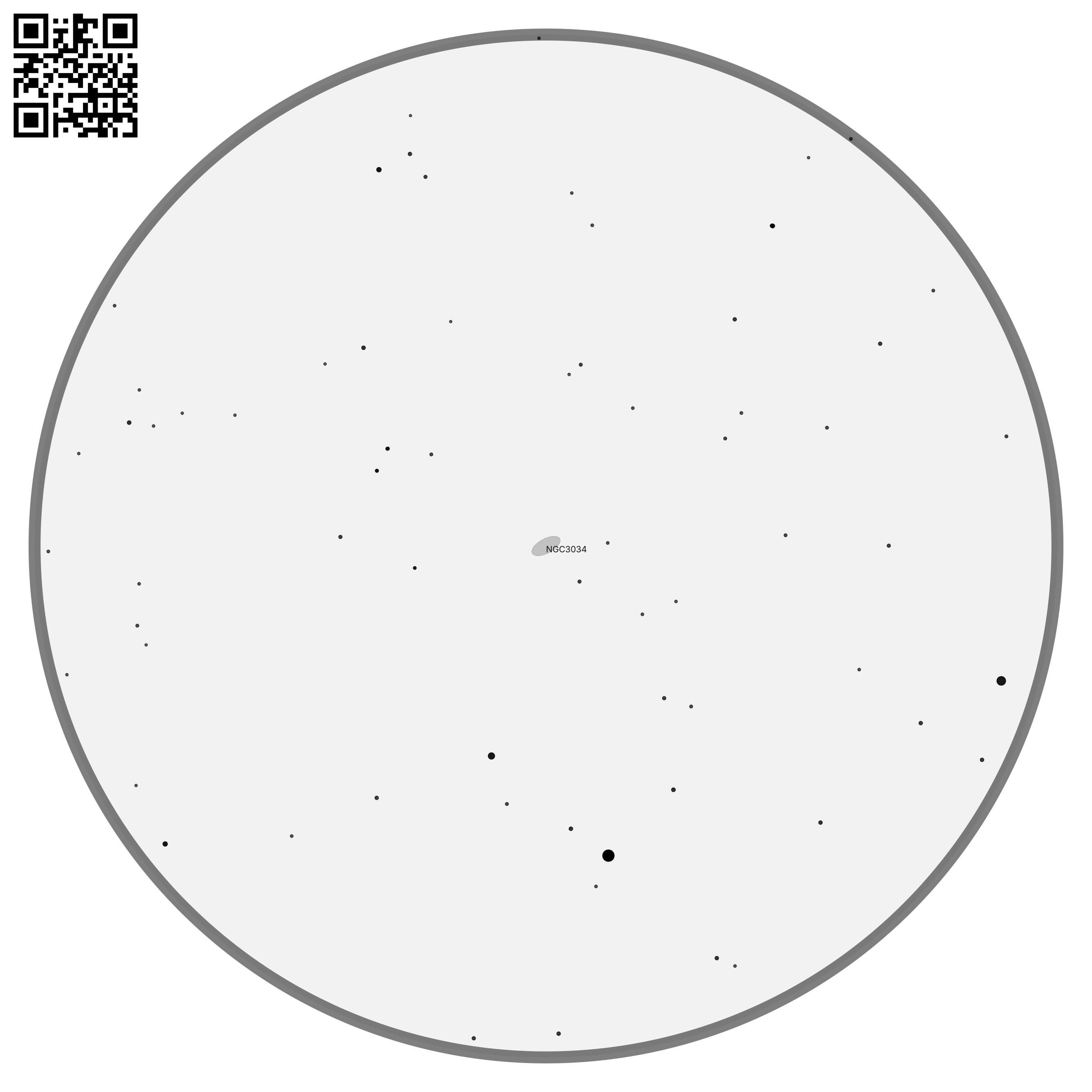
Finder scope & binocular view of M82
| Property | Value |
|---|---|
| Common names | Cigar Galaxy, Messier 82 |
| Catalog names | M 82, NGC 3034, PGC 28655, UGC 5322, Arp 337 |
| Type | Galaxy |
| Subtype | Active Galactic Nucleus |
| Coordinates | 9h 55m 52.43s, +69° 40’ 46.93” |
| Season | January - March |
| Best month | Mid-February |
| Beginner friendly | Marginal |
| Visual reward | High |
| Filters required | None |
| LP tolerance | Low |
| Minimum equipment | Binoculars |
| Optimal equipment | Small telescope |
| Magnitude | 8.4 |
| Size | 11.22 arcminutes x 4.26 arcminutes |
| Constellation | Ursa Major |
Observation Notes
Naked Eye
Not visible to the naked eye.
Binoculars
Appears as a distinct, elongated smudge of light, often seen in the same binocular field as the brighter, rounder galaxy M81.
Small Telescope
The characteristic cigar-shaped form is obvious. The galaxy shows uneven surface brightness, though fine structure remains subtle at this aperture.
Medium Telescope
Under dark skies and good seeing, prominent dark dust lanes cutting across the bright central region become visible, giving the galaxy a fractured, irregular appearance.
Large Telescope
Improves contrast and reveals more complex dust structure and patchiness within the disk. Multiple brightness variations are visible along the length of the galaxy, though all features remain diffuse and visual rather than sharply defined.