R Fornacis
4-8 inch Telescope • Carbon Stars
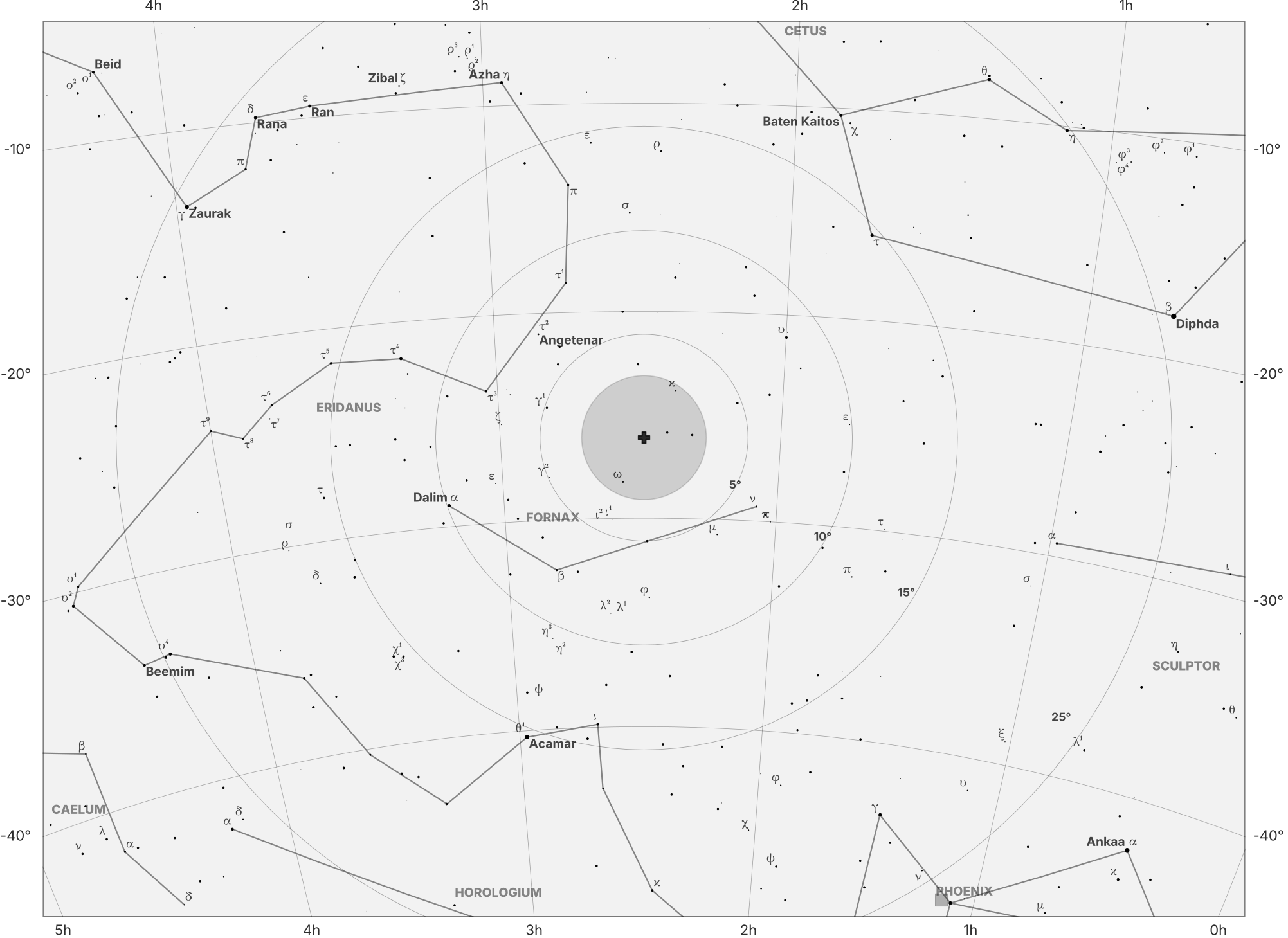
Finder map for R Fornacis
Requires a clear southern horizon for most Northern Hemisphere observers. High in the sky for Southern Hemisphere observers. The circumstellar dust shell surrounding R Fornacis is far too low in surface brightness for visual detection and is strictly an imaging target. Visual challenges instead include its low altitude for many Northern Hemisphere observers and its large amplitude variability, which can make the star difficult to follow near minimum light.
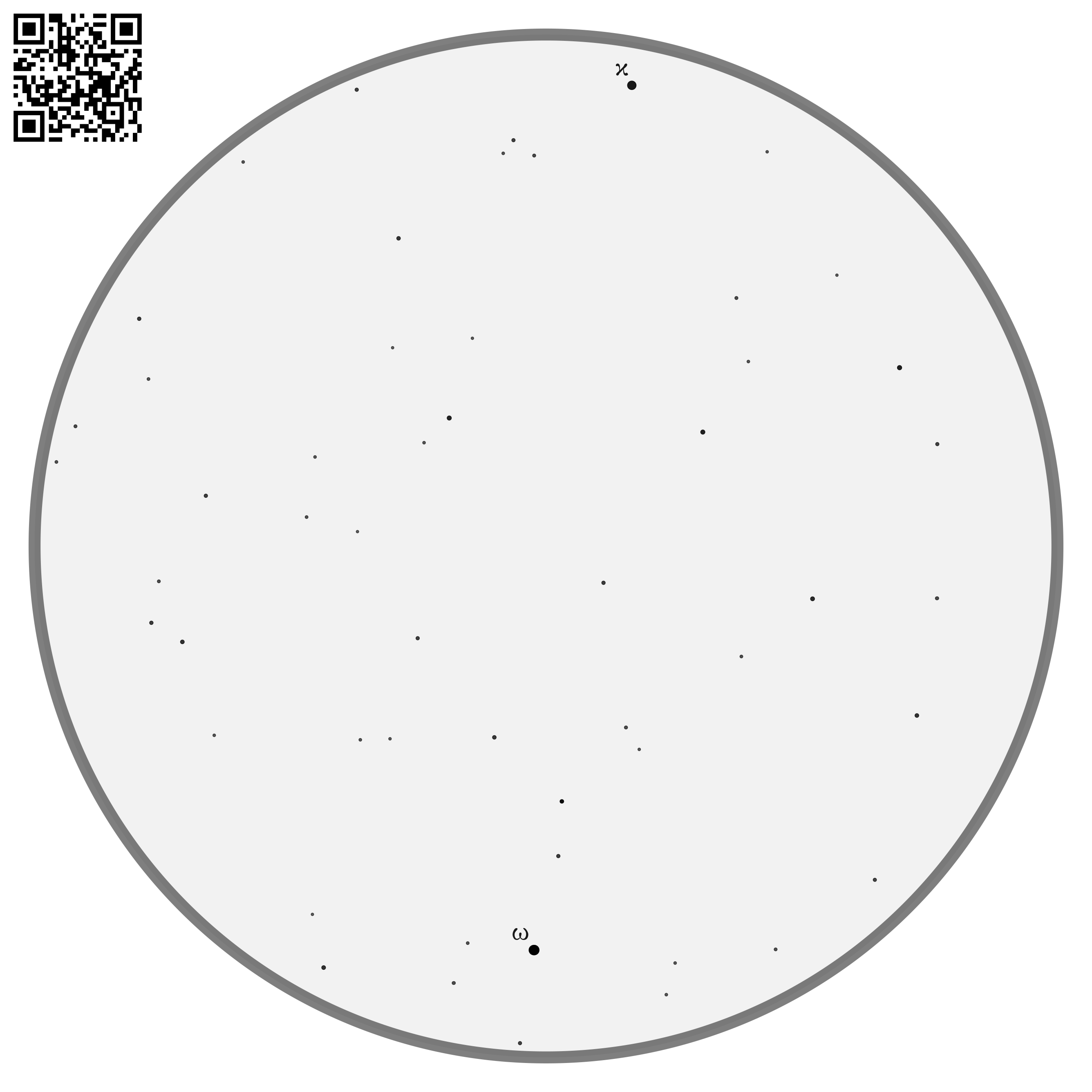
Finder scope & binocular view of R Fornacis
| Property | Value |
|---|---|
| Common names | R For |
| Catalog names | - |
| Type | Evolved Star |
| Subtype | Carbon Star |
| Coordinates | 2h 29m 15.31s, -26° 05’ 55.65” |
| Season | October - December |
| Best month | November |
| Beginner friendly | No |
| Visual reward | Moderate |
| Filters required | None |
| LP tolerance | Medium |
| Minimum equipment | Binoculars |
| Optimal equipment | Medium telescope |
| Magnitude | 7.5 |
| Size | - |
| Constellation | Fornax |
Observation Notes
Naked Eye
Not visible to the naked eye.
Binoculars
Detectable in binoculars such as 10×50 near favorable maxima, typically around magnitude 7–8. Appears as a faint star with a noticeable orange-red to red hue.
Small Telescope
Easily visible near maximum light, showing a warm red coloration. A small telescope allows the star to be followed through much of its brighter phase, though it fades beyond reach as it approaches minimum.
Medium Telescope
Improves visibility through fainter phases and makes the star’s red coloration more apparent, though the perceived intensity of color remains subjective and varies with brightness. No surrounding nebulosity is visible.
Large Telescope
Offers no additional structural detail beyond improved detection near minimum light. The star remains an unresolved point source; any circumstellar material associated with R Fornacis is not visually observable.