RT Capricorni
4-8 inch Telescope • Carbon Stars
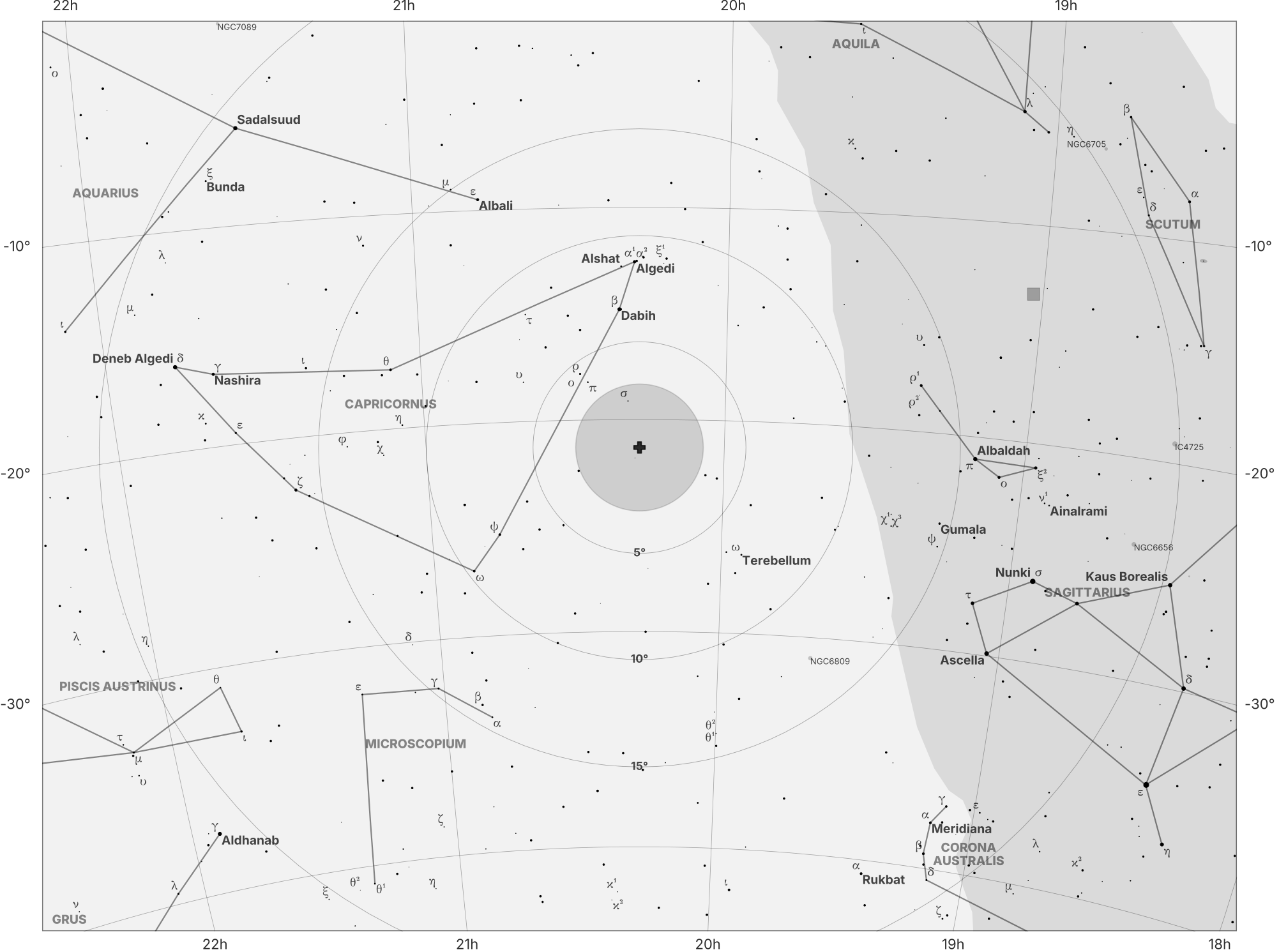
Finder map for RT Capricorni
Best viewed from southern and equatorial latitudes. Can be low in the southern sky for observers in mid-northern latitudes. Tracking its light curve requires consistent observations over several nights and careful comparison with non-variable stars.

Finder scope & binocular view of RT Capricorni
| Property | Value |
|---|---|
| Common names | RT Cap |
| Catalog names | - |
| Type | Evolved Star |
| Subtype | Carbon Star |
| Coordinates | 20h 17m 06.53s, -21° 19’ 04.47” |
| Season | July - September |
| Best month | August |
| Beginner friendly | No |
| Visual reward | Moderate |
| Filters required | None |
| LP tolerance | Medium |
| Minimum equipment | Binoculars |
| Optimal equipment | Medium telescope |
| Magnitude | 8.9 |
| Size | - |
| Constellation | Capricornus |
Observation Notes
Naked Eye
Only rarely visible, and then only at a favorable maximum (around magnitude 6.3) under exceptionally dark, transparent skies. Naked-eye detection should be considered an exceptional occurrence rather than a routine expectation.
Binoculars
Detectable in binoculars near maximum light, where it appears as a faint orange-red to red star. As it fades, it quickly becomes difficult or invisible in binoculars, making phase awareness important.
Small Telescope
Provides a clear view through much of the brighter portion of its variability cycle. The star’s warm red coloration is apparent, and a small telescope is well suited for making consistent visual brightness estimates using nearby comparison stars.
Medium Telescope
Extends visibility toward fainter phases and improves confidence in magnitude comparisons, particularly under suburban skies. The star remains unresolved, with color perception varying by brightness and observing conditions.
Large Telescope
Offers no meaningful visual advantage beyond ease of detection near minimum light. RT Capricorni’s visual interest lies in its color and long-term variability rather than in telescopic detail.