V Aquilae
Binoculars • Carbon Stars
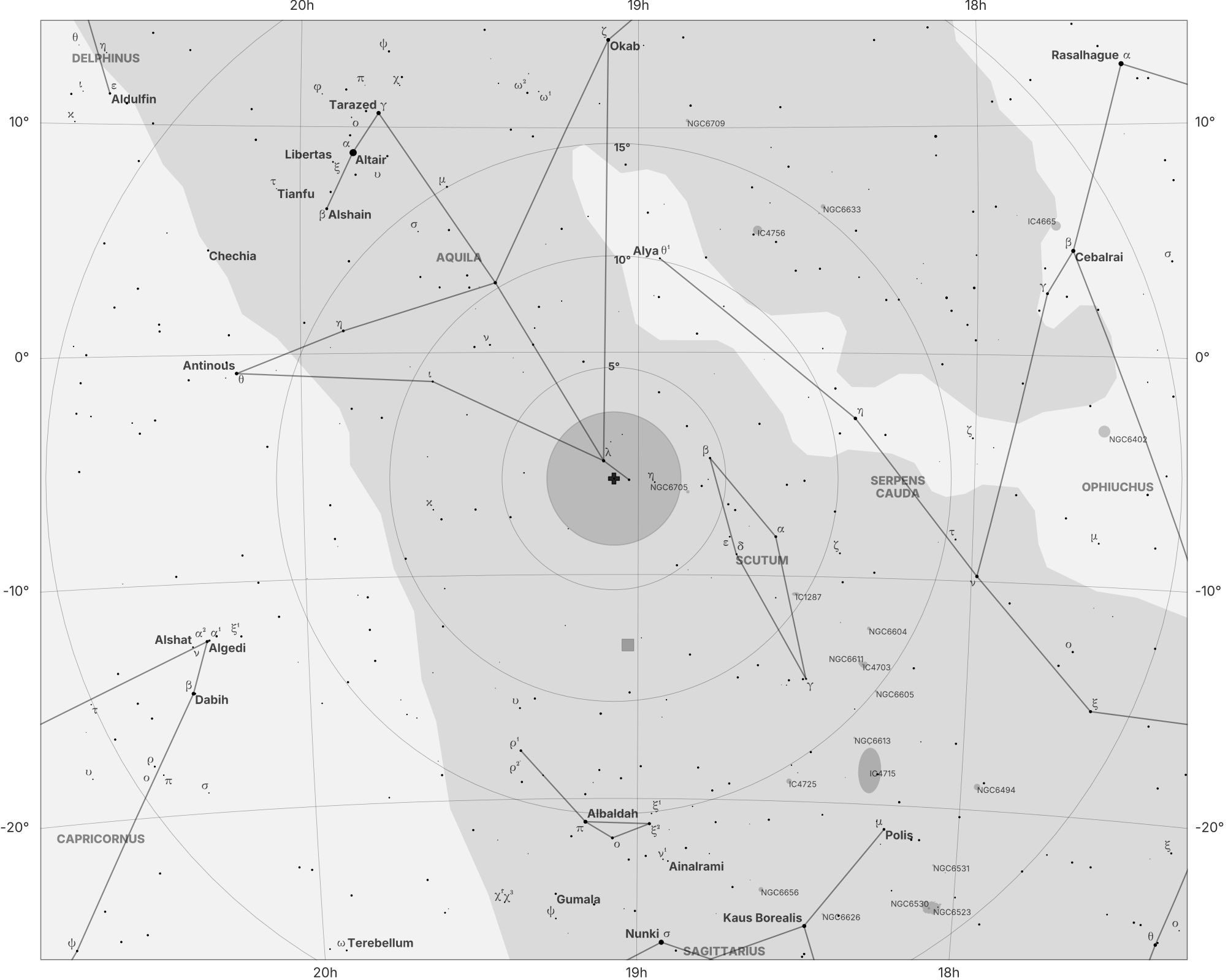
Finder map for V Aquilae
Best observed when high in the sky to minimize atmospheric distortion and fully appreciate its deep color. Its deep red color is best appreciated at low magnification and by comparing it to nearby bluer/whiter stars; being fully dark-adapted can actually mute red perception. Slightly defocusing can enhance the color. Tracking its magnitude changes over its roughly year-long semiregular cycle is a worthwhile challenge.
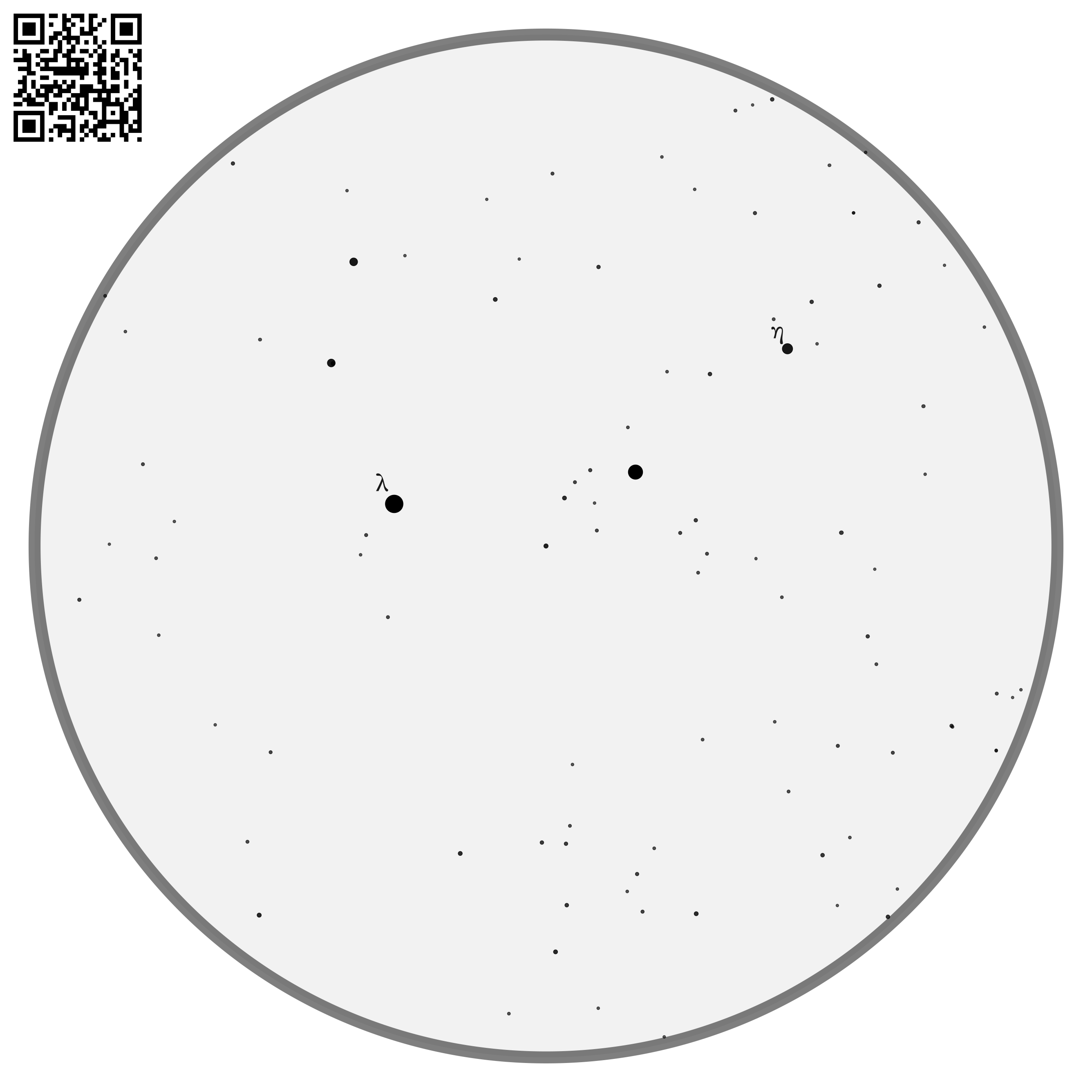
Finder scope & binocular view of V Aquilae
| Property | Value |
|---|---|
| Common names | V Aql |
| Catalog names | - |
| Type | Evolved Star |
| Subtype | Carbon Star |
| Coordinates | 19h 04m 24.15s, -5° 41’ 05.44” |
| Season | June - August |
| Best month | July |
| Beginner friendly | No |
| Visual reward | Moderate |
| Filters required | None |
| LP tolerance | Medium |
| Minimum equipment | Binoculars |
| Optimal equipment | Small telescope |
| Magnitude | 6.9 |
| Size | - |
| Constellation | Aquila |
Observation Notes
Naked Eye
Not reliably visible to the unaided eye, though it may be marginally detected under exceptionally dark and transparent skies when near maximum brightness (around magnitude 6.6).
Binoculars
Easily visible in standard astronomical binoculars such as 7×50 or 10×50 as a distinctly reddish-orange star. Its color is more apparent when compared with nearby whiter field stars.
Small Telescope
Reveals a rich ruby-red to crimson color, making it one of the more strongly colored carbon stars. The star remains a point source with no resolved detail.
Medium Telescope
The red coloration appears more saturated and the star is well suited for making visual magnitude estimates using faint comparison stars.
Large Telescope
Offers no additional structural detail beyond smaller instruments. Increased aperture does not significantly enhance the visual experience, and moderate magnification is usually preferred.