TX Piscium
Binoculars • Carbon Stars
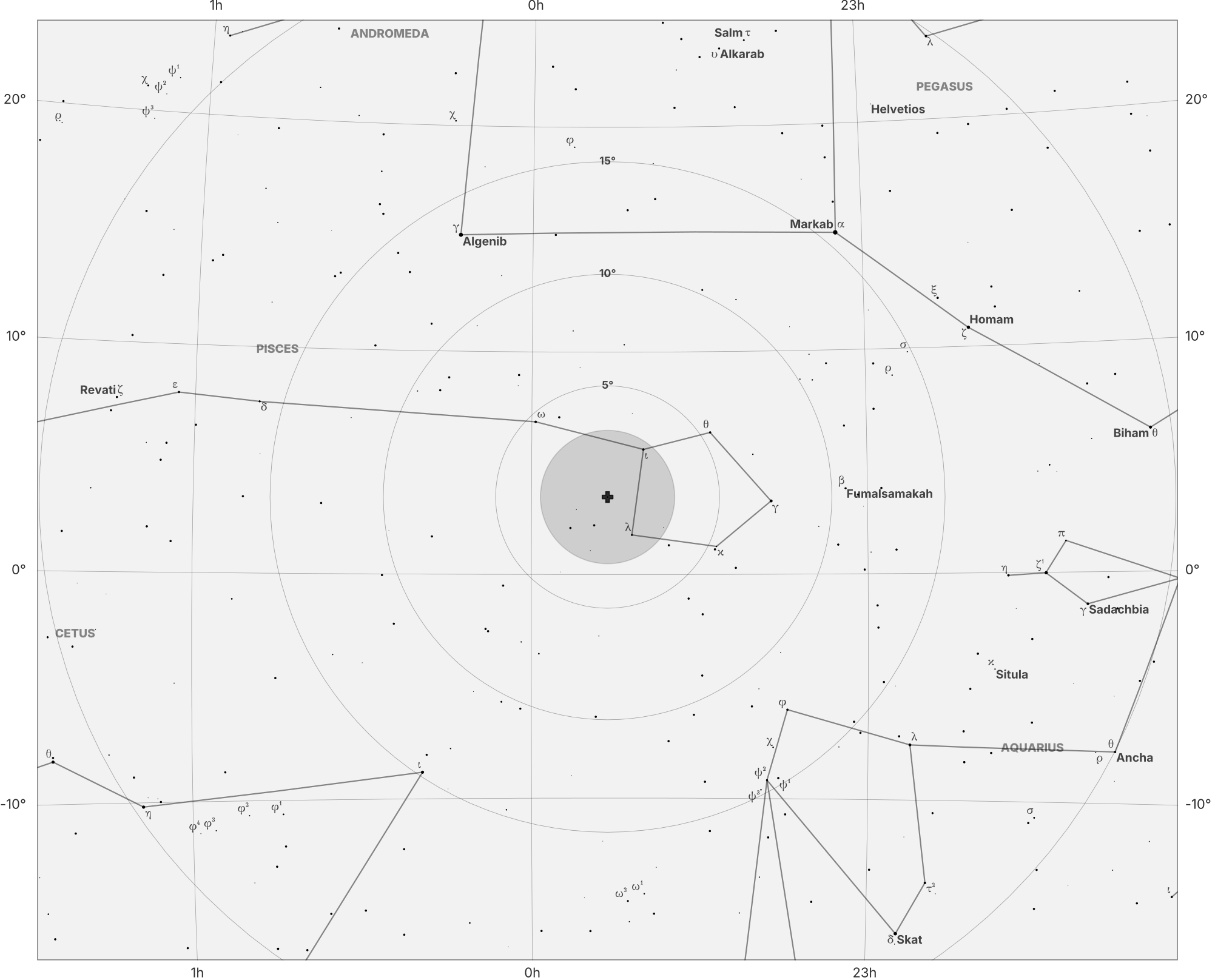
Finder map for TX Piscium
A celebrated object in modern amateur astronomy due to its spectacular color, often serving as a ‘showpiece’ object to demonstrate that stars come in colors other than white. Best viewed at high altitude to minimize atmospheric extinction which can affect color perception. Perceiving the deep red color with the naked eye requires significant dark adaptation. Monitoring its subtle brightness variations requires consistent observation over weeks.

Finder scope & binocular view of TX Piscium
| Property | Value |
|---|---|
| Common names | 19 Piscium |
| Catalog names | - |
| Type | Evolved Star |
| Subtype | Carbon Star |
| Coordinates | 23h 46m 23.52s, +3° 29’ 12.52” |
| Season | August - October |
| Best month | Mid-September |
| Beginner friendly | Marginal |
| Visual reward | Moderate |
| Filters required | None |
| LP tolerance | High |
| Minimum equipment | Naked eye |
| Optimal equipment | Binoculars |
| Magnitude | 5.0 |
| Size | - |
| Constellation | Pisces |
Observation Notes
Naked Eye
Visible to the unaided eye from moderately dark skies (Bortle 5 or better) as a faint star with a subtle orange-red tint. The color is delicate and benefits from dark adaptation and careful attention.
Binoculars
The red coloration becomes obvious and striking, often described as ember-like, and it stands out clearly from surrounding field stars.
Small Telescope
Provides a vivid view of its deep crimson color. The star remains a point source; its physical stellar disk is far too small to be resolved by any amateur instrument.
Medium Telescope
Enhances color saturation and allows rewarding color comparisons with other well-known red and carbon stars when observed separately.
Large Telescope
Reveals no additional structural detail beyond smaller apertures. Increased aperture does not materially improve the visual experience, and moderate magnification is usually preferred.