S Cephei
4-8 inch Telescope • Carbon Stars
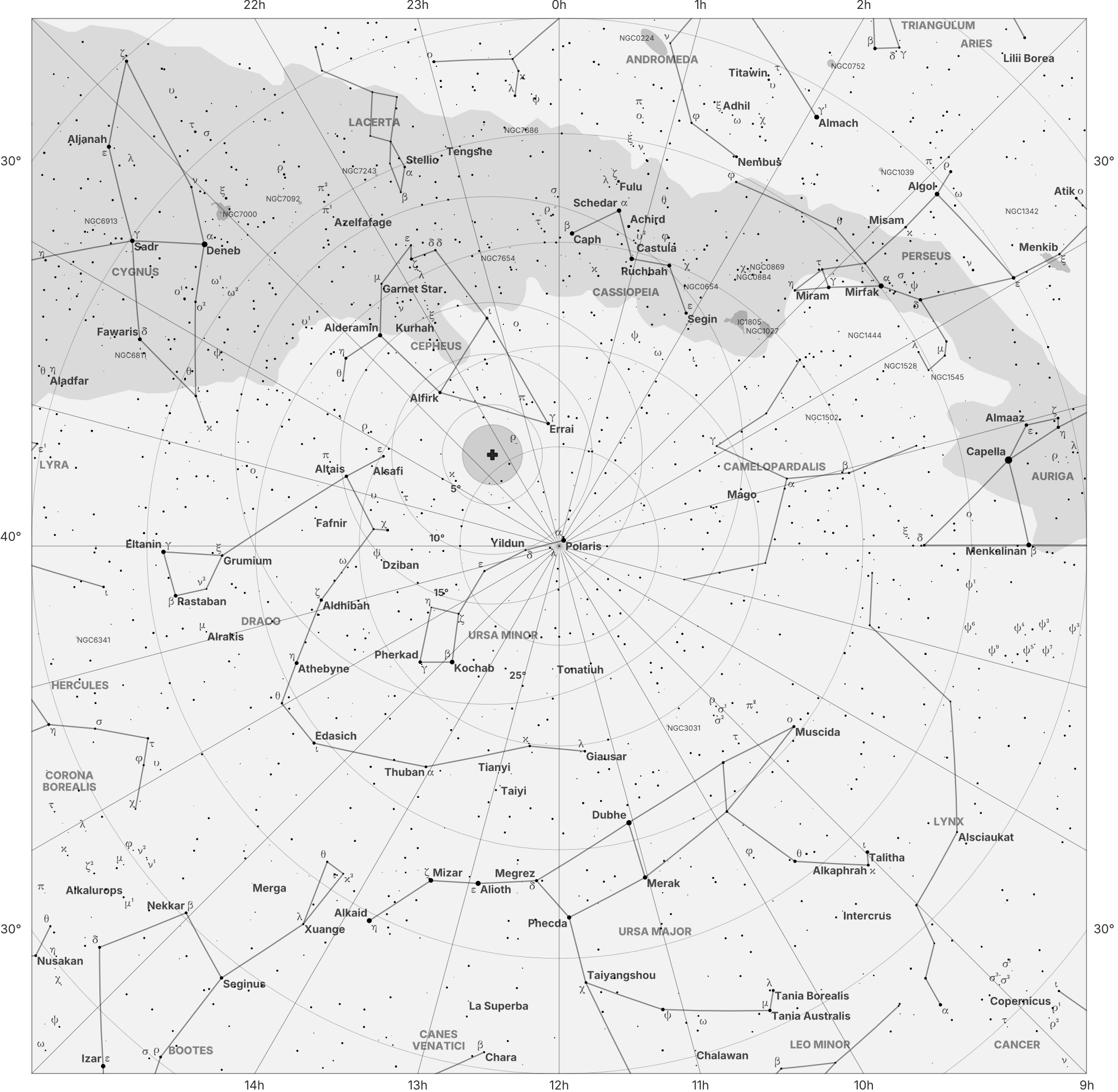
Finder map for S Cephei
No known ancient cultural significance. It is highly regarded within the amateur astronomy community as a prime example of a long-period variable star and a visually stunning object. Circumpolar for mid- and high-northern latitudes. It becomes increasingly low toward the equator and is effectively unobservable from most of the Southern Hemisphere. Following its full long-period light curve, which spans roughly a year, from bright maximum (around magnitude 7.4) to faint minimum (around magnitude 12.9), particularly near minimum light.
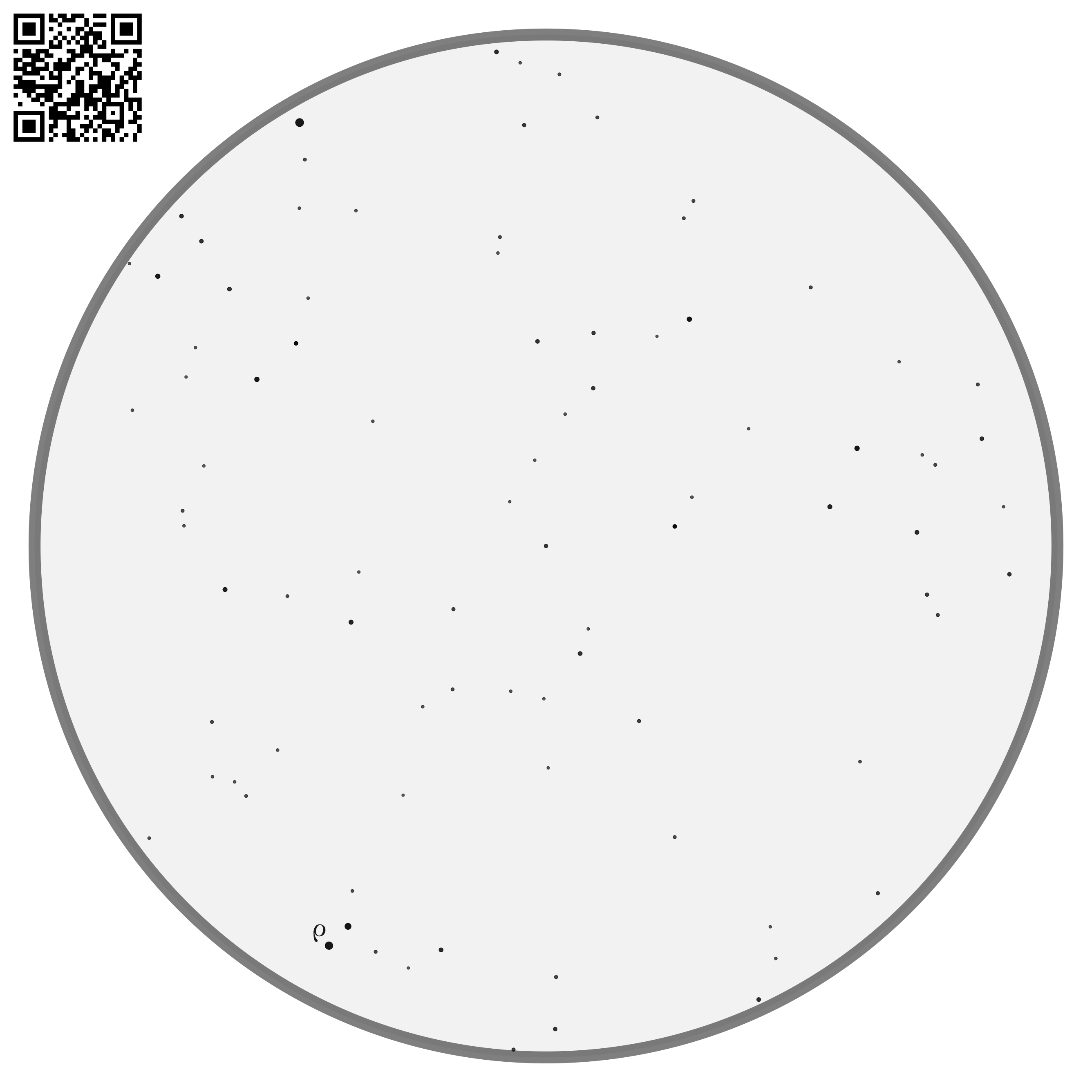
Finder scope & binocular view of S Cephei
| Property | Value |
|---|---|
| Common names | - |
| Catalog names | - |
| Type | Evolved Star |
| Subtype | Carbon Star |
| Coordinates | 21h 35m 12.82s, +78° 37’ 28.19” |
| Season | July - September |
| Best month | Mid-August |
| Beginner friendly | Marginal |
| Visual reward | High |
| Filters required | None |
| LP tolerance | High |
| Minimum equipment | Binoculars |
| Optimal equipment | Medium telescope |
| Magnitude | 7.4 |
| Size | - |
| Constellation | Cepheus |
Observation Notes
Naked Eye
Not visible to the naked eye at any point in its cycle.
Binoculars
Detectable in binoculars such as 10×50 near favorable maxima, appearing as a faint orange-red to red star. As it fades, it becomes difficult or invisible in binoculars depending on phase and sky conditions.
Small Telescope
Easily visible through much of its brighter phase, though it may be lost near deep minimum in some cycles. The star shows a pronounced red coloration that stands out when compared with nearby whiter stars.
Medium Telescope
Extends coverage into fainter phases and provides a stable view for following its variability. The red hue remains evident, though perceived intensity varies with brightness, contrast, and observing conditions.
Large Telescope
Improves ease of detection near minimum light but reveals no additional visual detail. The star remains an unresolved point source; its primary visual interest is its color and long-term variability.