U Hydrae
4-8 inch Telescope • Carbon Stars
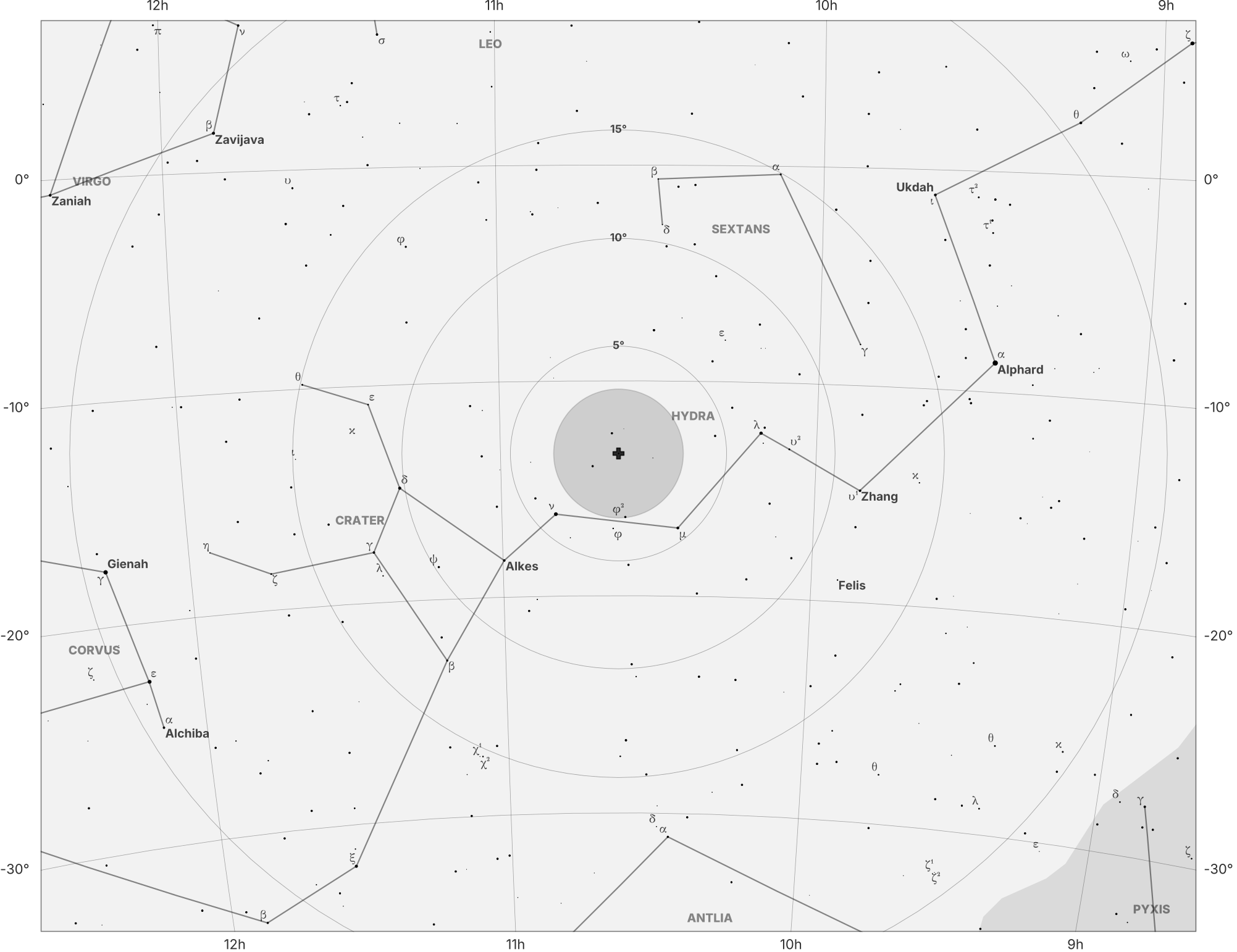
Finder map for U Hydrae
No known ancient cultural or mythological significance. U Hydrae is a prominent bright carbon star that has attracted sustained interest from both amateur observers and professional astronomers. Accessible from both hemispheres, reaching moderate altitude from mid-northern latitudes and high altitude from much of the Southern Hemisphere. Estimating its relatively subtle brightness variations can be challenging, particularly when making visual magnitude estimates. Perceiving the full intensity of its red coloration can also be influenced by atmospheric conditions and individual color sensitivity.
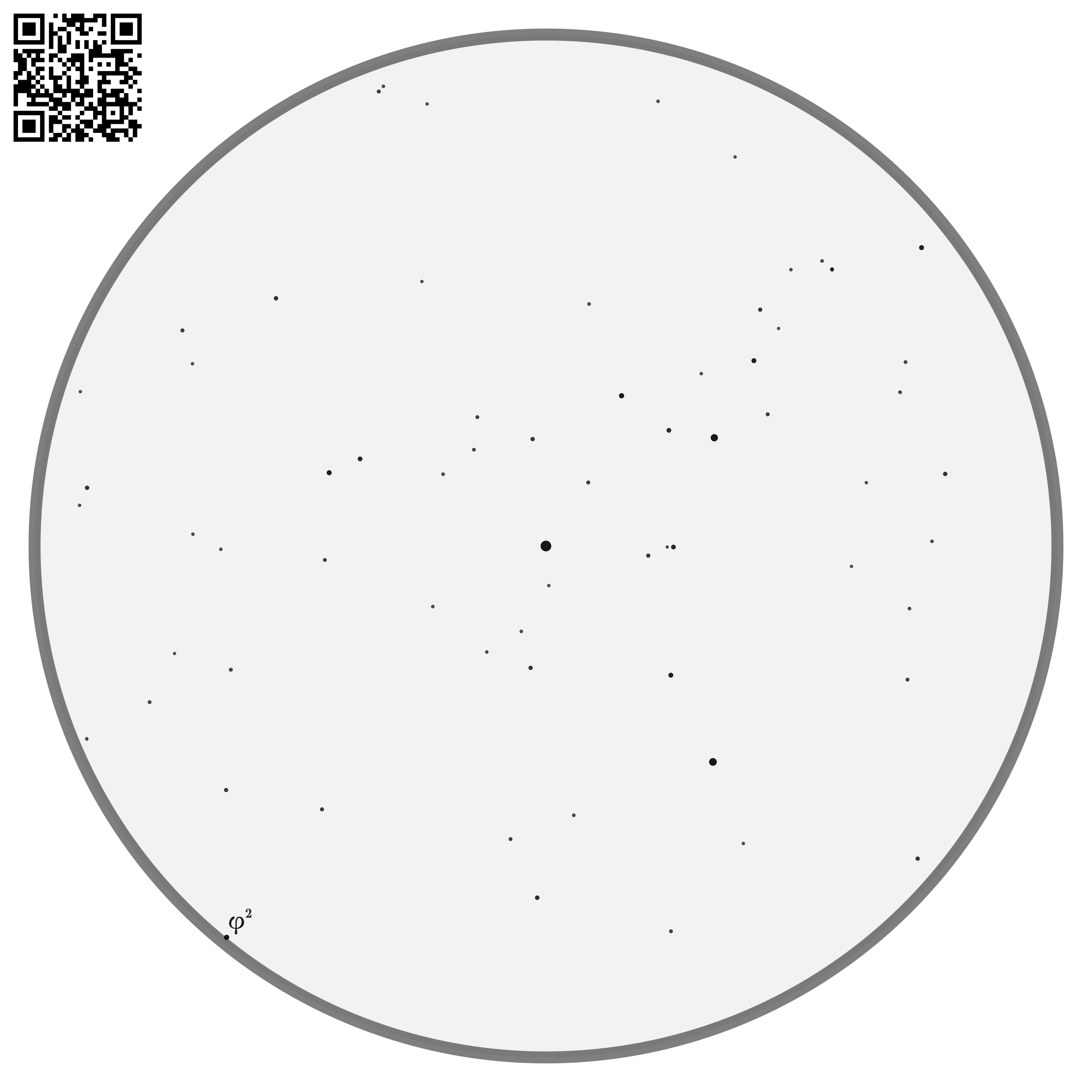
Finder scope & binocular view of U Hydrae
| Property | Value |
|---|---|
| Common names | U Hya |
| Catalog names | - |
| Type | Evolved Star |
| Subtype | Carbon Star |
| Coordinates | 10h 37m 33.27s, -13° 23’ 04.35” |
| Season | February - April |
| Best month | March |
| Beginner friendly | Yes |
| Visual reward | High |
| Filters required | None |
| LP tolerance | High |
| Minimum equipment | Naked eye |
| Optimal equipment | Binoculars |
| Magnitude | 4.8 |
| Size | - |
| Constellation | Hydra |
Observation Notes
Naked Eye
At favorable maxima (typically around magnitude 4.8–5.0), visible from dark sites as a moderately faint star. Its color is subtle to the unaided eye and is not always obvious without optical aid.
Binoculars
Easily located when near maximum light. Binoculars make its warm orange-red to red coloration apparent, helping it stand out from nearby field stars.
Small Telescope
Shows a pronounced red hue, best appreciated at low to moderate magnification with nearby whiter stars in the same field for contrast. The star remains an unresolved point source.
Medium Telescope
Extends visibility into fainter phases and provides a stable view for appreciating its color relative to surrounding stars. The perceived intensity of the red coloration varies with brightness and observing conditions rather than aperture alone.
Large Telescope
Offers little additional visual information beyond easier detection and access to fainter nearby stars. U Hydrae remains unresolved, and its visual appeal lies in its color and long-term variability rather than telescopic detail.