R Leporis
Binoculars • Carbon Stars
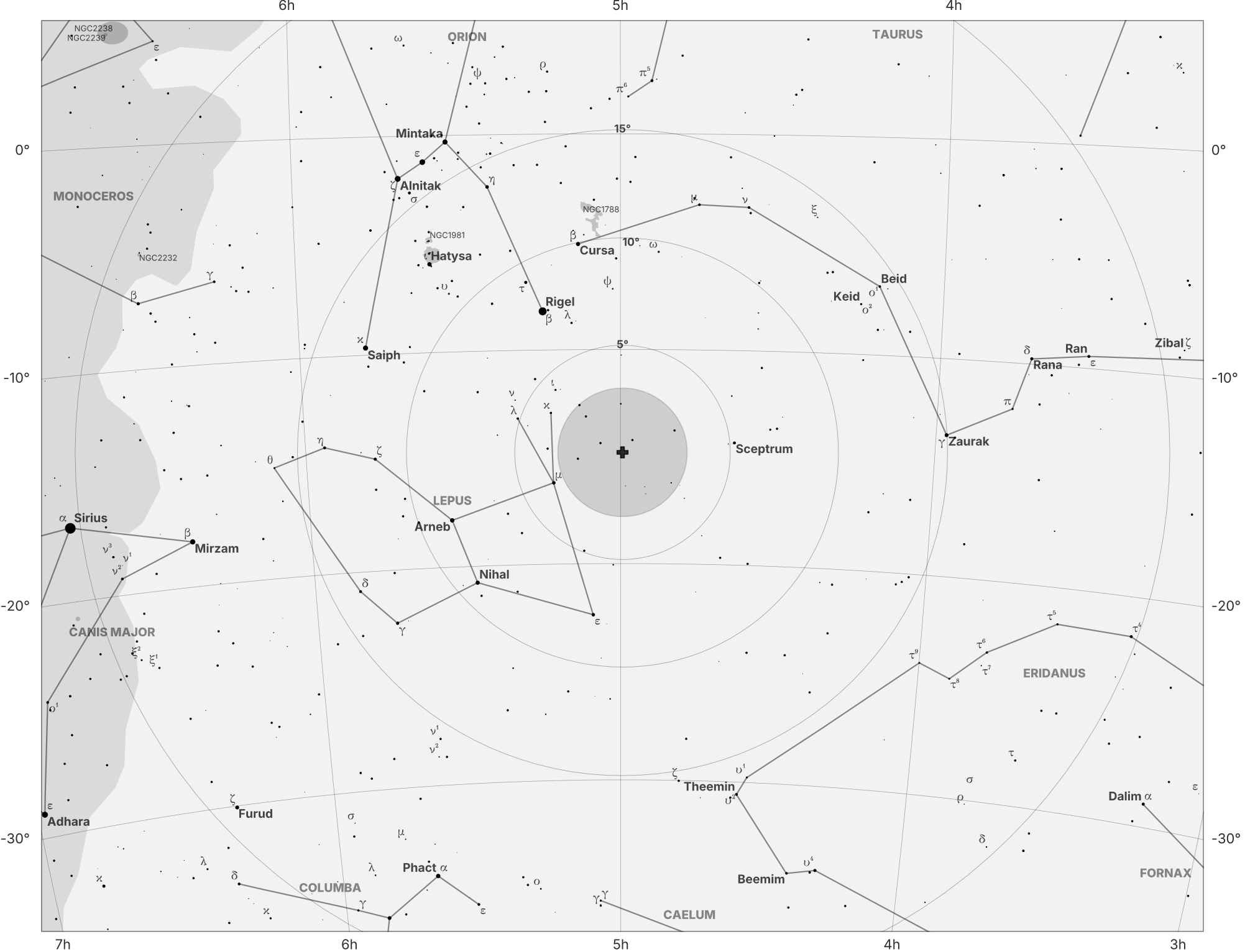
Finder map for R Leporis
Known as ‘Hind’s Crimson Star’, it is a celebrated object in amateur astronomy culture, renowned for its beauty and its role as an accessible variable star for study. Best observed when high in the sky to minimize atmospheric extinction, which can diminish its brightness and affect its apparent color. Its deep red color can be difficult for the human eye to perceive, especially at a glance. Its brightness varies significantly, making it harder to locate when near minimum.

Finder scope & binocular view of R Leporis
| Property | Value |
|---|---|
| Common names | Hind’s Crimson Star, The Vampire Star |
| Catalog names | - |
| Type | Evolved Star |
| Subtype | Carbon Star |
| Coordinates | 4h 59m 36.35s, -14° 48’ 22.50” |
| Season | November - January |
| Best month | December |
| Beginner friendly | No |
| Visual reward | High |
| Filters required | None |
| LP tolerance | High |
| Minimum equipment | Binoculars |
| Optimal equipment | Medium telescope |
| Magnitude | 7.8 |
| Size | - |
| Constellation | Lepus |
Observation Notes
Naked Eye
Only marginally visible to the unaided eye at rare maxima under exceptionally dark skies (Bortle 1–2). Most observers will require optical aid even near peak brightness.
Binoculars
Easily visible when brighter than magnitude 8. Its deep red coloration is already apparent in 7×50 or 10×50 binoculars.
Small Telescope
The star’s intense ruby-red color is its defining feature. It appears stellar with no resolved detail.
Medium Telescope
The crimson hue is exceptionally vivid and is best appreciated by contrasting it with nearby field stars of neutral or bluish color.
Large Telescope
No surface detail is ever visible. Increased aperture does not reveal additional structure, and moderate magnification often provides the most aesthetically pleasing color impression.