RS Cygni
4-8 inch Telescope • Carbon Stars
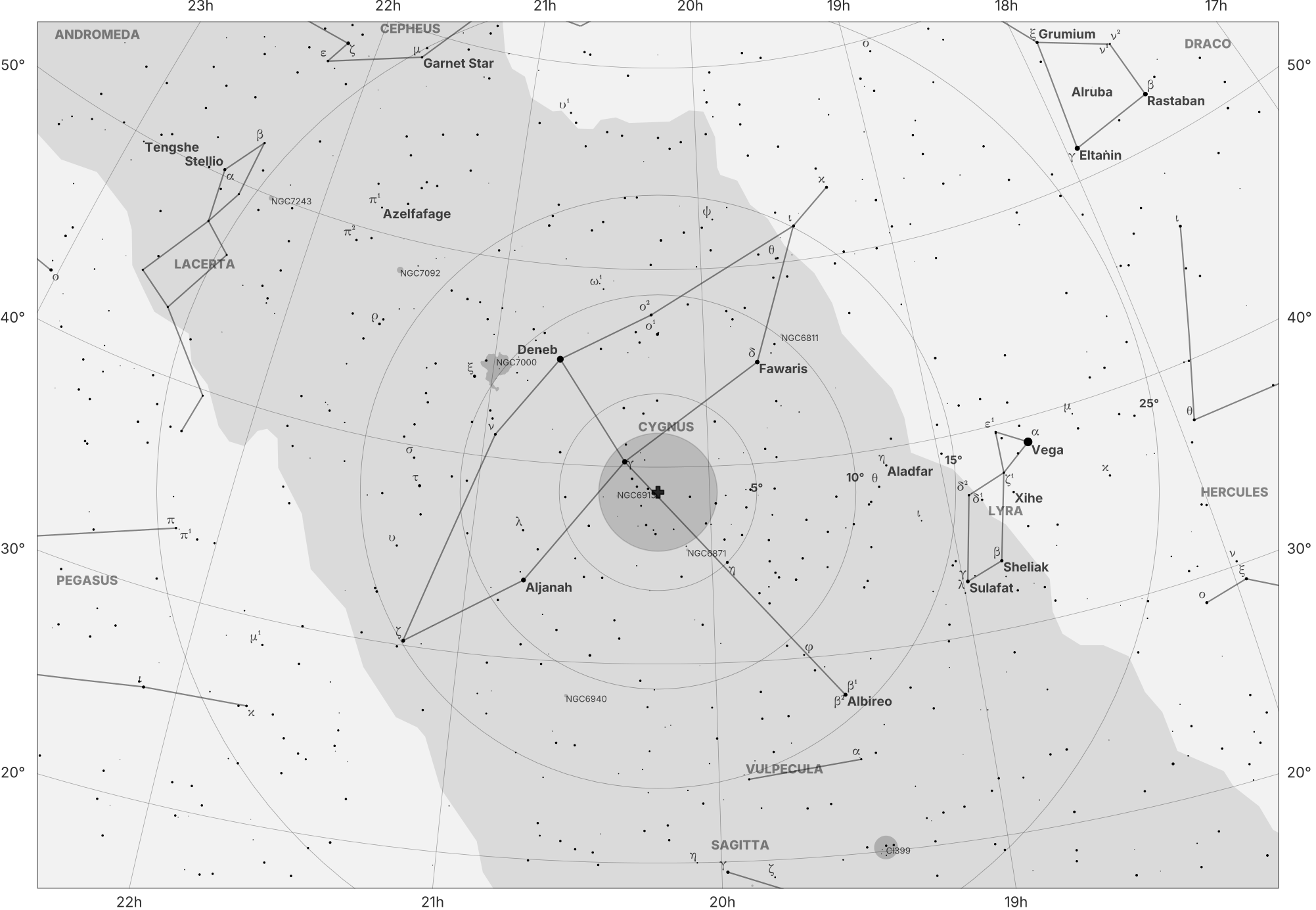
Finder map for RS Cygni
Well known among amateur astronomers for its intense red coloration, RS Cygni is a popular target on observing lists devoted to carbon and other vividly colored stars. Best observed when Cygnus is high overhead. Difficult to observe from far southern latitudes. Perceiving the star’s intense red color may require careful, prolonged viewing and comparison with nearby field stars. Its significant brightness variations can also affect how easily it is located at different phases.
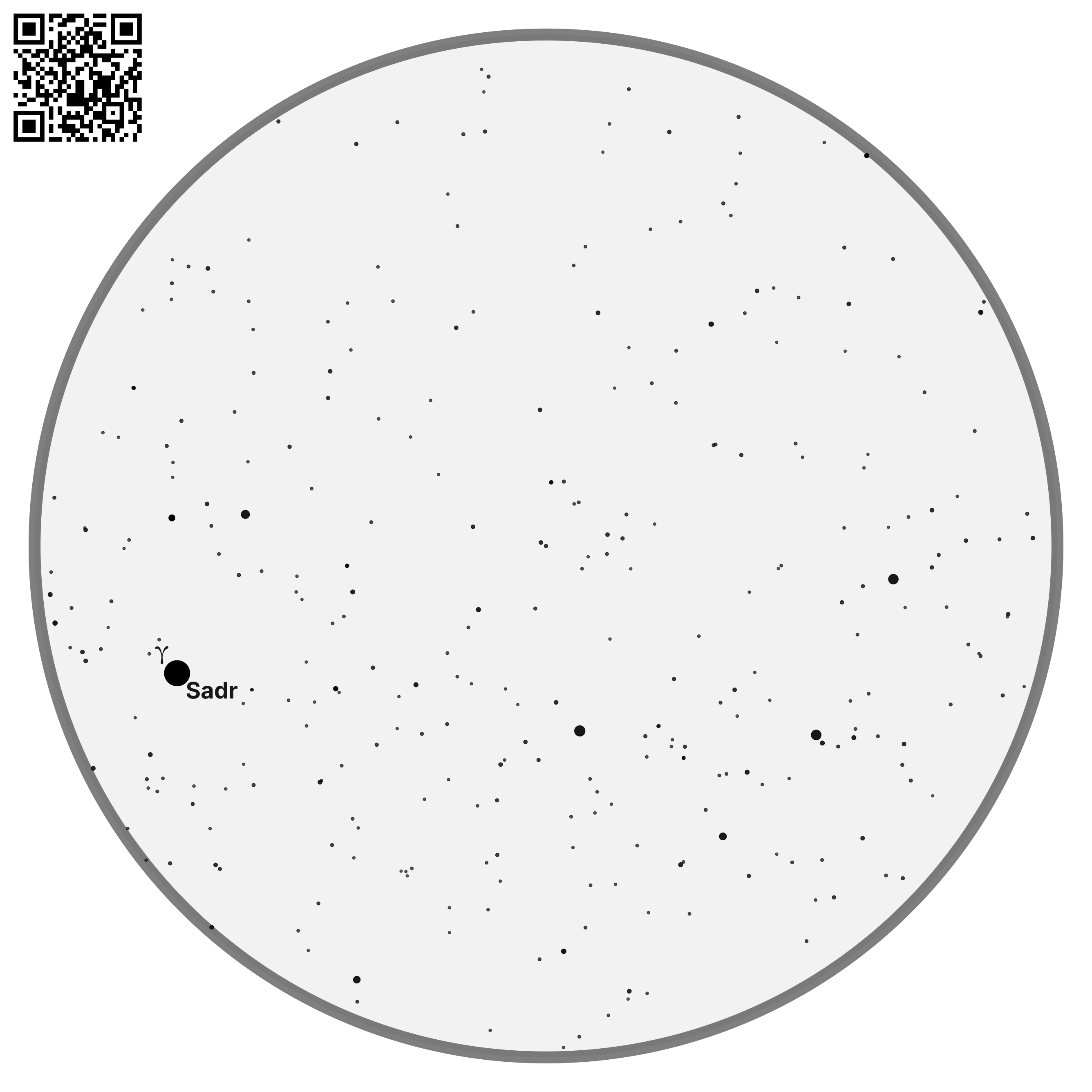
Finder scope & binocular view of RS Cygni
| Property | Value |
|---|---|
| Common names | RS Cyg |
| Catalog names | - |
| Type | Evolved Star |
| Subtype | Carbon Star |
| Coordinates | 20h 13m 23.66s, +38° 43’ 44.47” |
| Season | July - September |
| Best month | August |
| Beginner friendly | Marginal |
| Visual reward | Moderate |
| Filters required | None |
| LP tolerance | High |
| Minimum equipment | Binoculars |
| Optimal equipment | Medium telescope |
| Magnitude | 6.5 |
| Size | - |
| Constellation | Cygnus |
Observation Notes
Naked Eye
Not visible to the naked eye.
Binoculars
Visible in binoculars near maximum light, typically around magnitude 6–7, appearing as a noticeably orange-red to red star. As it fades, it quickly becomes difficult or invisible in binoculars, depending on aperture and sky conditions.
Small Telescope
Shows a distinctly red coloration, best appreciated at low to moderate magnification with nearby whiter stars in the same field for contrast. The star can be followed through much of its brighter phase but is lost as it approaches minimum.
Medium Telescope
Extends visibility toward fainter phases and maintains the star’s pronounced red hue, though the perceived intensity of color varies with brightness and observing conditions. The star remains an unresolved point source.
Large Telescope
Provides little added visual information beyond making the star easier to hold near minimum light. The color remains the principal visual feature, with no additional detail resolved.