T Camelopardalis
4-8 inch Telescope • Carbon Stars
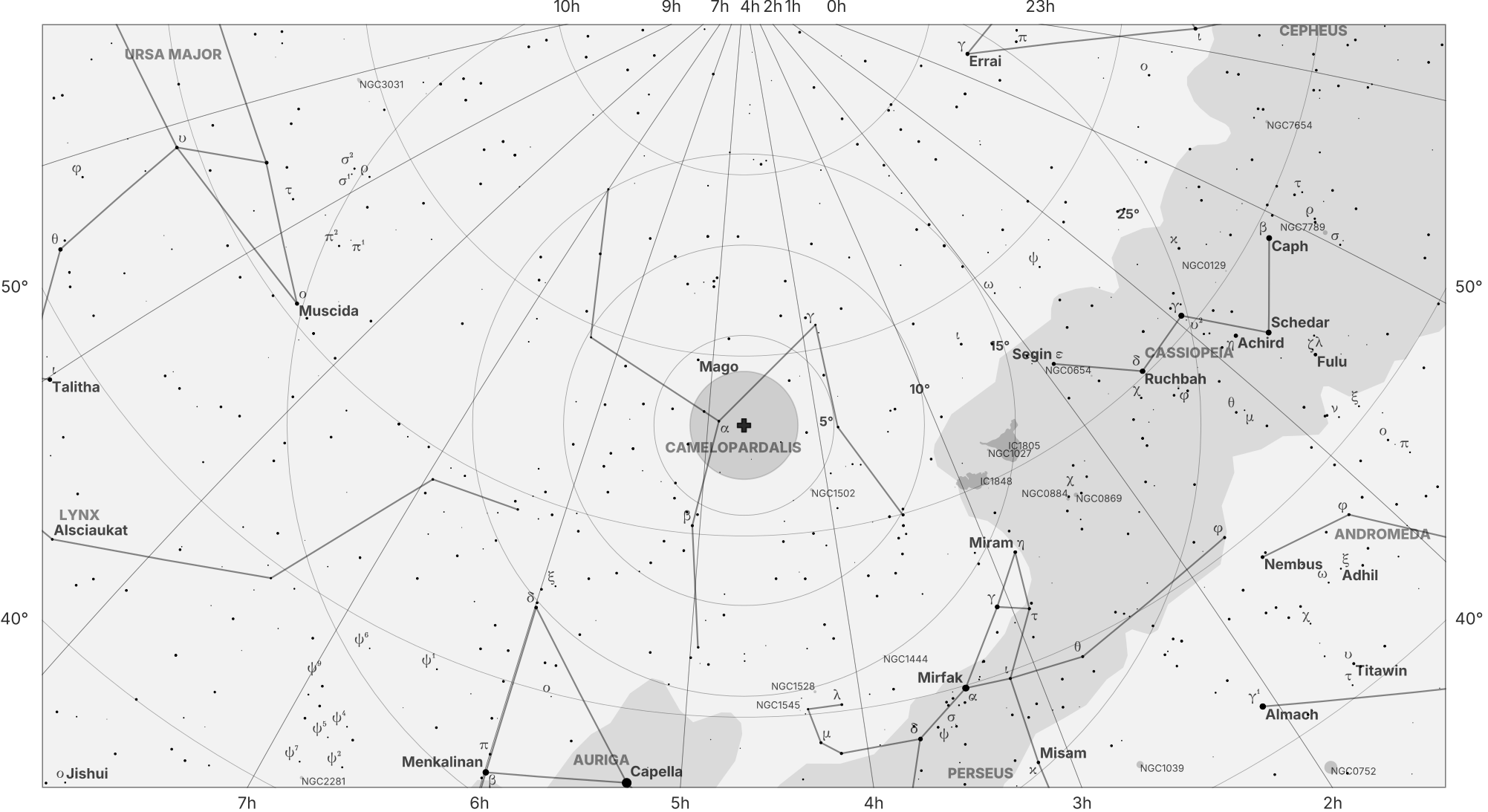
Finder map for T Camelopardalis
No known ancient cultural or mythological significance. T Camelopardalis is of interest primarily to amateur and professional observers studying carbon-rich long-period variable stars. Circumpolar for many northern observers (roughly north of 25° N) and well placed high in the sky from mid-northern latitudes. It becomes increasingly low toward equatorial regions and is effectively unobservable from most of the Southern Hemisphere. Its very large magnitude range presents a challenge: while easily visible near maximum, it fades beyond the reach of 4–8 inch telescopes near minimum light. Identifying the star in its relatively sparse field can also be difficult, particularly as it
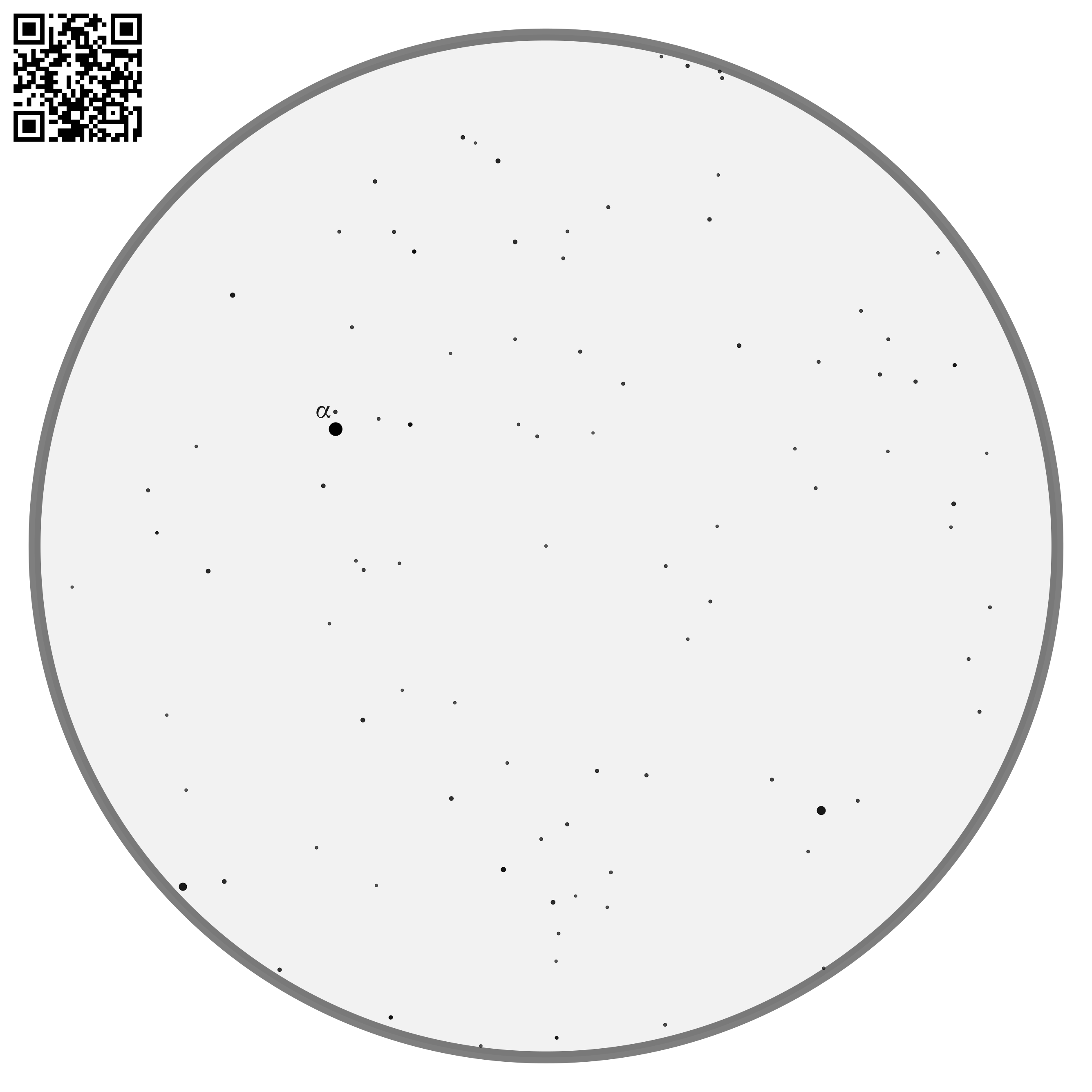
Finder scope & binocular view of T Camelopardalis
| Property | Value |
|---|---|
| Common names | T Cam, HR 1228 |
| Catalog names | - |
| Type | Evolved Star |
| Subtype | S Star |
| Coordinates | 4h 40m 08.87s, +66° 08’ 48.64” |
| Season | October - December |
| Best month | Mid-November |
| Beginner friendly | No |
| Visual reward | Moderate |
| Filters required | None |
| LP tolerance | Medium |
| Minimum equipment | Binoculars |
| Optimal equipment | Medium telescope |
| Magnitude | 7.3 |
| Size | - |
| Constellation | Camelopardalis |
Observation Notes
Naked Eye
Not visible to the naked eye at any point in its cycle.
Binoculars
Detectable in binoculars such as 7×50 or 10×50 near favorable maxima, appearing as a faint orange-red to red star. Visibility is strongly phase-dependent and may be difficult under less-than-dark skies.
Small Telescope
A 3–5 inch telescope shows the star clearly near maximum light and through much of its brighter phase, with its warm red coloration readily apparent. Suitable for basic brightness estimates using nearby comparison stars.
Medium Telescope
Extends coverage well into fainter phases, allowing the star to be followed as it fades toward magnitude 12 and beyond, though identification becomes increasingly challenging near minimum.
Large Telescope
Improves the chance of detection near deep minima, which can reach roughly magnitude 13–14, but the star remains a difficult, low-contrast point source. Even in large apertures, it may be challenging or occasionally lost at its faintest.