U Camelopardalis
Binoculars • Carbon Stars
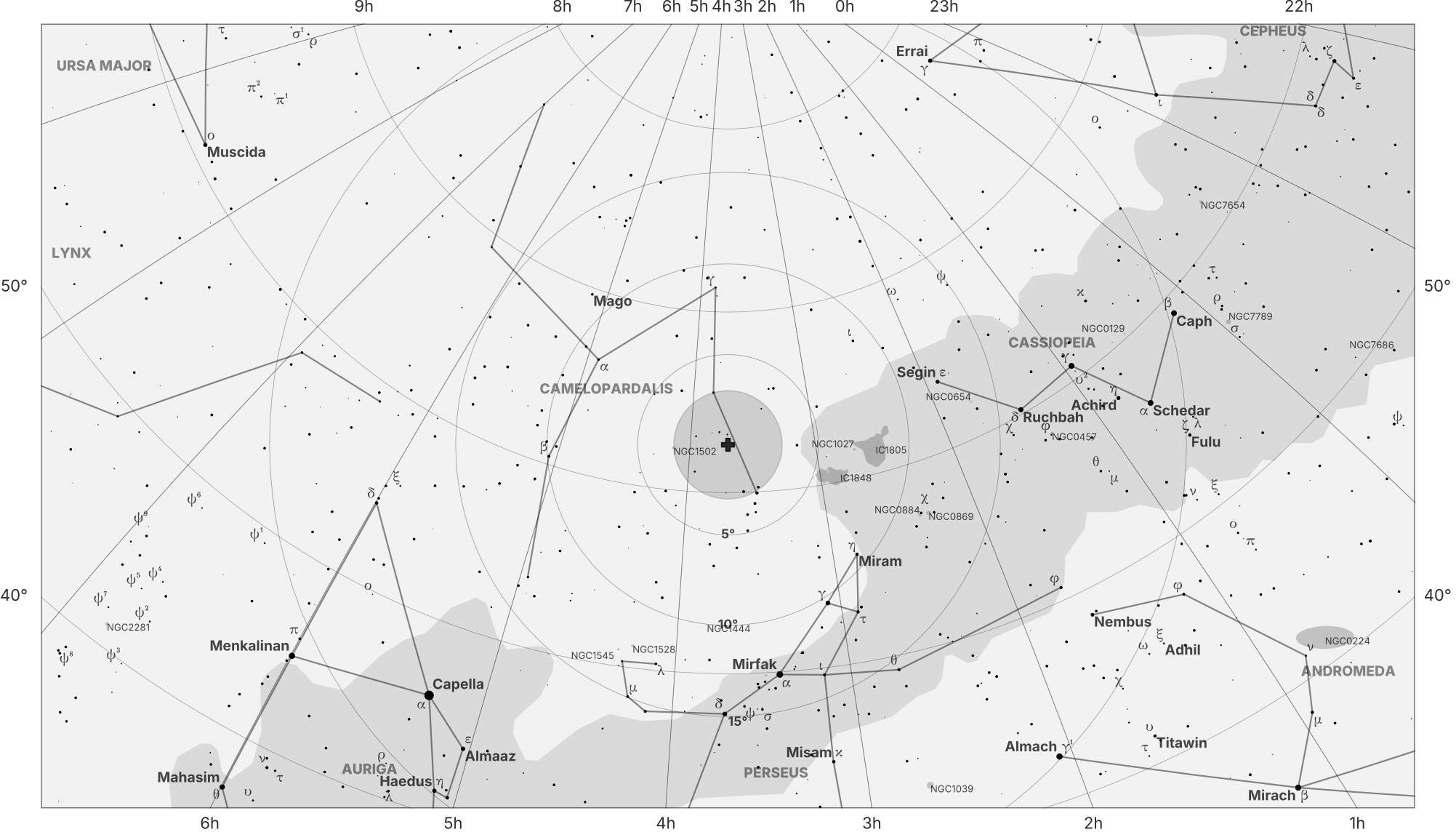
Finder map for U Camelopardalis
No known ancient or mythological significance. It is highly regarded within modern amateur and professional astronomy as a premier example of a carbon star and a key object for understanding late-stage stellar evolution. Best observed from mid to high northern latitudes where it is circumpolar or reaches high altitude. Tracking its subtle, semi-regular brightness variations over several months. Its deep red color can make accurate magnitude estimates difficult due to the Purkinje effect.
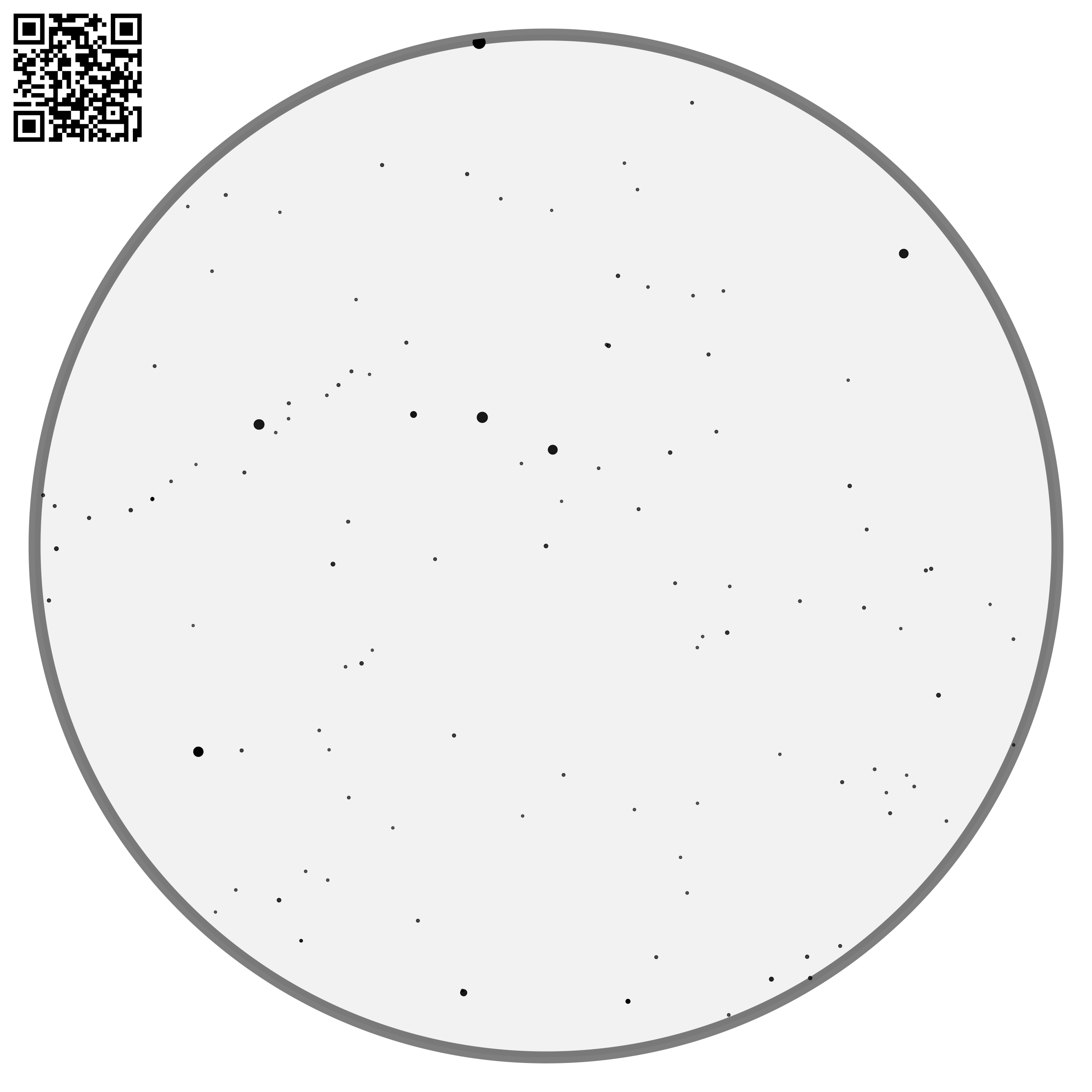
Finder scope & binocular view of U Camelopardalis
| Property | Value |
|---|---|
| Common names | - |
| Catalog names | - |
| Type | Evolved Star |
| Subtype | Carbon Star |
| Coordinates | 3h 41m 48.18s, +62° 38’ 54.40” |
| Season | October - December |
| Best month | Mid-November |
| Beginner friendly | No |
| Visual reward | Moderate |
| Filters required | None |
| LP tolerance | Low |
| Minimum equipment | Binoculars |
| Optimal equipment | Small telescope |
| Magnitude | 11.0 |
| Size | - |
| Constellation | Camelopardalis |
Observation Notes
Naked Eye
Not visible to the naked eye.
Binoculars
Visible in 10×50 binoculars as a faint star with a noticeable reddish tint, most apparent when the star is near maximum brightness.
Small Telescope
Easily visible as a stellar point. Its deep red coloration is the most rewarding visual feature.
Medium Telescope
Enhances the saturation of the red color and is suitable for making visual magnitude estimates using established comparison charts.
Large Telescope
Reveals no additional visual detail beyond smaller instruments. Although U Camelopardalis is known to possess a detached circumstellar shell, this structure is far too faint to be detected visually or photographically with amateur equipment.