Y Canum Venaticorum
Binoculars • Carbon Stars
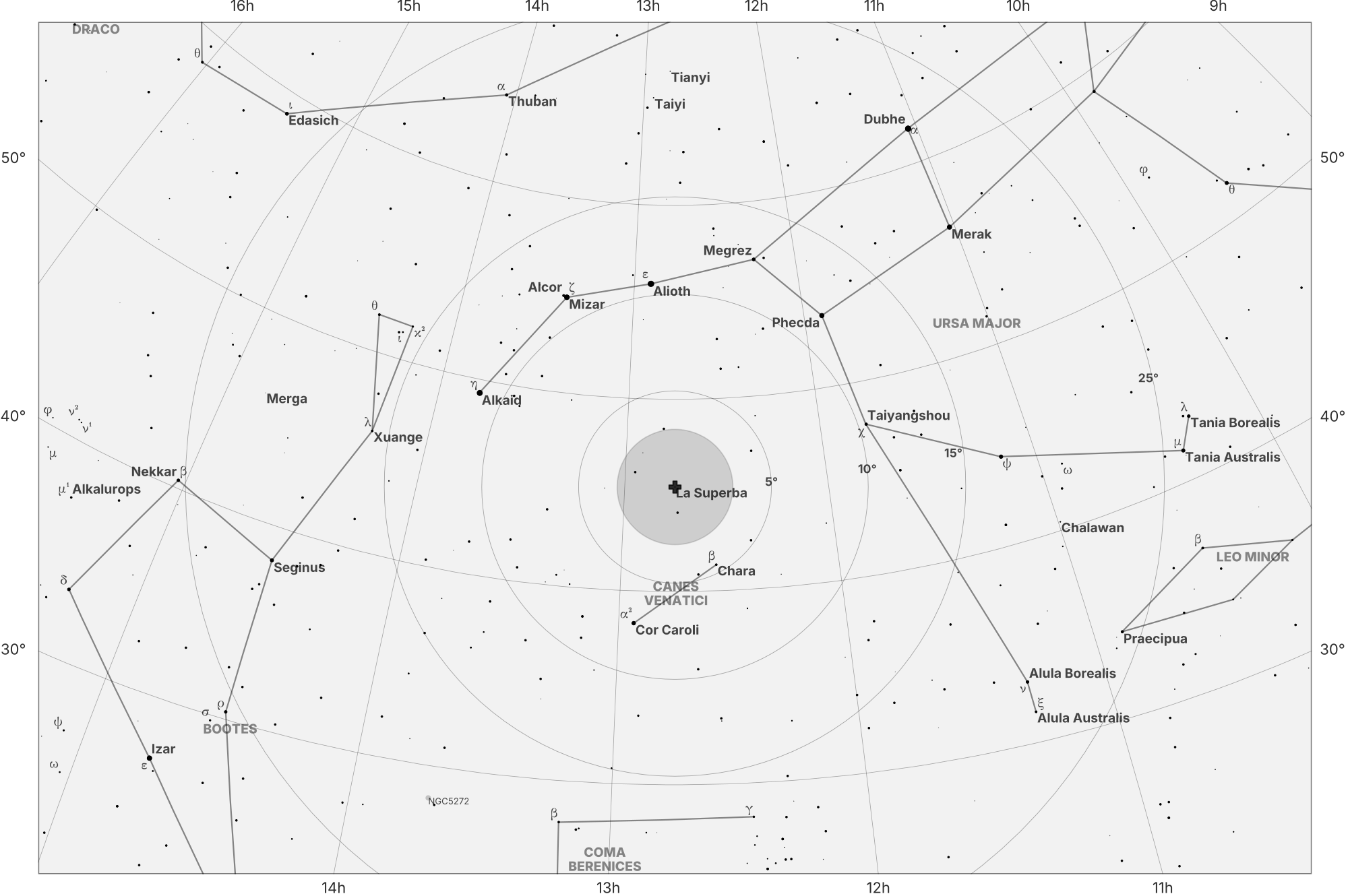
Finder map for Y Canum Venaticorum
The name ‘La Superba’ (The Superb One) reflects the profound impression its intense color made on early observers. It remains a celebrated ‘showpiece’ object for amateur astronomers worldwide. Best viewed from the Northern Hemisphere where it reaches high altitude. Appears low on the northern horizon from the Southern Hemisphere. Its deep red color can be difficult for some observers to perceive, and its variability means its brightness changes over weeks and months.
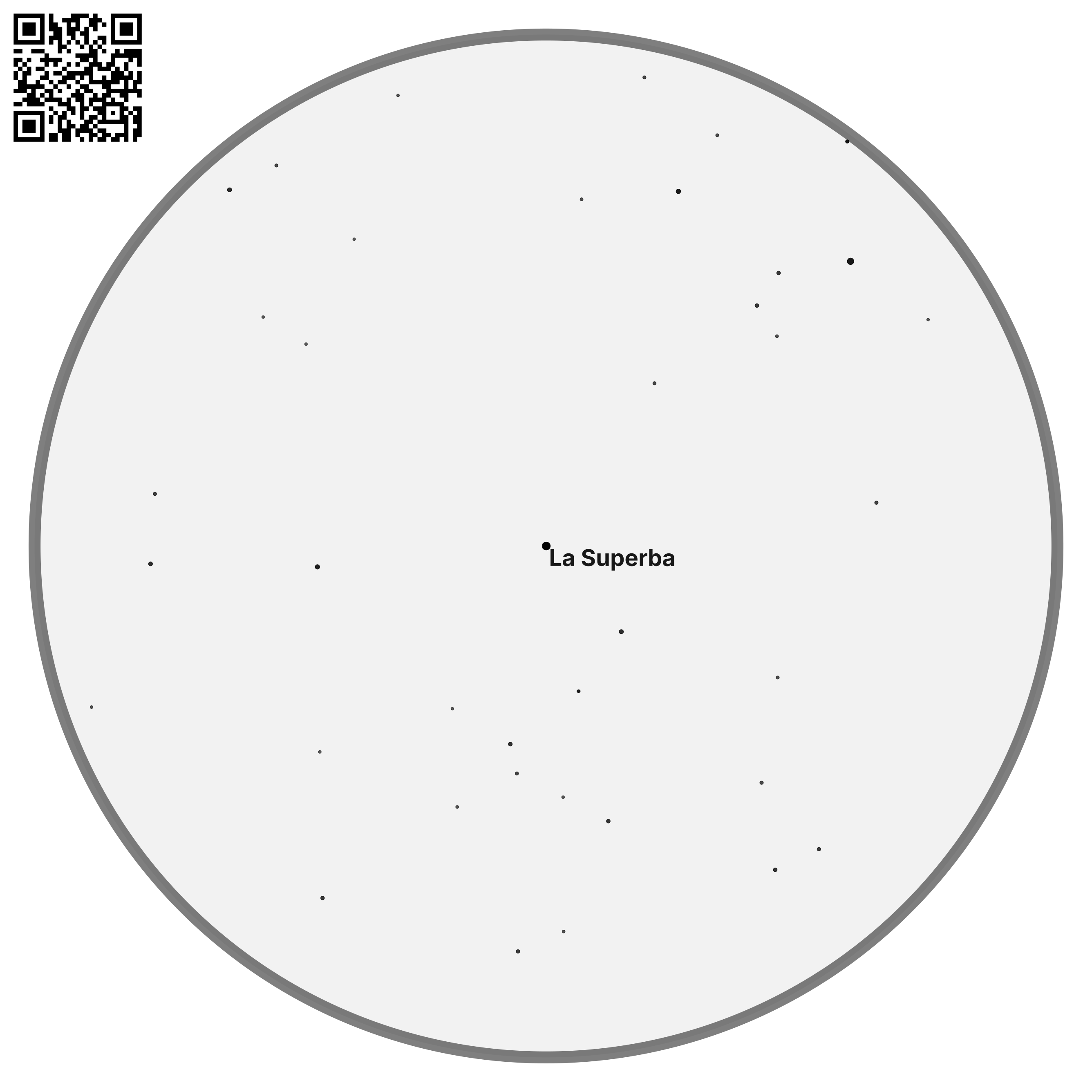
Finder scope & binocular view of Y Canum Venaticorum
| Property | Value |
|---|---|
| Common names | La Superba |
| Catalog names | - |
| Type | Evolved Star |
| Subtype | Carbon Star |
| Coordinates | 12h 45m 07.83s, +45° 26’ 24.93” |
| Season | March - May |
| Best month | April |
| Beginner friendly | Yes |
| Visual reward | High |
| Filters required | None |
| LP tolerance | High |
| Minimum equipment | Naked eye |
| Optimal equipment | Binoculars |
| Magnitude | 4.9 |
| Size | - |
| Constellation | Canes Venatici |
Observation Notes
Naked Eye
Visible to the unaided eye when near maximum brightness from moderately dark, transparent skies (typically Bortle 4–5 or better). It appears as a faint star with a subtle yellow-orange to reddish tint.
Binoculars
Easily visible in standard binoculars, where its deep red or ruby coloration becomes obvious and contrasts strongly with nearby white or bluish field stars.
Small Telescope
Presents a striking and richly colored view, with the star appearing as a sharp point of intense red. Its color is frequently described by observers as coal-like or blood-red, though perception varies.
Medium Telescope
Enhances the saturation of the red color and provides an aesthetically pleasing view focused entirely on color rather than detail.
Large Telescope
Reveals no surface features beyond smaller instruments. While the color can appear very intense at suitable magnifications, increased aperture does not necessarily improve the visual experience, and moderate magnification is often preferred.