UV Aurigae
4-8 inch Telescope • Carbon Stars
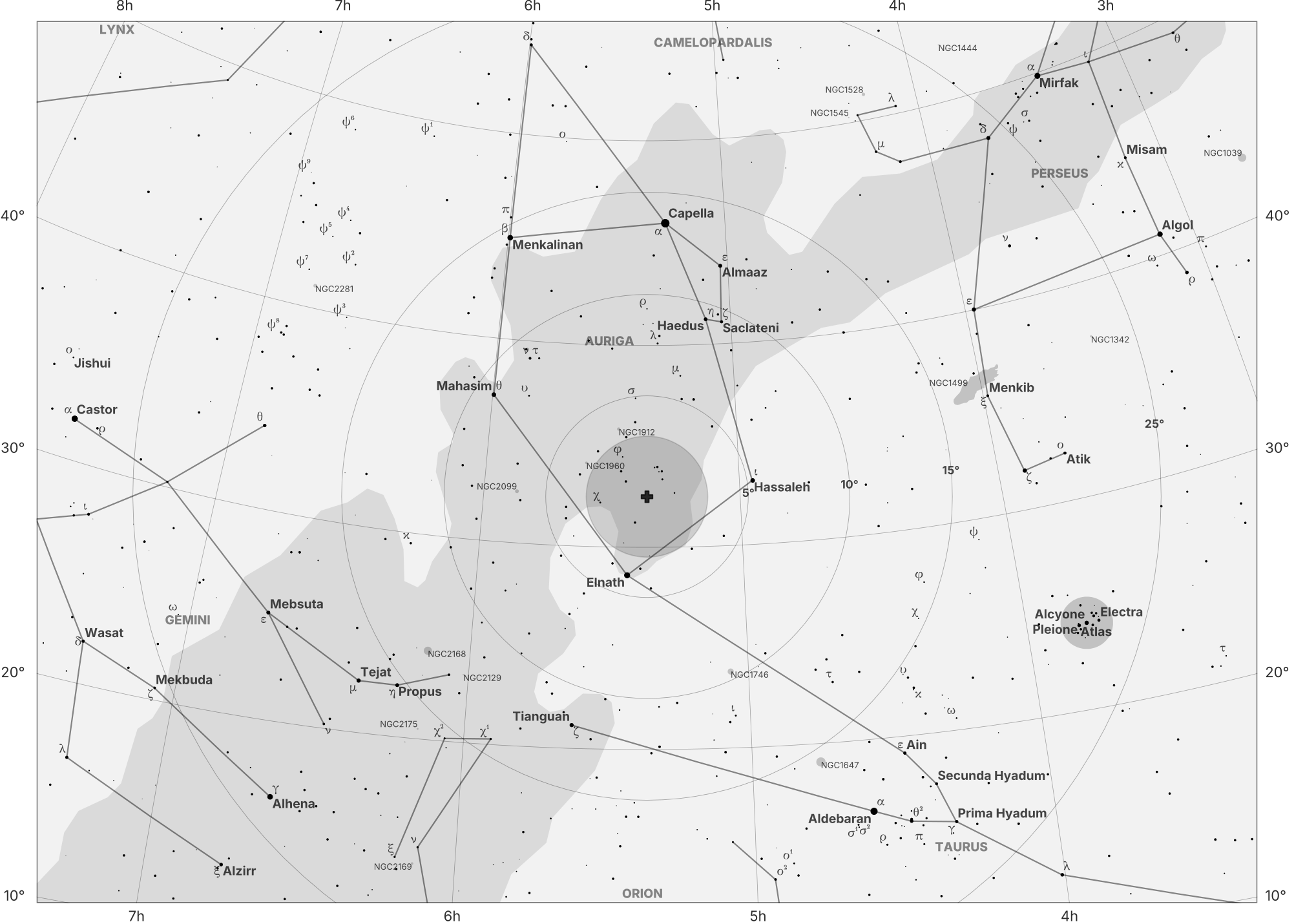
Finder map for UV Aurigae
No known ancient cultural or mythological significance. UV Aurigae is well known among variable-star observers as an unusual carbon-rich system with symbiotic characteristics. Best observed when high in the sky to reduce atmospheric extinction and dispersion, which can diminish the star’s apparent color. For Southern Hemisphere observers, it remains low on the northern horizon. Perceiving the star’s deep red color can be subtle and may require careful, prolonged viewing and comparison with nearby stars. Estimating its brightness against non-red comparison stars is a classic challenge in visual variable-star observing.
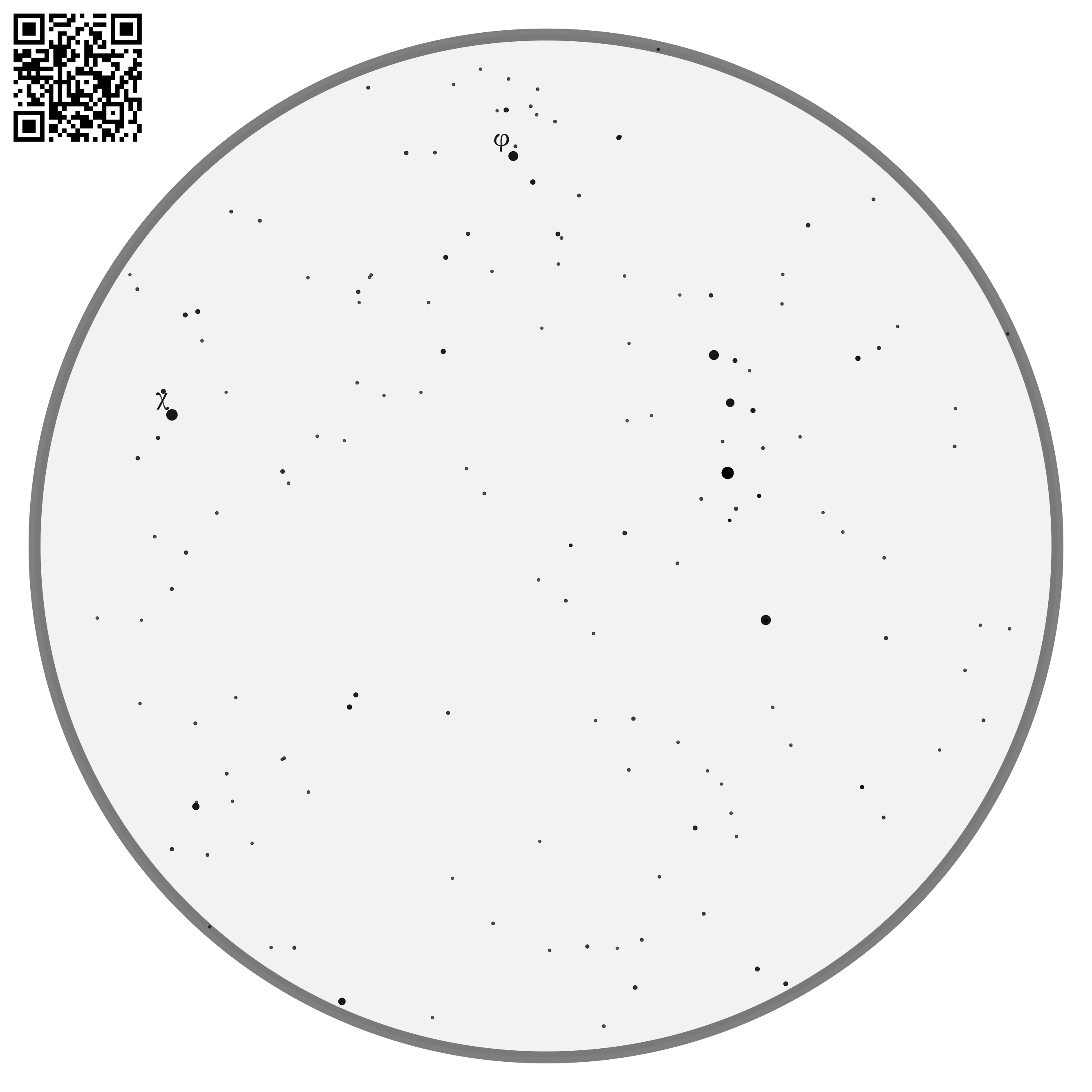
Finder scope & binocular view of UV Aurigae
| Property | Value |
|---|---|
| Common names | UV Aur |
| Catalog names | - |
| Type | Evolved Star |
| Subtype | Carbon Star |
| Coordinates | 5h 21m 48.91s, +32° 30’ 40.18” |
| Season | November - January |
| Best month | Mid-December |
| Beginner friendly | Marginal |
| Visual reward | High |
| Filters required | None |
| LP tolerance | High |
| Minimum equipment | Binoculars |
| Optimal equipment | Medium telescope |
| Magnitude | 10.4 |
| Size | - |
| Constellation | Auriga |
Observation Notes
Naked Eye
Not visible to the naked eye at any point in its cycle.
Binoculars
Detectable in 10×50 binoculars near favorable maxima, appearing as a faint star with a subtle yellow-orange to orange-red tint. Visibility is phase-dependent and not assured under light-polluted skies.
Small Telescope
A 3–4 inch telescope shows the star well near maximum light. At fainter phases it becomes challenging in small apertures, especially from suburban locations. The color is typically modest, appearing yellow-orange rather than deeply red.
Medium Telescope
A 6–8 inch telescope makes UV Aurigae easier to follow through much of its variability cycle. The star remains unresolved, with a gentle yellow-orange hue that varies slightly with brightness and observing conditions.
Large Telescope
Provides no additional visual detail beyond improved ease of detection near minimum light. The star remains stellar in appearance, and the perceived color does not reliably intensify with aperture.