Abell 39
10+ inch Telescope • Challenging Planetaries
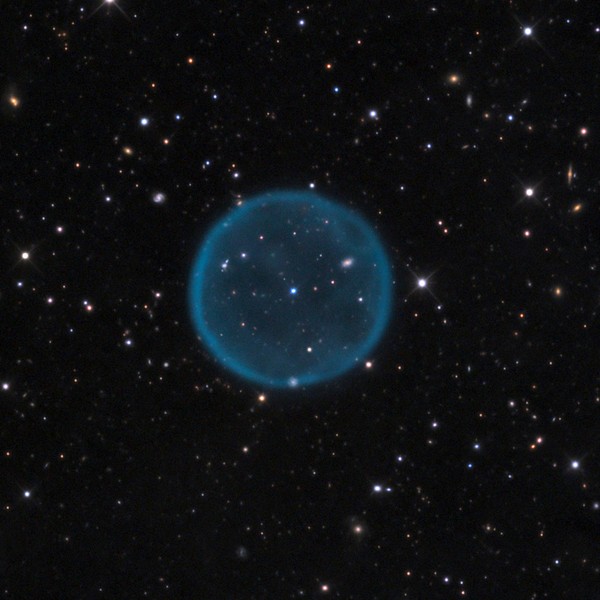
Image: Adam Block/Mount Lemmon SkyCenter/University of Arizona
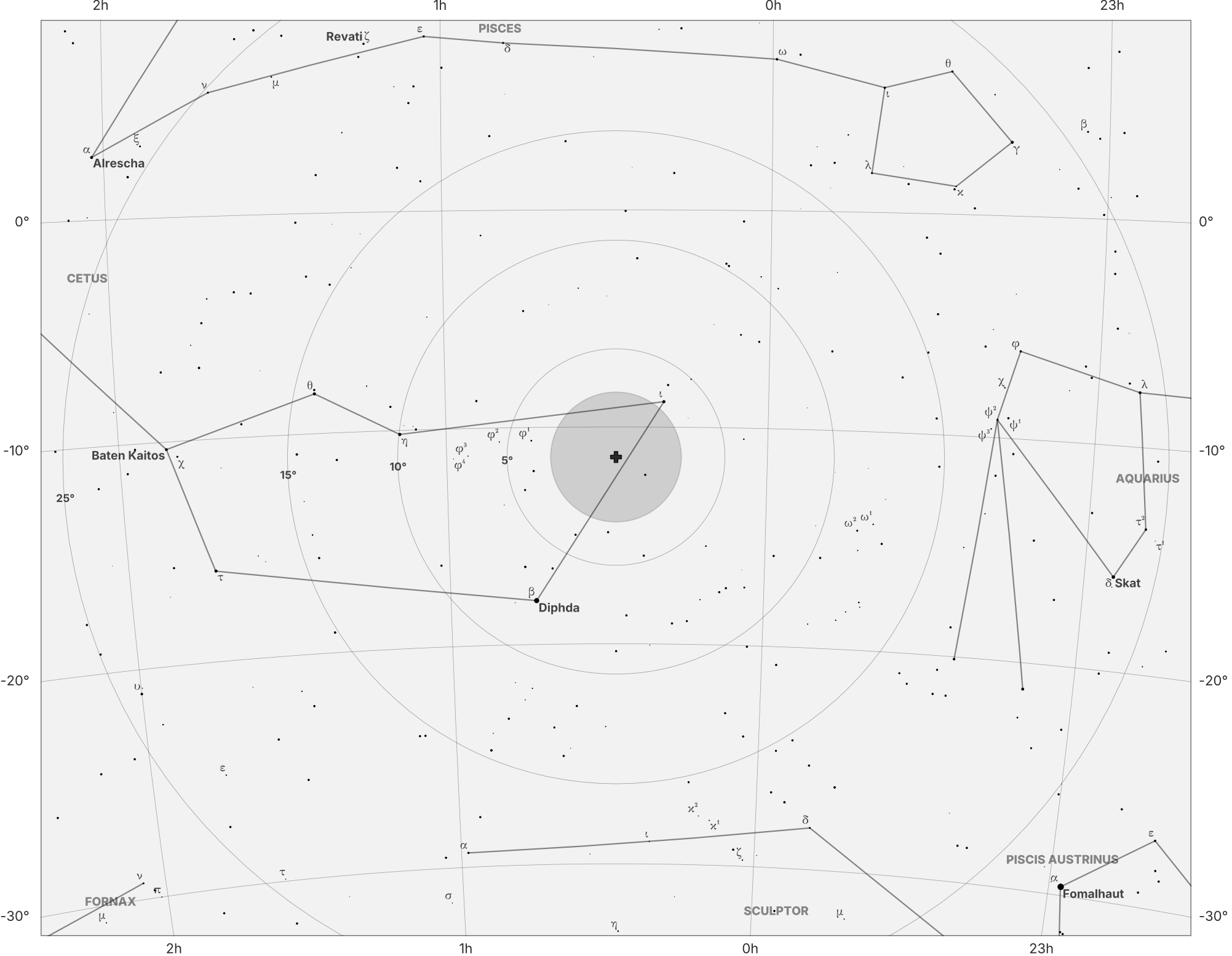
Finder map for Abell 39
High altitude above the horizon is essential to minimize atmospheric extinction, given the object’s extremely low surface brightness. Its extremely low and uniform surface brightness makes it a classic ‘dark sky’ challenge. Distinguishing it from the background sky glow is the primary difficulty.
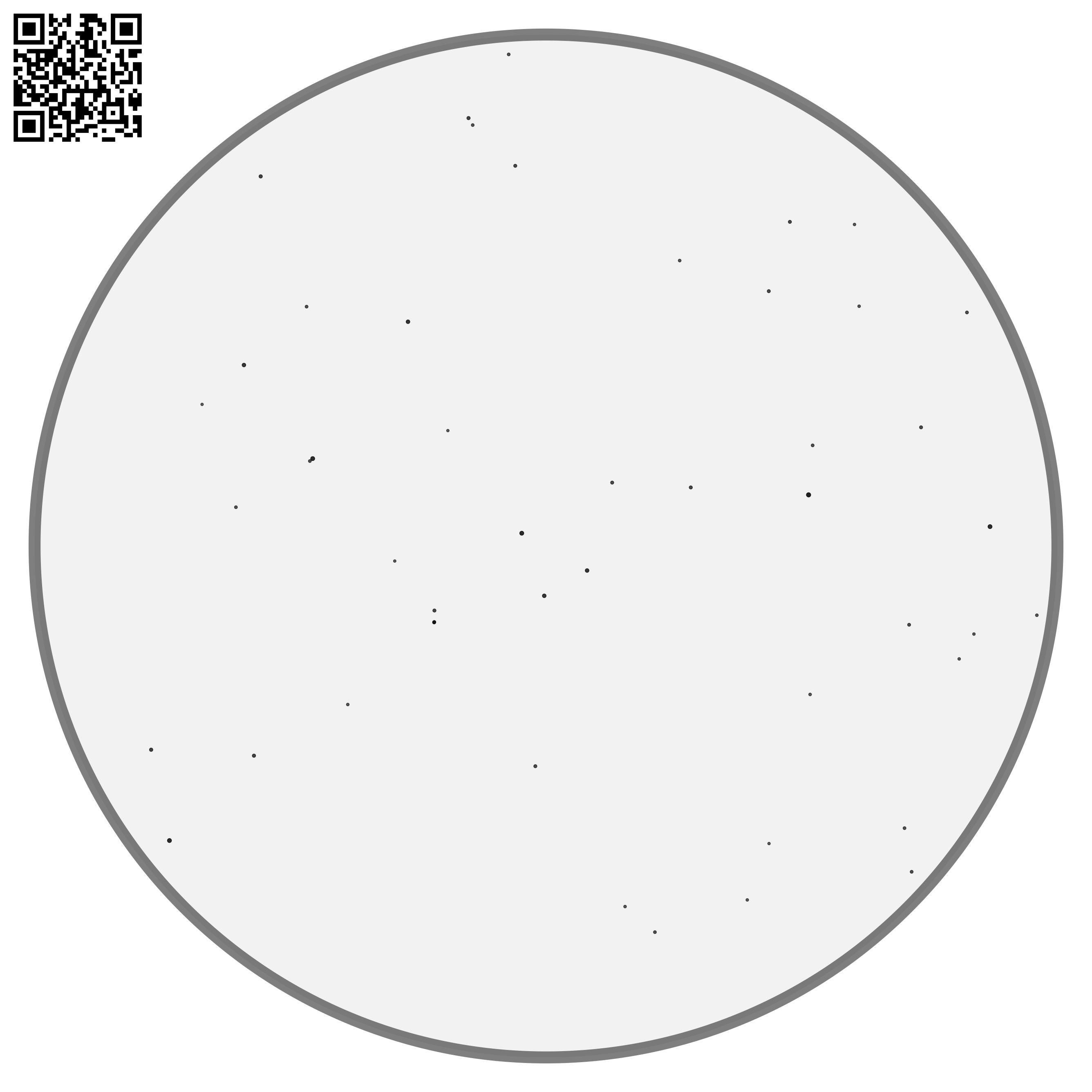
Finder scope & binocular view of Abell 39
| Property | Value |
|---|---|
| Common names | Abell Planetary 39 |
| Catalog names | Abell 39 |
| Type | Evolved Star |
| Subtype | Planetary Nebula |
| Coordinates | 0h 28m 20.00s, -11° 23’ 24.00” |
| Season | September - November |
| Best month | October |
| Beginner friendly | No |
| Visual reward | Low |
| Filters required | OIII, UHC |
| LP tolerance | Low |
| Minimum equipment | Large telescope |
| Optimal equipment | Large telescope |
| Magnitude | 13.7 |
| Size | 2.6 arcminutes x 2.6 arcminutes |
| Constellation | Hercules |
Observation Notes
Naked Eye
Invisible.
Binoculars
Invisible.
Small Telescope
Invisible; cannot be detected visually.
Medium Telescope
Exceptionally difficult and not a reliable target. Under pristine, truly dark skies (Bortle 1–2), observers using large medium-class apertures (around 12 inches) with an O-III filter may suspect a very broad, extremely low-contrast circular glow with averted vision, but many will fail to see it at all.
Large Telescope
From a dark site, telescopes of roughly 16 inches or larger with an O-III filter can reveal Abell 39 as a huge, exceedingly faint, round nebula with a soft, poorly defined edge and little internal contrast. It appears more as a tenuous, ghostly disk than a sharply defined ring. The central star (around magnitude 15–16) is a major challenge and often remains unseen even in large apertures.