NGC 7027
4-8 inch Telescope • Planetary Nebulae Detailed
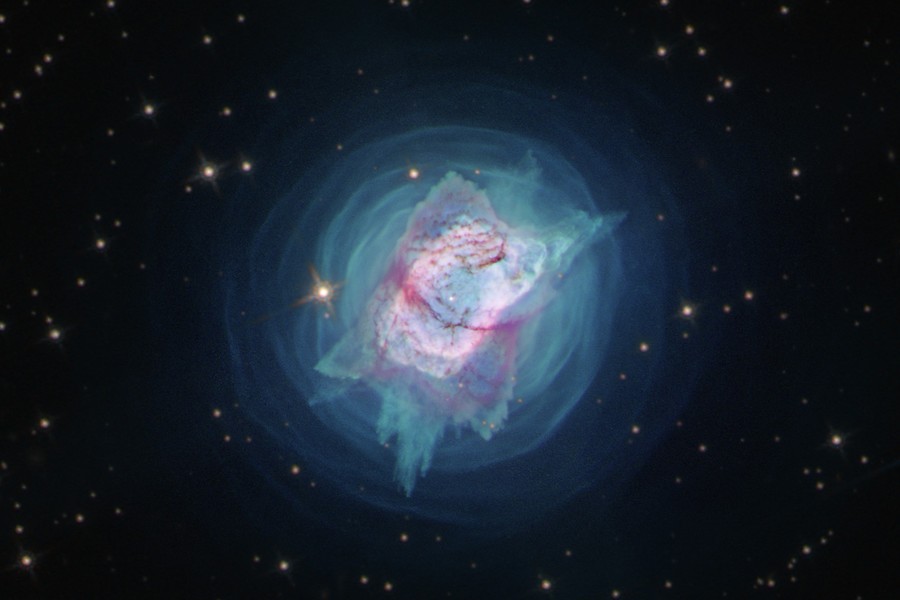
Image: NASA, ESA, Joel Kastner (RIT)

Finder map for NGC 7027
Best viewed from the Northern Hemisphere where it reaches high altitude. Very low and difficult from most of the Southern Hemisphere. Its extremely small angular size makes it appear stellar at low magnifications. High magnification is required to resolve its non-stellar shape. The central star is very difficult to observe visually.
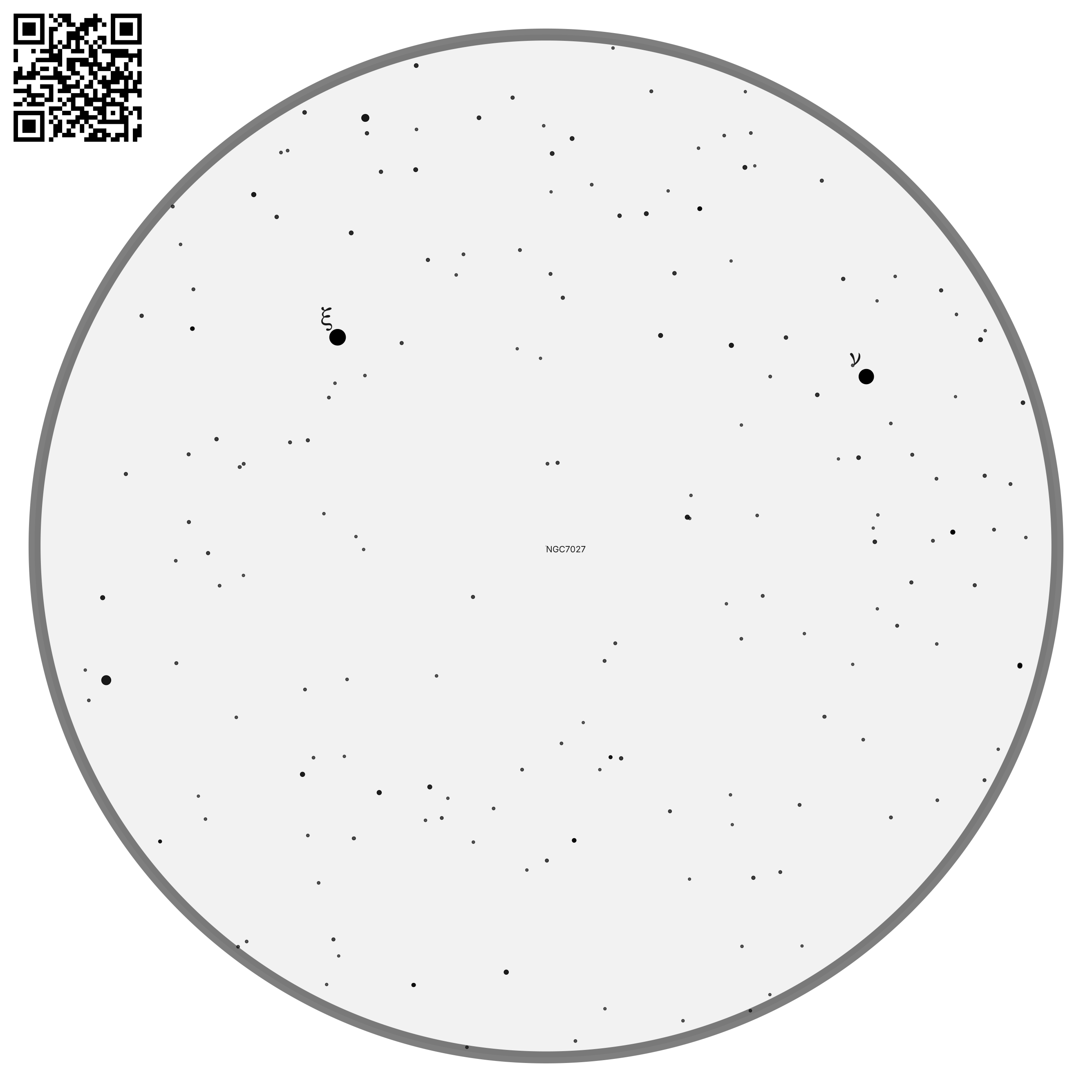
Finder scope & binocular view of NGC 7027
| Property | Value |
|---|---|
| Common names | Jewel Bug Nebula, Magic Carpet Nebula |
| Catalog names | NGC 7027, PK 084-03.1, PN G084.9-03.4 |
| Type | Evolved Star |
| Subtype | Planetary Nebula |
| Coordinates | 21h 07m 01.57s, +42° 14’ 10.47” |
| Season | July - September |
| Best month | Mid-August |
| Beginner friendly | Yes |
| Visual reward | High |
| Filters required | OIII, UHC |
| LP tolerance | High |
| Minimum equipment | Small telescope |
| Optimal equipment | Medium telescope |
| Magnitude | 8.5 |
| Size | 0.3 arcminutes x 0.2 arcminutes |
| Constellation | Cygnus |
Observation Notes
Naked Eye
Not visible.
Binoculars
Not visible as a nebula; at best appears as a faint, stellar point even in large binoculars under very dark skies.
Small Telescope
In 4–6 inch apertures, appears at low power as a bright, stellar-looking object. The blinking technique is useful to distinguish it from field stars, with or without a narrowband filter. At higher magnification (around 150× or more), a tiny, non-stellar disk may occasionally be suspected under good seeing.
Medium Telescope
With 8–12 inches at high magnification (200× or more), the nebula resolves into a very small, high–surface-brightness disk with a slightly elongated or boxy outline. A blue-green coloration is often noticeable.
Large Telescope
In apertures of roughly 14 inches and larger, the compact, rectangular appearance is clearly defined with direct vision. The central star remains an extreme visual challenge, glimpsed only during moments of excellent seeing, while an O-III filter markedly enhances contrast and helps the nebula stand out against the background.