NGC 40
4-8 inch Telescope • Planetary Nebulae Detailed
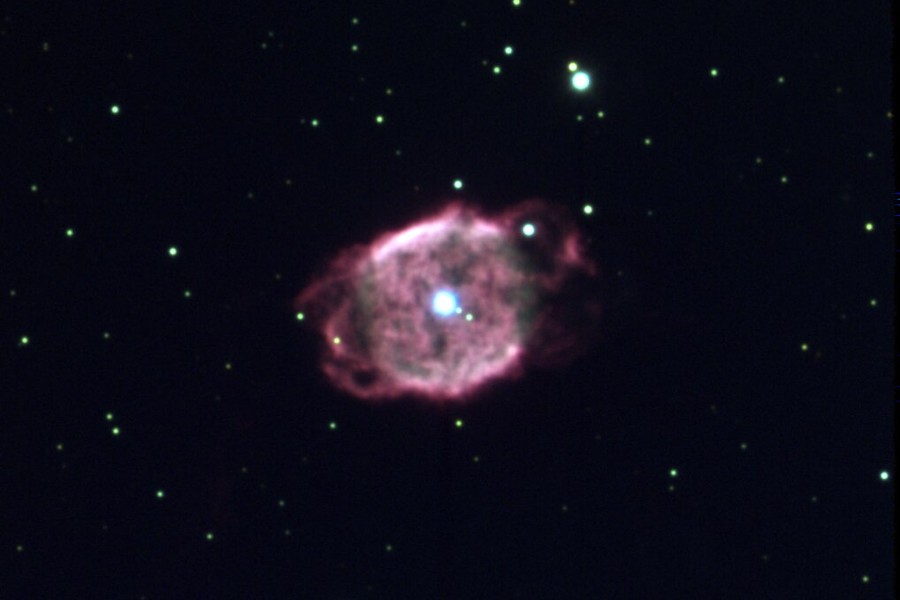
Image: WIYN/NOIRLab/NSF
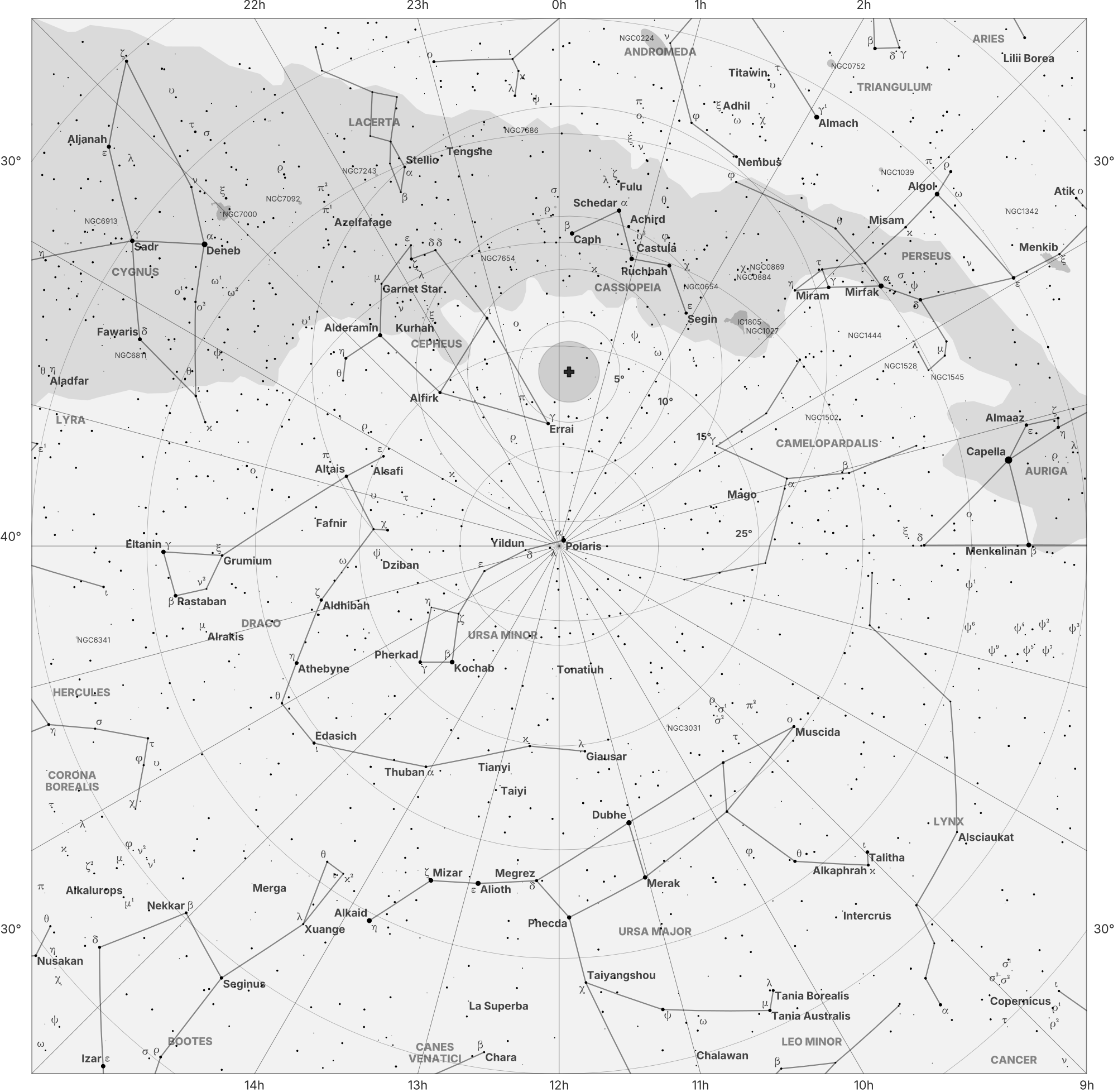
Finder map for NGC 40
High northern declination makes it circumpolar for many northern latitudes, but it remains very low or invisible for most of the Southern Hemisphere. The main visual challenge is confirming the nebula’s compact, non-stellar nature at higher magnification and detecting subtle asymmetry in its shape. The central star and the well-defined bipolar structure seen in images lie beyond reliable visual detection in 4–8 inch telescopes.
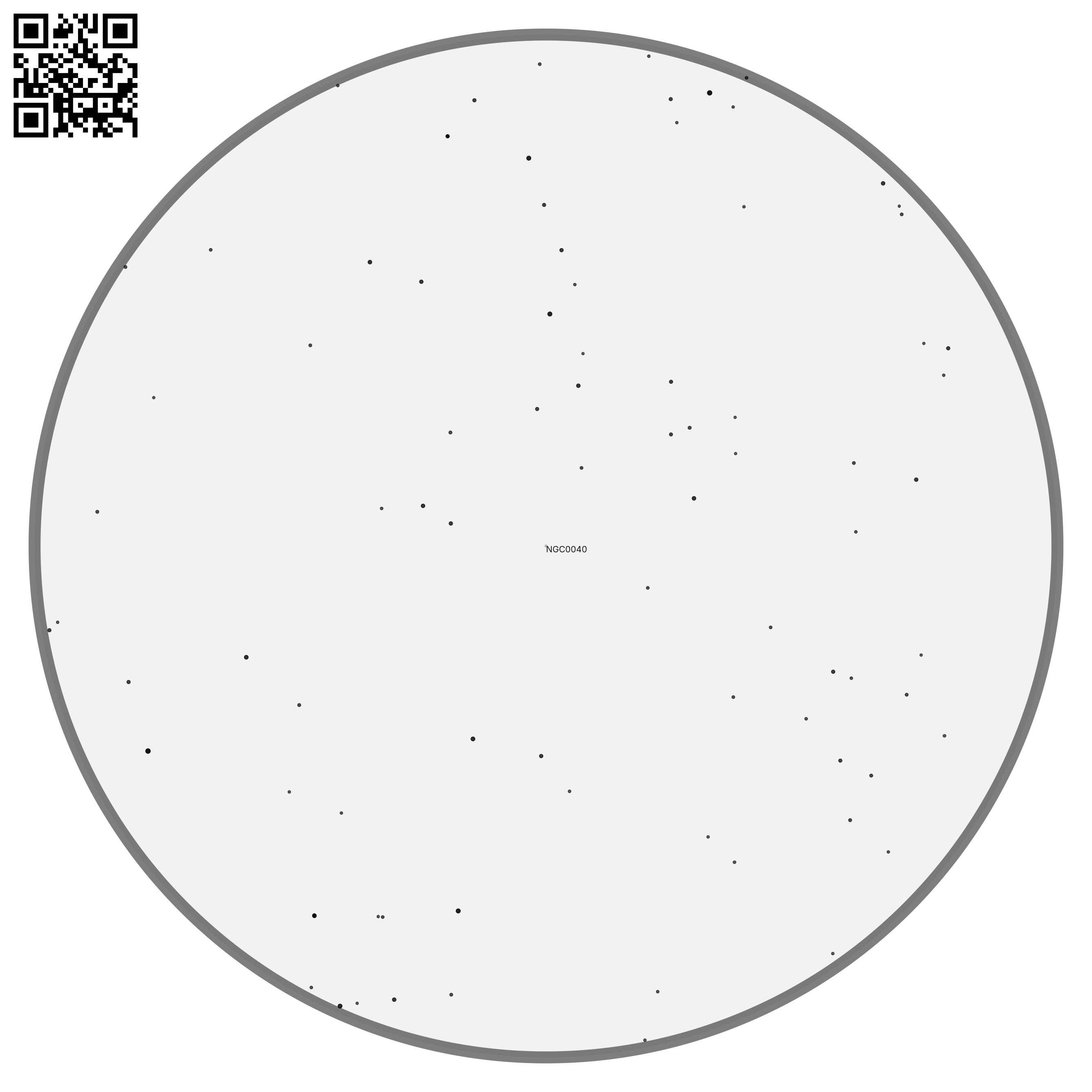
Finder scope & binocular view of NGC 40
| Property | Value |
|---|---|
| Common names | Bow-Tie Nebula, Caldwell 2 |
| Catalog names | C 2, NGC 40, PK 120+09.1, PN G120.0+09.8 |
| Type | Evolved Star |
| Subtype | Planetary Nebula |
| Coordinates | 0h 13m 01.02s, +72° 31’ 19.03” |
| Season | September - November |
| Best month | October |
| Beginner friendly | Marginal |
| Visual reward | Moderate |
| Filters required | OIII, UHC |
| LP tolerance | Medium |
| Minimum equipment | Small telescope |
| Optimal equipment | Medium telescope |
| Magnitude | 12.3 |
| Size | 1.23 arcminutes x 1.23 arcminutes |
| Constellation | Cepheus |
Observation Notes
Naked Eye
Not visible.
Binoculars
Not visible as a nebula; remains indistinguishable from a faint star even in large binoculars.
Small Telescope
In 4–6 inch apertures, appears as a small, slightly fuzzy “star.” An O-III filter produces a clear blinking effect, causing the nebula to remain visible while nearby stars fade, confirming its identity.
Medium Telescope
With 8–12 inches at higher magnification, the object resolves into a small disk with slight elongation. The central star may be glimpsed intermittently under good seeing, and with careful averted vision a subtle asymmetry in brightness may be suspected rather than a sharply defined shape.
Large Telescope
In apertures of roughly 14 inches and larger, high magnification and an O-III filter reveal a more clearly elongated disk with uneven brightness across its interior. The bipolar “bow-tie” character may be suggested as a contrast effect under excellent conditions, but all internal structure remains low contrast and seeing-dependent rather than sharply delineated.