IC 418
4-8 inch Telescope • Planetary Nebulae Detailed
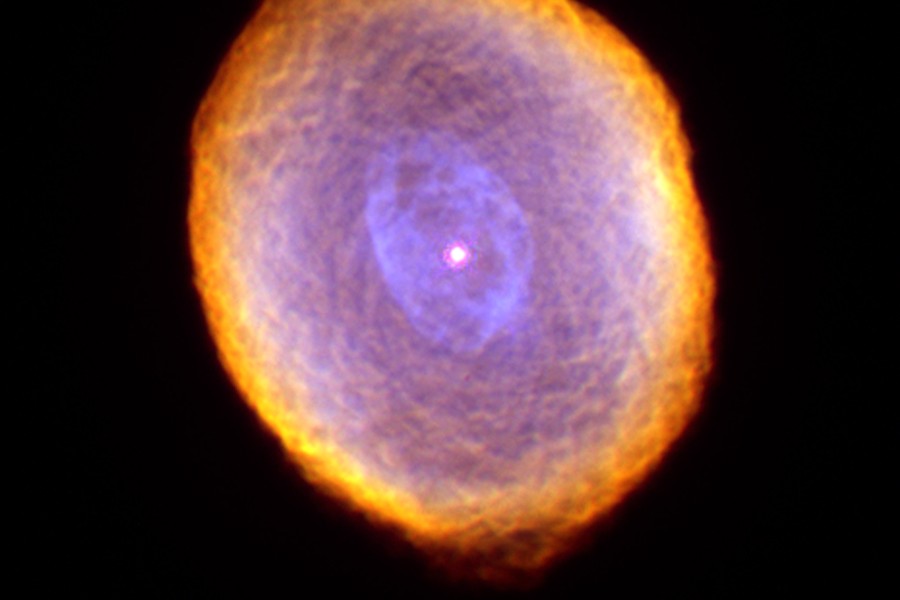
Image: NASA/ESA and The Hubble Heritage Team (STScI/AURA)
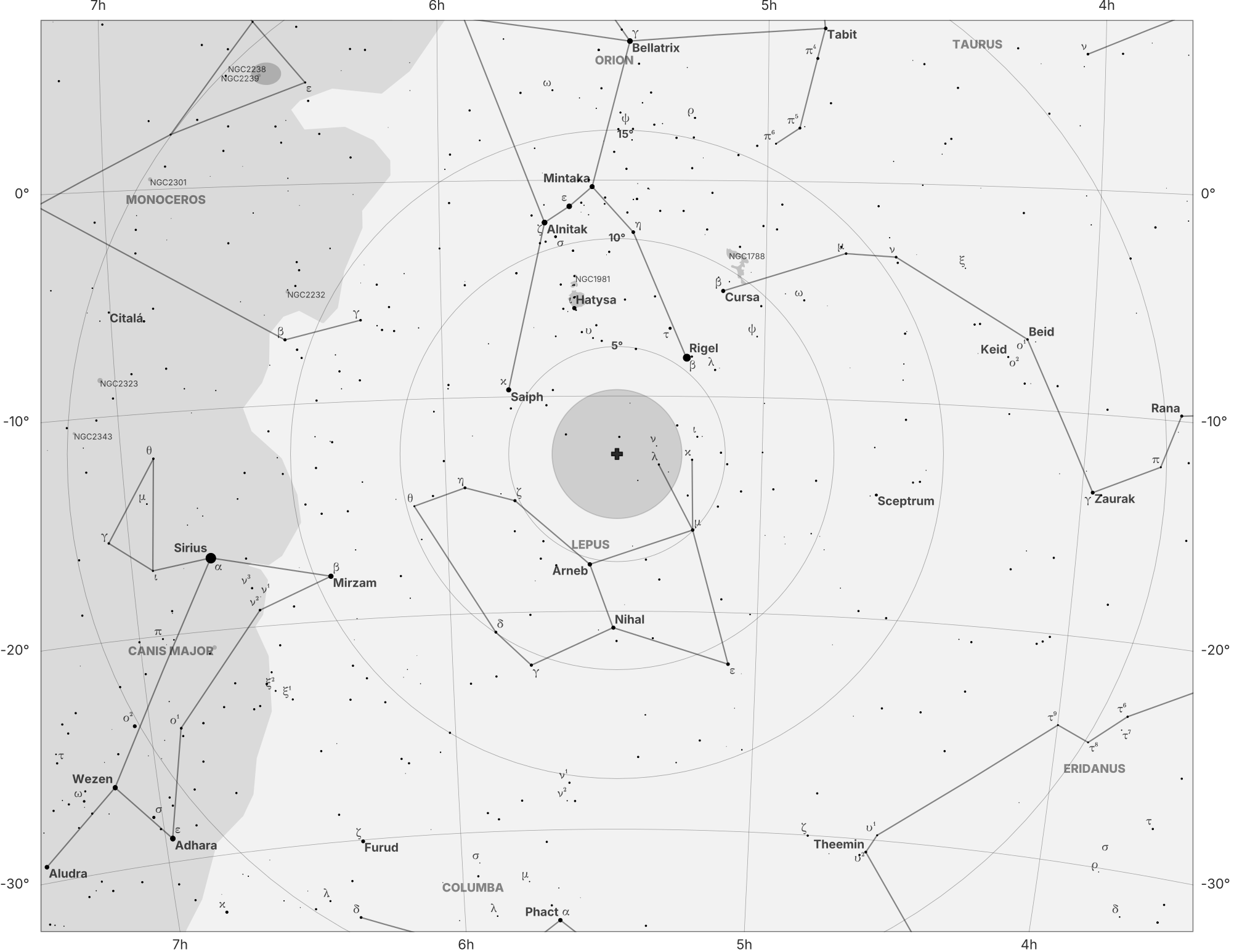
Finder map for IC 418
Well placed for Southern Hemisphere observers. From mid-northern latitudes it culminates at a lower altitude in the southern sky during winter, requiring a clear southern horizon. Its extremely small angular size causes it to appear nearly stellar at low to moderate magnification. The challenge is confirming its non-stellar nature by using higher magnification, with steady seeing aiding the view.
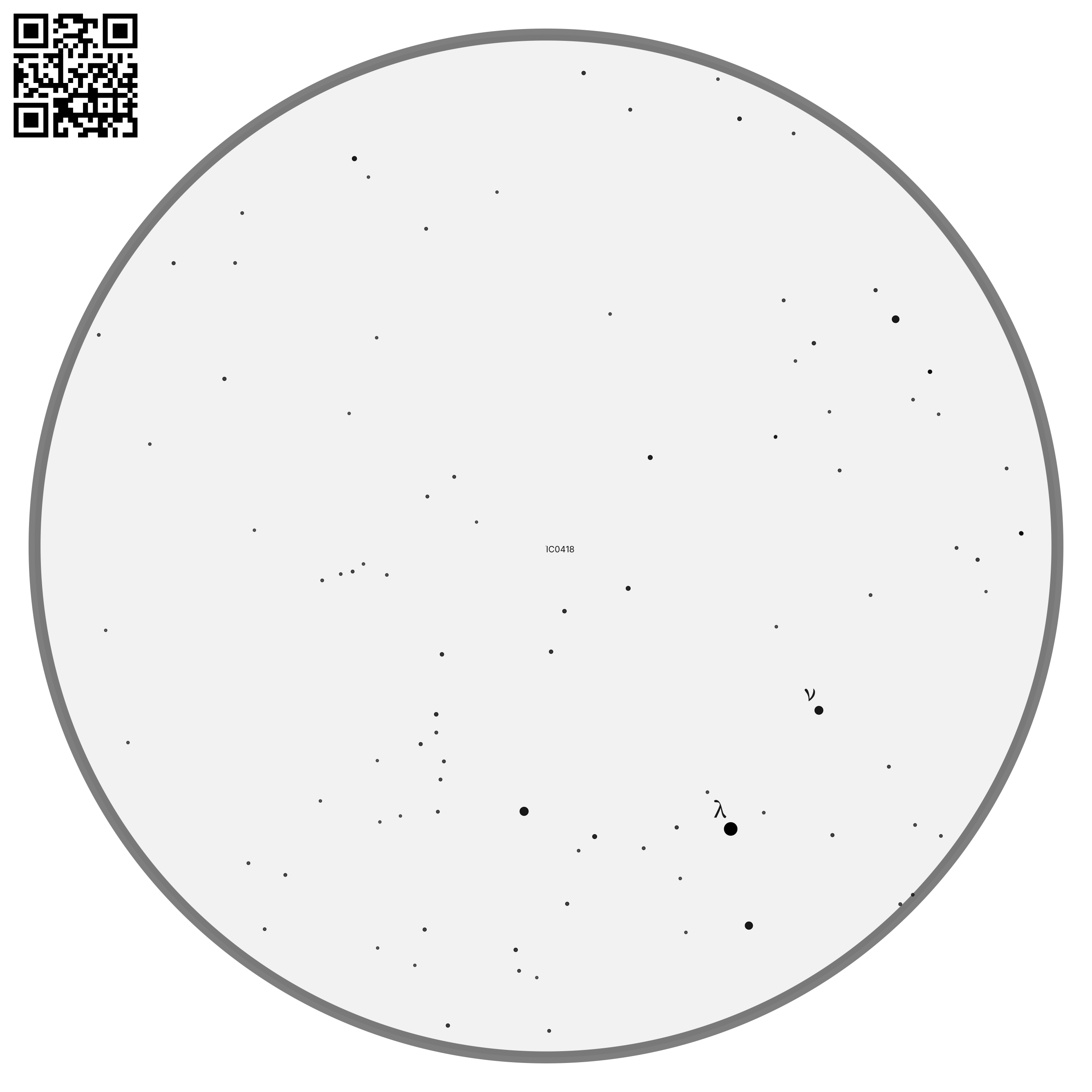
Finder scope & binocular view of IC 418
| Property | Value |
|---|---|
| Common names | Spirograph Nebula |
| Catalog names | IC 418, PK 215-24.1, PN G215.2-24.2 |
| Type | Evolved Star |
| Subtype | Planetary Nebula |
| Coordinates | 5h 27m 28.21s, -12° 41’ 50.28” |
| Season | November - January |
| Best month | Mid-December |
| Beginner friendly | Yes |
| Visual reward | High |
| Filters required | OIII, UHC |
| LP tolerance | High |
| Minimum equipment | Small telescope |
| Optimal equipment | Medium telescope |
| Magnitude | 9.3 |
| Size | 0.2 arcminutes x 0.2 arcminutes |
| Constellation | Lepus |
Observation Notes
Naked Eye
Not visible.
Binoculars
Not visible as a nebula; appears indistinguishable from a faint star even in large binoculars.
Small Telescope
In 4–6 inch apertures, appears as a tiny, slightly fuzzy “star.” The blinking technique helps confirm its nebular nature, as the object remains visible while nearby stars fade. Narrowband filters offer limited benefit, and the nebula often appears brighter without an O-III filter.
Medium Telescope
With 8–12 inches at high magnification (150× or more), resolves into a small, bright, slightly oval disk with a soft edge. The central star, around magnitude 10–11, is usually visible. A subtle peach, salmon, or yellowish tint may be perceived under good conditions.
Large Telescope
In apertures of roughly 14 inches and larger, the disk remains smooth but shows gentle brightness variations toward the rim under excellent seeing. The central star is prominent, and the warm coloration becomes more apparent; fine internal structure remains subtle and contrast-limited.