NGC 6751
10+ inch Telescope • Challenging Planetaries
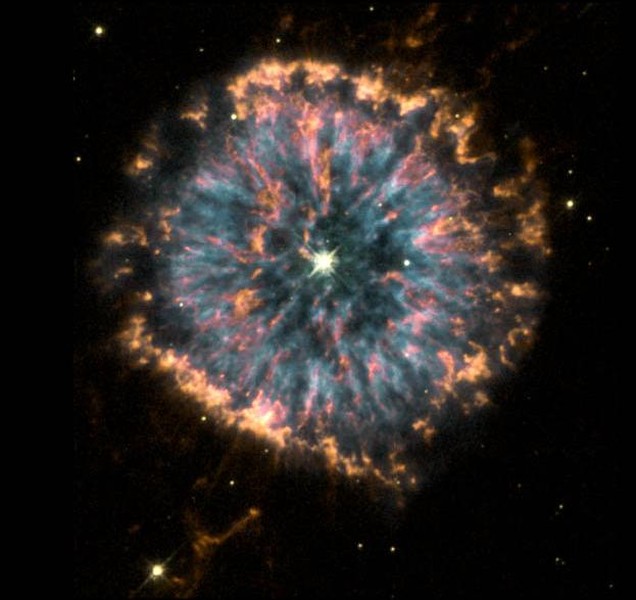
Image: NASA, The Hubble Heritage Team (STScI/AURA)
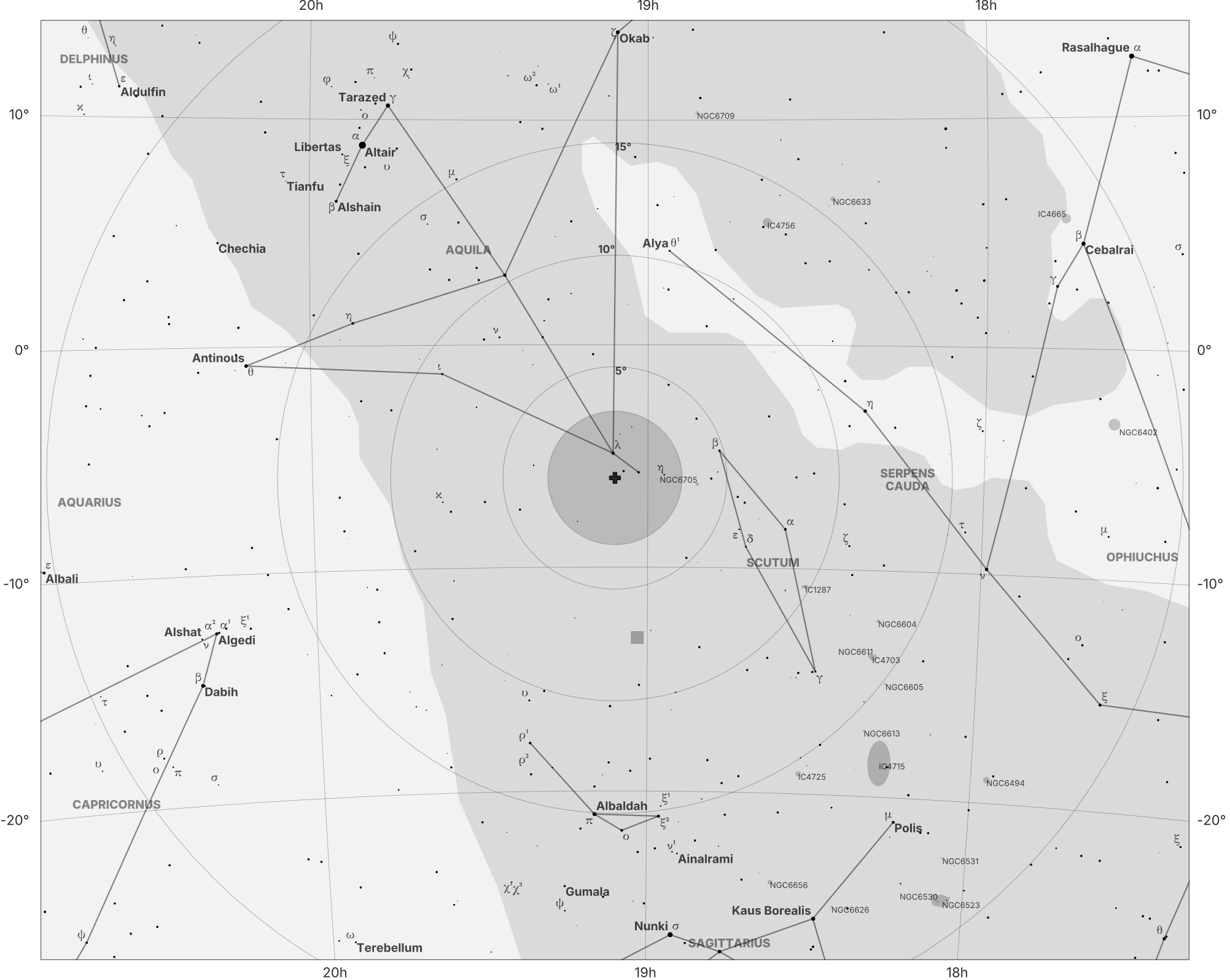
Finder map for NGC 6751
NGC 6751 is best known from space-based imagery, particularly a striking Hubble image often used in outreach to illustrate the late evolutionary stages of sun-like stars. It has no known cultural or historical significance beyond modern astronomy. Well-positioned for both hemispheres due to its location near the celestial equator. Despite its small angular size, NGC 6751 is readily identifiable as a planetary nebula in large apertures. The main visual challenge lies in discerning subtle internal structure and brightness variations within the disc. The central star, around magnitude 13.8, is accessible in large telescopes under good conditions.
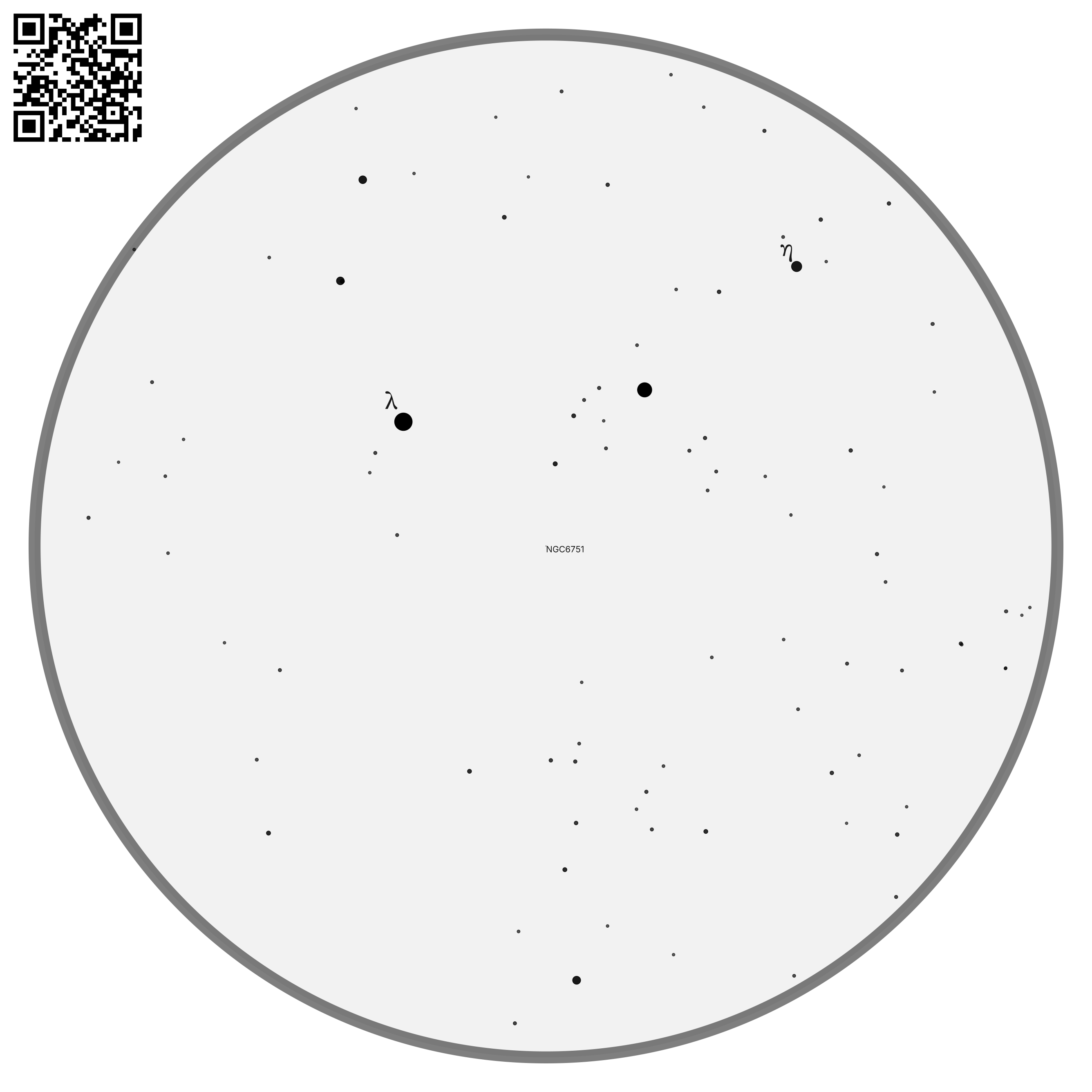
Finder scope & binocular view of NGC 6751
| Property | Value |
|---|---|
| Common names | Glowing Eye Nebula, Dandelion Puffball Nebula |
| Catalog names | NGC 6751, PK 029-05.1, PN G029.2-05.9 |
| Type | Evolved Star |
| Subtype | Planetary Nebula |
| Coordinates | 19h 05m 55.54s, -5° 59’ 32.29” |
| Season | June - August |
| Best month | July |
| Beginner friendly | Marginal |
| Visual reward | Moderate |
| Filters required | OIII, UHC |
| LP tolerance | Medium |
| Minimum equipment | Medium telescope |
| Optimal equipment | Large telescope |
| Magnitude | 11.9 |
| Size | 0.43 arcminutes x 0.43 arcminutes |
| Constellation | Aquila |
Observation Notes
Naked Eye
Not visible.
Binoculars
Not visible.
Small Telescope
Very difficult. Appears as a faint, nearly stellar point at low power and is easily mistaken for a field star. High magnification is required to suspect its non-stellar nature, and it may still remain unresolved in small apertures.
Medium Telescope
Under good seeing and at high magnification (around 200× or more), the object can be detected as a tiny, round disk with a slightly softened edge. An O-III filter greatly improves contrast and is usually needed to separate it from the surrounding star field.
Large Telescope
The nebula is clearly seen as a very small, grey to grey-green disk at high power. A slightly brighter interior may be suspected under excellent seeing, but no sharp internal structure is visible. The central star is an extreme visual challenge and is only rarely glimpsed, even in large apertures.