NGC 1360
10+ inch Telescope • Challenging Planetaries
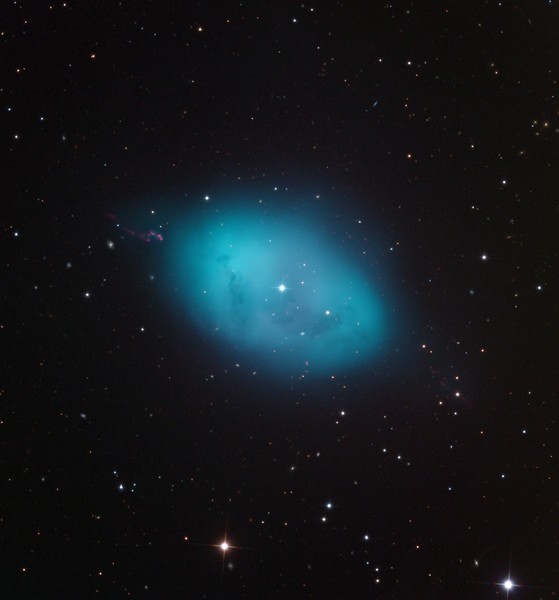
Image: Ngc1535
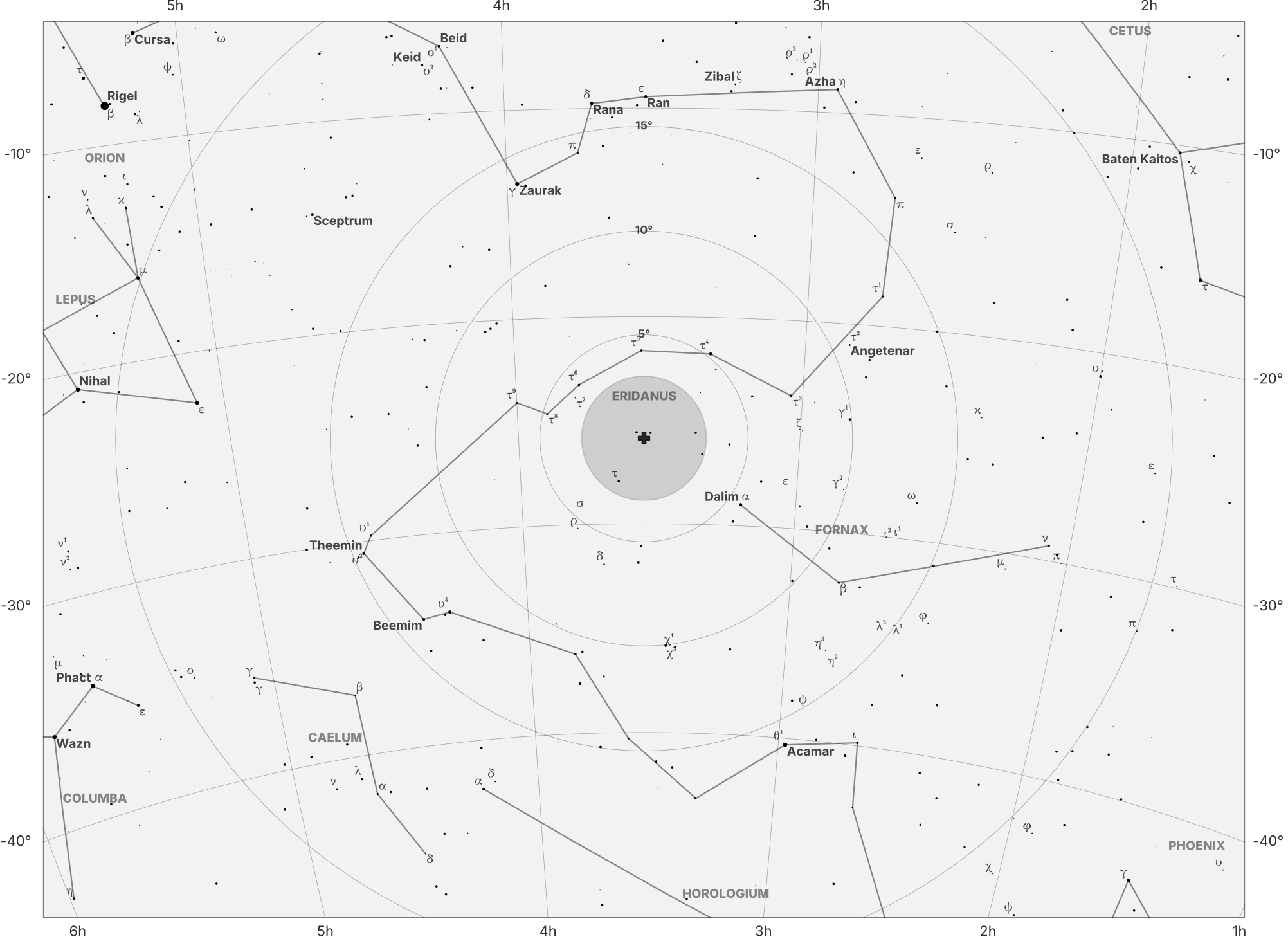
Finder map for NGC 1360
Best viewed from southern latitudes, where it climbs high in the sky. From mid- to high-northern latitudes it remains lower and benefits from a clear southern horizon. Its extremely low surface brightness makes it a demanding target, particularly from anything less than dark skies. Narrowband filters greatly improve detectability, though even then the nebulosity remains subtle. The central star is visible in large apertures but can be difficult to separate cleanly from the surrounding glow.
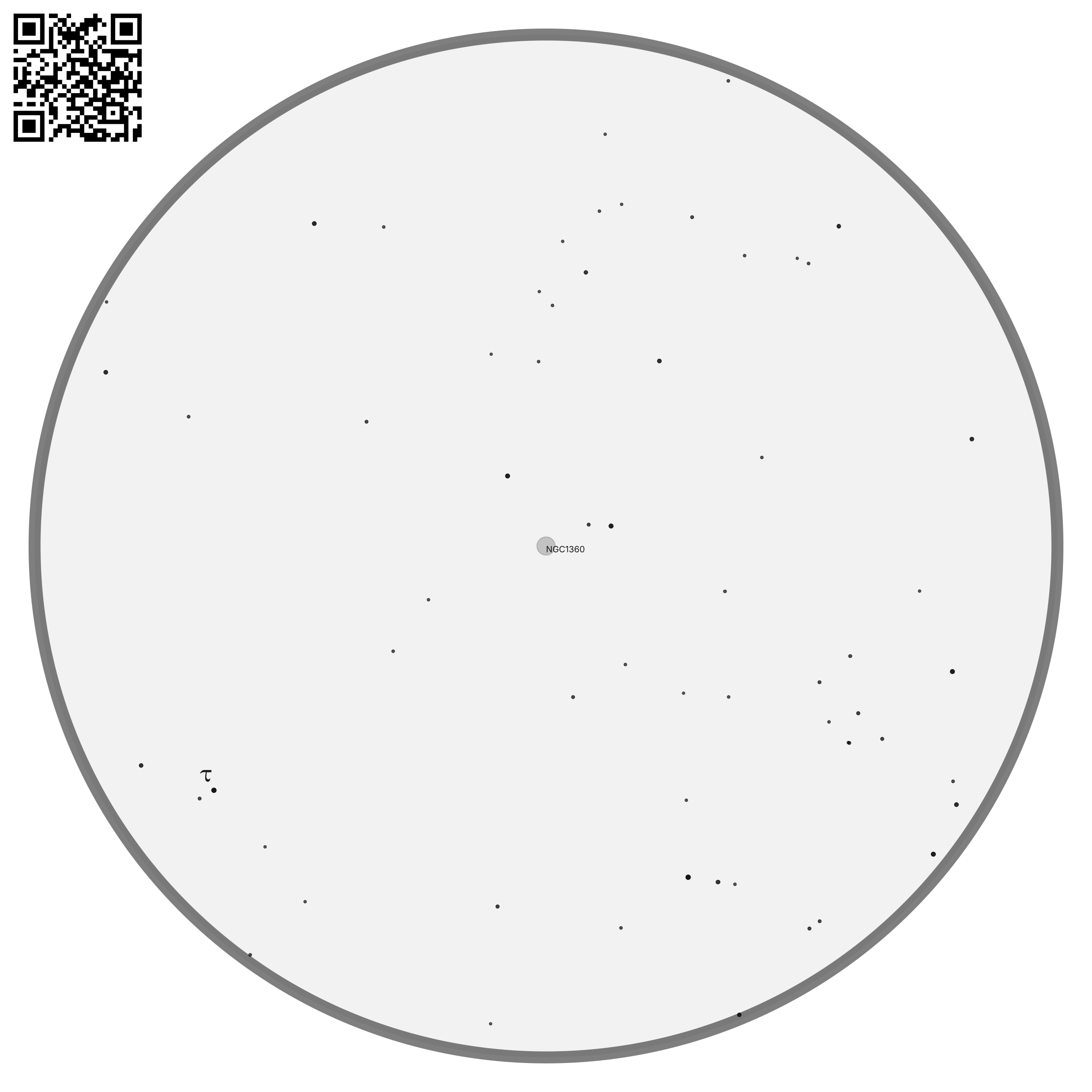
Finder scope & binocular view of NGC 1360
| Property | Value |
|---|---|
| Common names | Robin’s Egg Nebula |
| Catalog names | NGC 1360, PGC 3145958, PK 220-53.1, PN G220.3-53.9, ESO 482-7 |
| Type | Evolved Star |
| Subtype | Planetary Nebula |
| Coordinates | 3h 33m 14.65s, -25° 52’ 17.98” |
| Season | October - December |
| Best month | Mid-November |
| Beginner friendly | No |
| Visual reward | Moderate |
| Filters required | OIII, UHC |
| LP tolerance | Low |
| Minimum equipment | Medium telescope |
| Optimal equipment | Large telescope |
| Magnitude | 9.4 |
| Size | 6.42 arcminutes x 6.42 arcminutes |
| Constellation | Fornax |
Observation Notes
Naked Eye
Not visible.
Binoculars
Not visible due to its extremely low surface brightness.
Small Telescope
Very difficult and often invisible. Under dark skies, experienced observers using an O-III filter may suspect a large, diffuse, oval glow, but many will fail to detect it at all in apertures below about 6 inches.
Medium Telescope
Detection becomes more reliable with the aid of an O-III filter. The nebula appears as a large, faint, softly defined oval with very low contrast against the background sky. The central star (around magnitude 11.4) may be glimpsed under good conditions but is not assured.
Large Telescope
The nebula is easier to hold with averted vision, showing a broad, diffuse oval with a gently brighter interior and no sharp edge. Any internal texture is extremely subtle. The central star is more readily visible, and a very faint blue-green cast may be suspected by some observers.