NGC 2392
4-8 inch Telescope • Planetary Nebulae Detailed
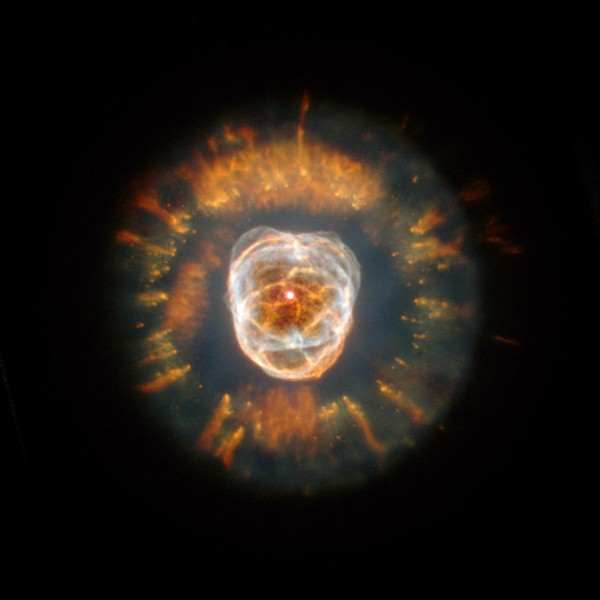
Image: NASA, ESA, Andrew Fruchter (STScI), and the ERO team (STScI + ST-ECF)
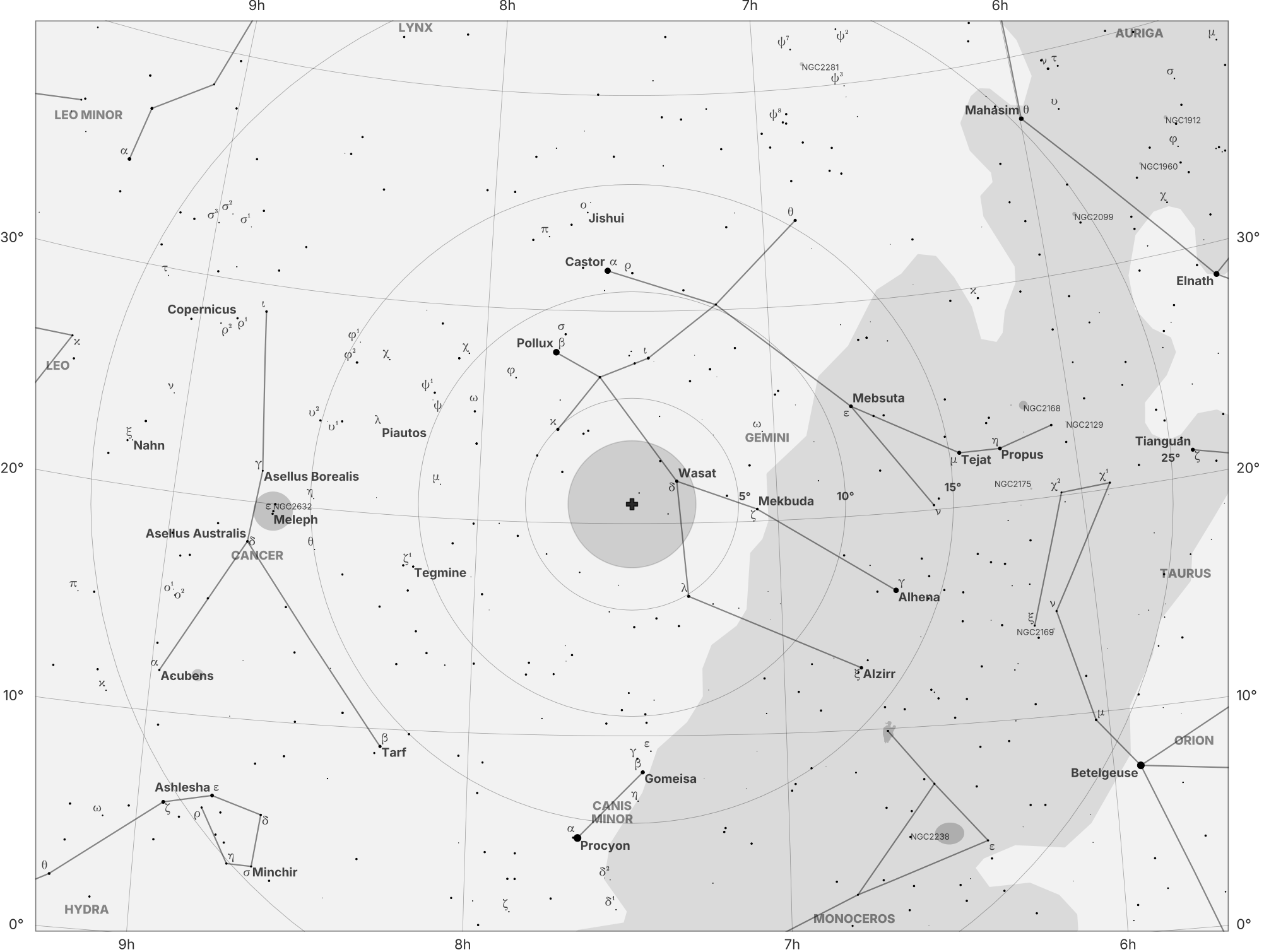
Finder map for NGC 2392
NGC 2392 is widely known by the traditional nickname “Eskimo Nebula” (also sometimes called the “Clownface Nebula”), making it a popular outreach target and a frequent subject in amateur astronomy literature and astrophotography. Best observed when high in the sky to reduce atmospheric extinction and improve contrast, which is important for this compact planetary nebula. The visual challenge lies in distinguishing the bright inner shell from the fainter surrounding envelope using moderate to high magnification, and in glimpsing the central star against the bright nebulosity. Much finer filamentary structure in the extended halo seen in images lies beyond the visual reach of 4–8 inch telescopes.
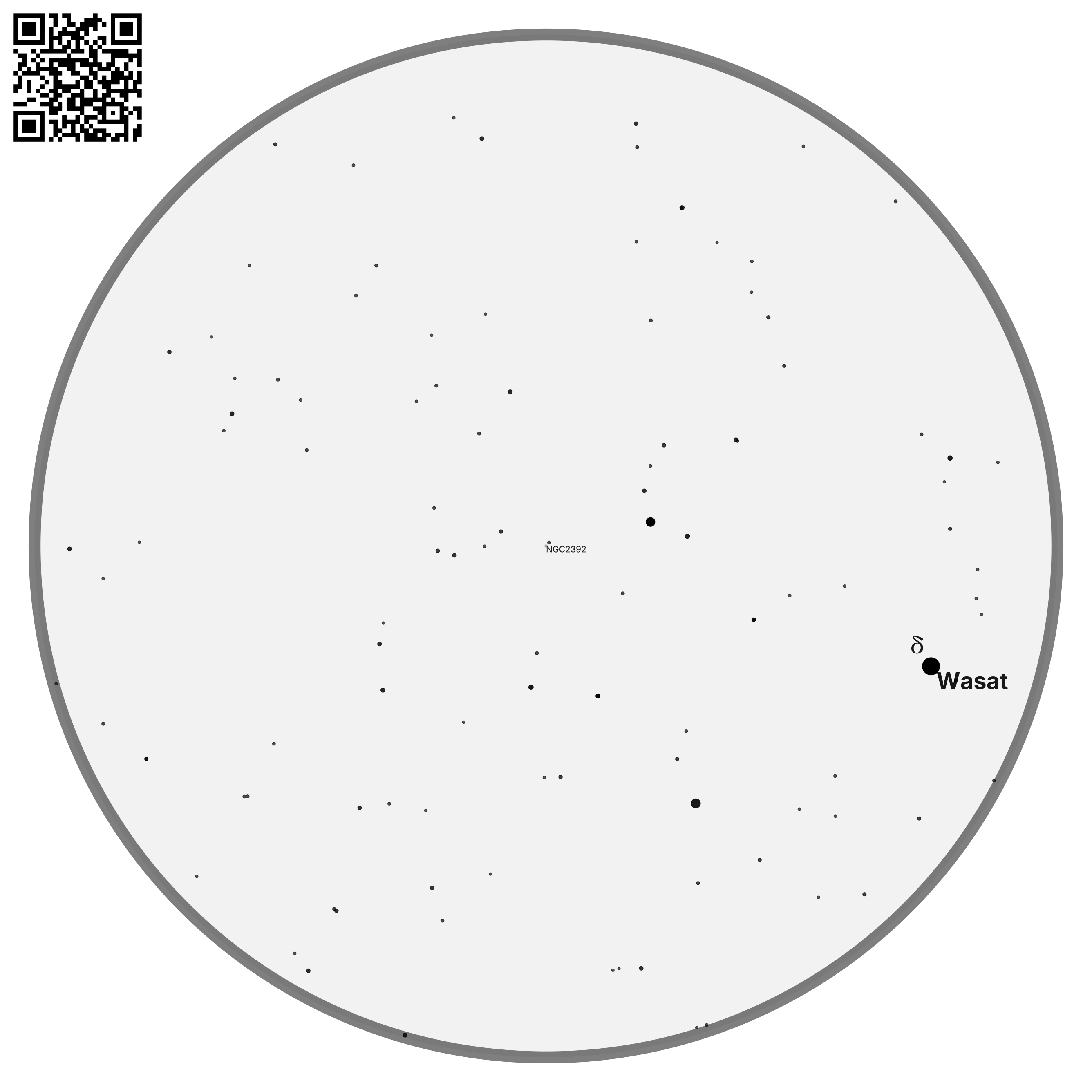
Finder scope & binocular view of NGC 2392
| Property | Value |
|---|---|
| Common names | Eskimo Nebula, Clown-faced Nebula, Lion Nebula |
| Catalog names | C 39, NGC 2392, PK 197+17.1, PN G197.8+17.3 |
| Type | Evolved Star |
| Subtype | Planetary Nebula |
| Coordinates | 7h 29m 10.77s, +20° 54’ 42.47” |
| Season | December - February |
| Best month | Mid-January |
| Beginner friendly | Yes |
| Visual reward | High |
| Filters required | OIII, UHC |
| LP tolerance | High |
| Minimum equipment | Small telescope |
| Optimal equipment | Medium telescope |
| Magnitude | 9.1 |
| Size | 0.9 arcminutes x 0.9 arcminutes |
| Constellation | Gemini |
Observation Notes
Naked Eye
Not visible.
Binoculars
Appears stellar and indistinguishable from a faint star, with no nebulous character.
Small Telescope
In 4–6 inch apertures, appears at low power as a slightly fuzzy, bluish-green star. At higher magnification (100× or more), its small, round disk becomes apparent. An O-III filter helps the nebula stand out by suppressing surrounding stars.
Medium Telescope
With 8–12 inches, the bright inner region is clearly defined, and the central star, near magnitude 10.5, may be glimpsed intermittently during moments of steady seeing. The nebula responds very well to an O-III filter, which markedly improves contrast.
Large Telescope
In apertures of roughly 14 inches and larger under dark skies, careful high-magnification viewing can reveal a brighter inner shell surrounded by a much fainter, diffuse outer envelope. Subtle textural impressions within the inner region may be suspected under excellent seeing, but all fine structure remains low contrast and seeing-dependent.