Owl Nebula
4-8 inch Telescope • Planetary Nebulae Detailed
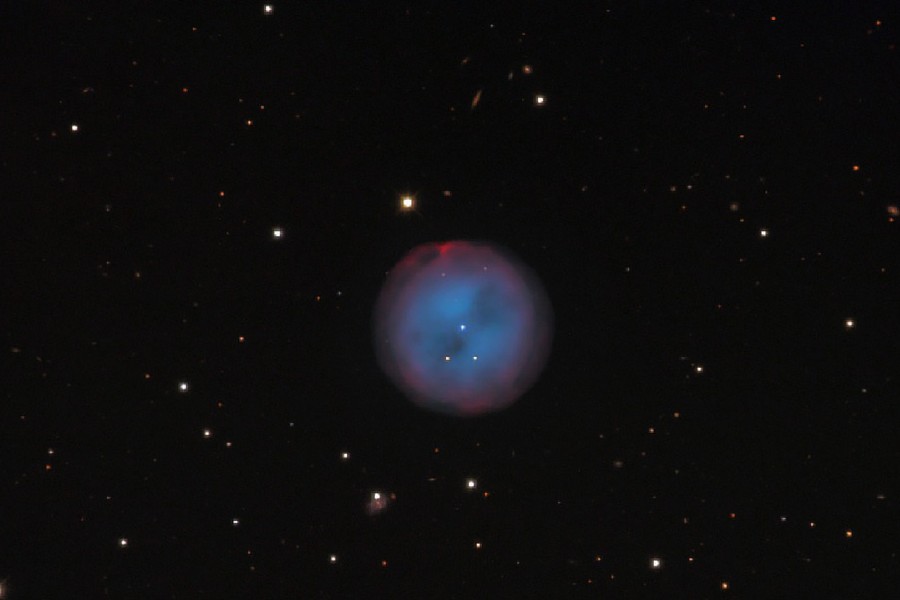
Image: Fryns
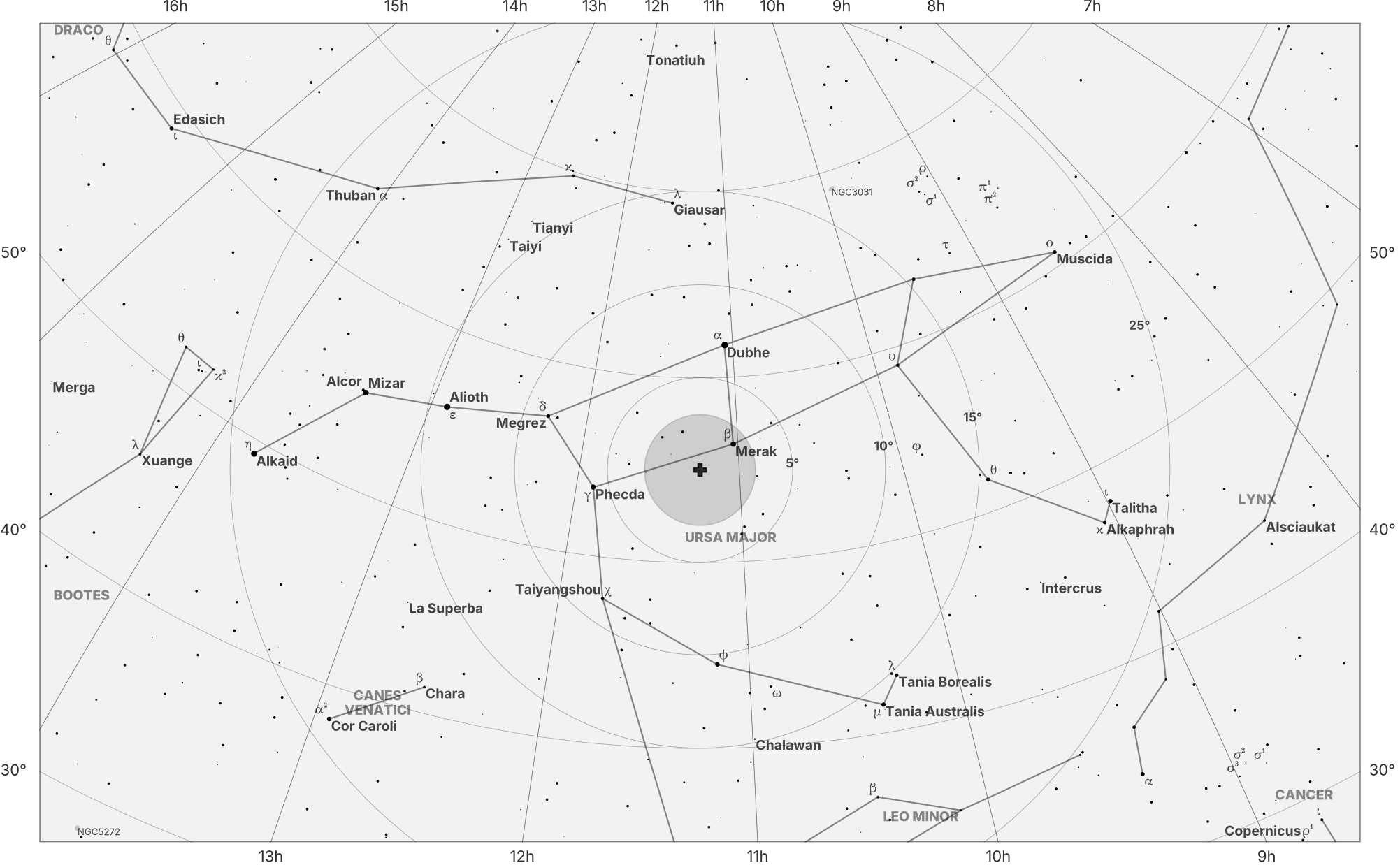
Finder map for Owl Nebula
A classic and popular deep-sky object for amateur astronomers, known for its evocative name and the observing challenge it presents. Best observed from northern latitudes, where it reaches high altitude and is circumpolar north of about 35° N. From the Southern Hemisphere it remains very low on the northern horizon and is observable only from latitudes north of roughly 35° S. The primary challenge is detecting the nebula’s very low surface brightness, which makes it difficult or invisible from light-polluted sites. In 4–8 inch telescopes the Owl typically appears as a large, diffuse disk, with the darker “eye” regions hinted at only subtly under excellent dark-sky conditions.
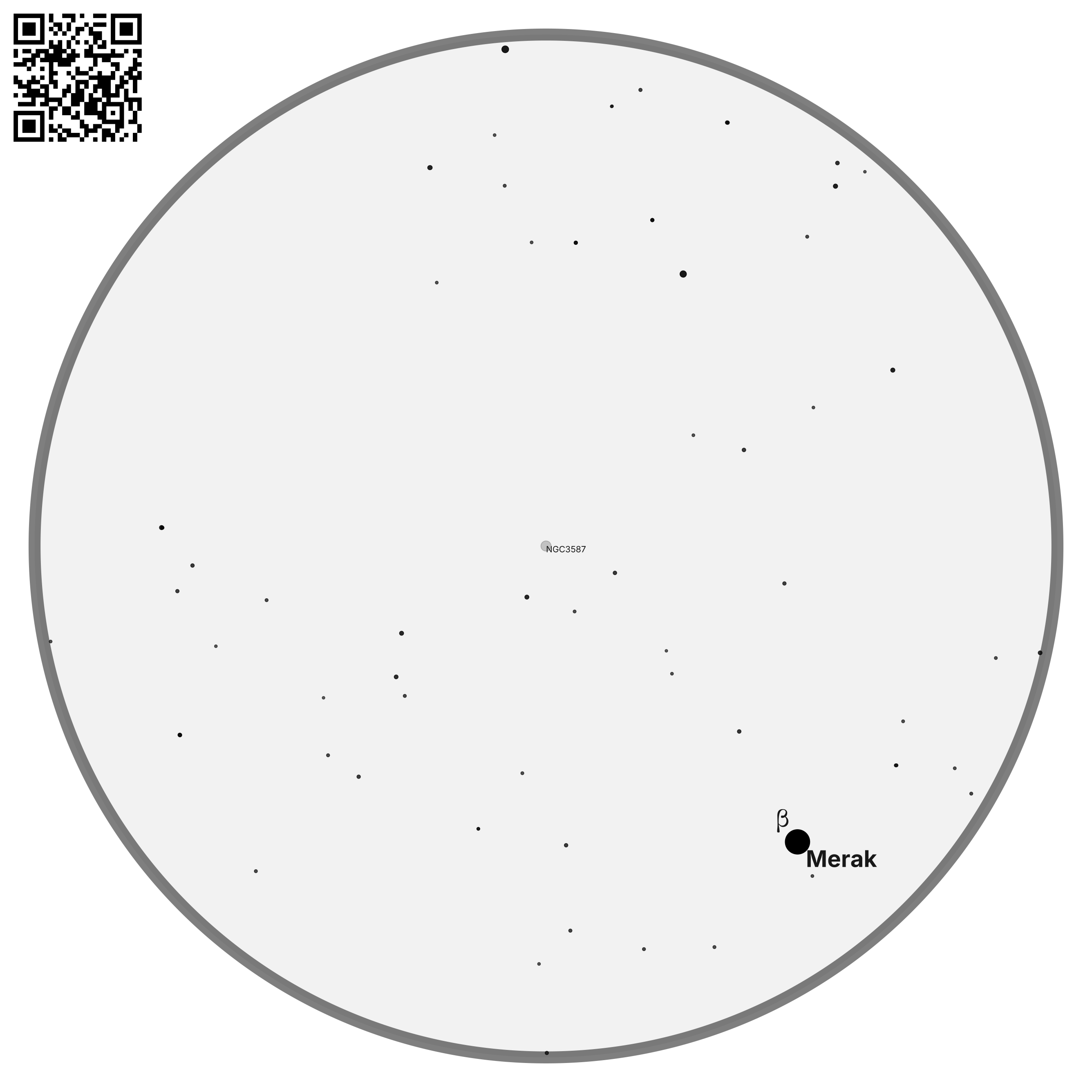
Finder scope & binocular view of Owl Nebula
| Property | Value |
|---|---|
| Common names | Messier 97, M97 |
| Catalog names | M 97, NGC 3587, PGC 3517765, PK 148+57.1, PN G148.4+57.0 |
| Type | Evolved Star |
| Subtype | Planetary Nebula |
| Coordinates | 11h 14m 47.71s, +55° 01’ 08.48” |
| Season | February - April |
| Best month | Mid-March |
| Beginner friendly | Marginal |
| Visual reward | Moderate |
| Filters required | OIII, UHC |
| LP tolerance | Medium |
| Minimum equipment | Binoculars |
| Optimal equipment | Medium telescope |
| Magnitude | 9.9 |
| Size | 2.83 arcminutes x 2.83 arcminutes |
| Constellation | Ursa Major |
Observation Notes
Naked Eye
Not visible.
Binoculars
Not visible.
Small Telescope
In 4–6 inch apertures, appears as a large, very faint, round, low–surface-brightness disk with little internal detail. An O-III filter is strongly recommended to improve contrast against the background sky.
Medium Telescope
With 8–12 inches under dark skies and using an O-III filter, the circular outline is more distinct. Very subtle darker regions corresponding to the “eyes” may be suspected with averted vision, but remain elusive and low contrast.
Large Telescope
In apertures of roughly 14 inches and larger, the characteristic “owl” appearance becomes more convincing, with the two darker regions visible as gentle contrast features within the disk. A faint greenish tint and uneven texture may be noticed under good transparency, though all detail remains soft and seeing-dependent.