NGC 6543
4-8 inch Telescope • Planetary Nebulae Detailed
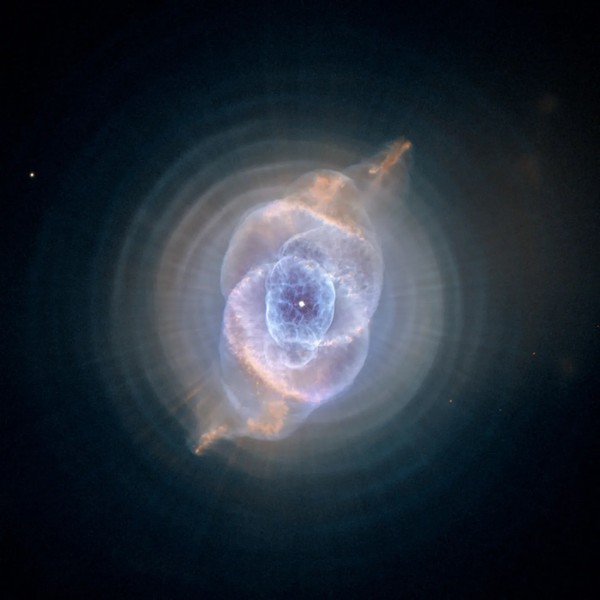
Image: NASA, ESA, HEIC, and the Hubble Heritage Team (STScI/AURA)
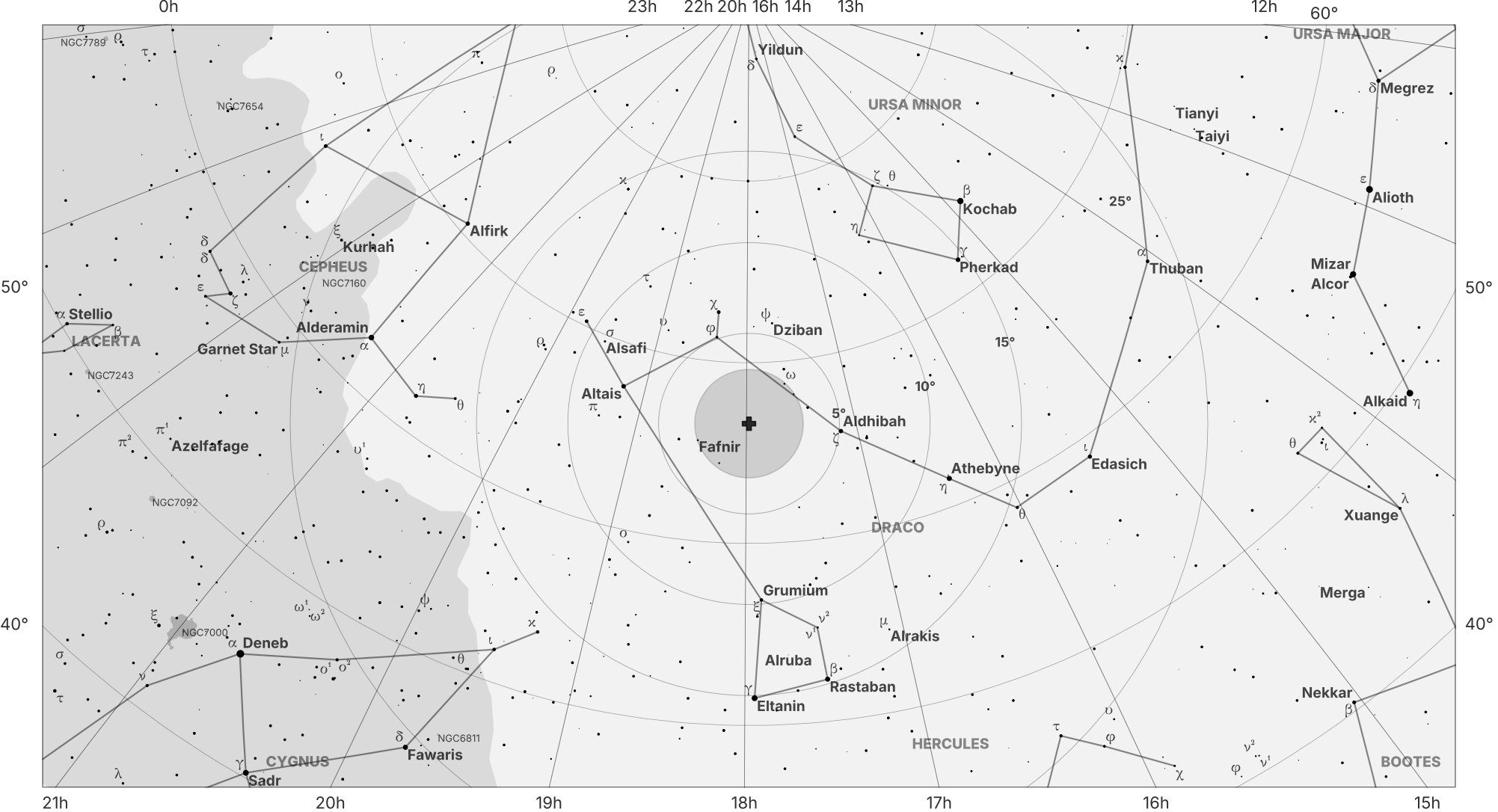
Finder map for NGC 6543
Its striking appearance and the popular name ‘Cat’s Eye Nebula’ have made it one of the most famous and recognizable deep-sky objects, frequently featured in books, documentaries, and popular science articles. Circumpolar for many northern latitudes, best observed when high in the sky. Very low or not visible for most southern hemisphere observers. Detecting the nebula as distinctly non-stellar and noticing its tiny, high–surface-brightness disk against the surrounding star field. The famous internal structure, faint outer halo, and central star are revealed only with large telescopes or imaging and lie beyond typical binocular views.
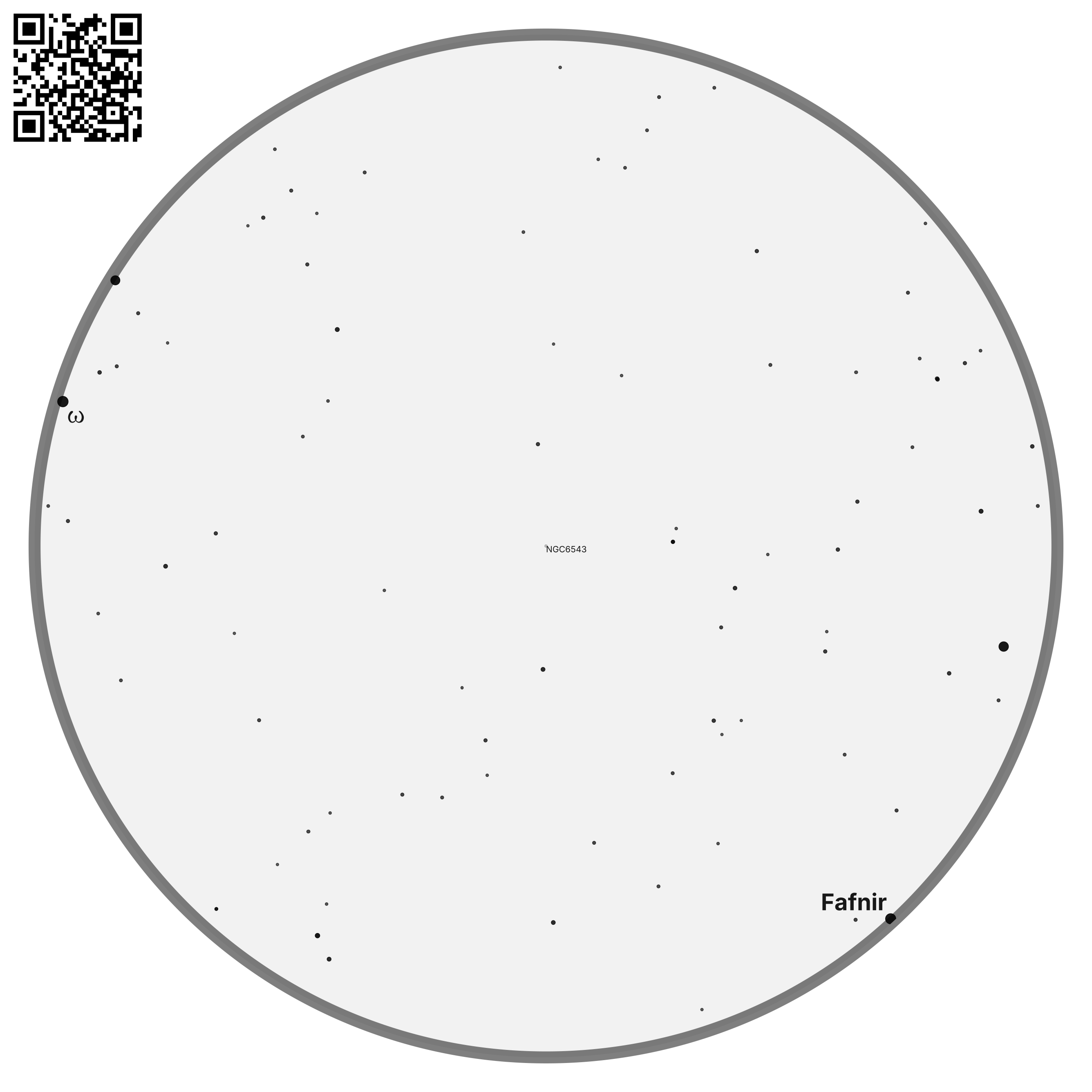
Finder scope & binocular view of NGC 6543
| Property | Value |
|---|---|
| Common names | Cat’s Eye Nebula, Caldwell 6 |
| Catalog names | C 6, NGC 6543, PGC 2921944, PK 096+29.1, PN G096.4+29.9 |
| Type | Evolved Star |
| Subtype | Planetary Nebula |
| Coordinates | 17h 58m 33.40s, +66° 37’ 58.75” |
| Season | May - July |
| Best month | Mid-June |
| Beginner friendly | No |
| Visual reward | Moderate |
| Filters required | OIII, UHC |
| LP tolerance | High |
| Minimum equipment | Small telescope |
| Optimal equipment | Medium telescope |
| Magnitude | 8.1 |
| Size | 0.33 arcminutes x 0.33 arcminutes |
| Constellation | Draco |
Observation Notes
Naked Eye
Not visible to the naked eye.
Binoculars
Appears as a star-like object with no obvious nebulosity. Its planetary nature is not apparent in binoculars.
Small Telescope
In a 5–6 inch telescope, appears as a small, bright, distinctly non-stellar disk with a noticeable blue-green color. An O-III filter greatly enhances contrast against surrounding stars.
Medium Telescope
The nebula’s oval disk is obvious, and the blue-green coloration is vivid. Under steady seeing and high magnification, the central star may be glimpsed with averted vision. Subtle internal brightness variations can be detected, though fine structure remains elusive.
Large Telescope
Reveals increased texture and uneven brightness across the nebula, with brighter regions and a more complex appearance at high magnification. The central star is more readily visible under good conditions. The extremely faint outer halo can be detected by experienced observers under very dark skies with patience and averted vision.