NGC 3242
4-8 inch Telescope • Planetary Nebulae Detailed
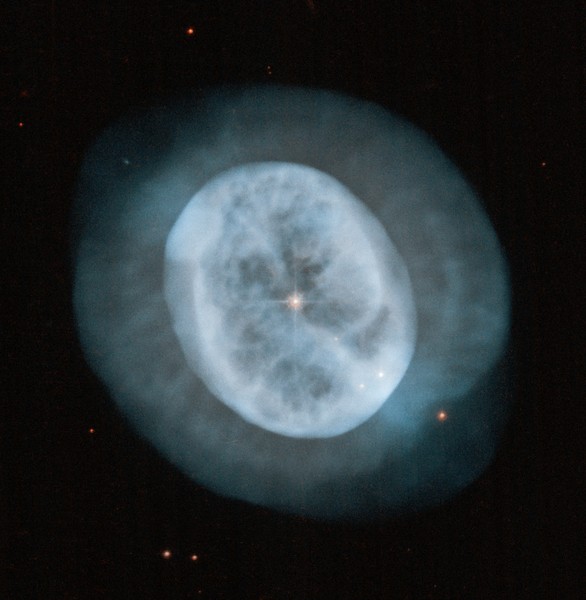
Image: Judy Schmidt
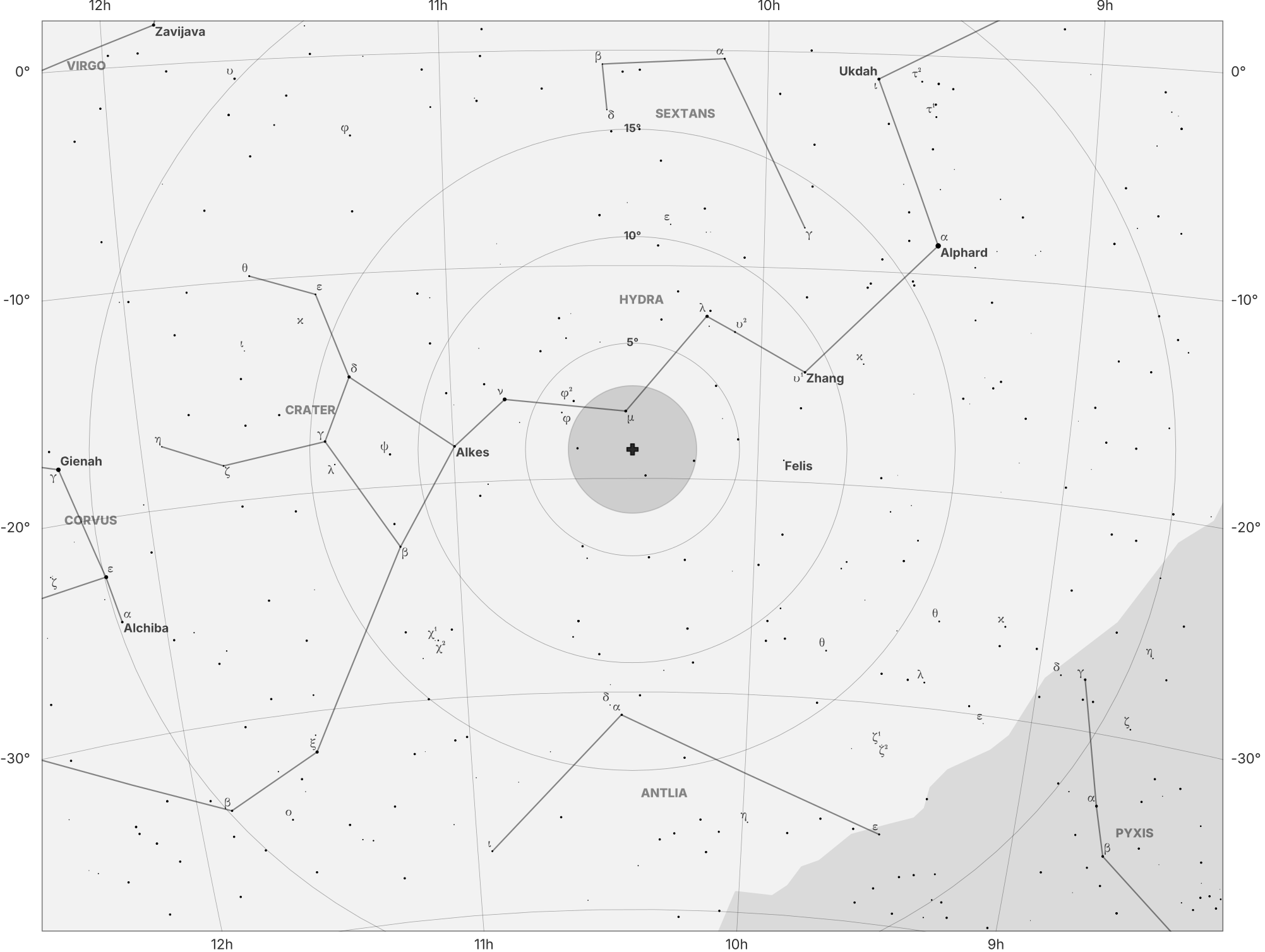
Finder map for NGC 3242
Its common name, ‘Ghost of Jupiter’, was coined by early observers due to its apparent size, shape, and pale color in small telescopes, which vaguely resembled a ghostly image of the planet Jupiter. For far-northern observers, a clear southern horizon is required, as the nebula culminates at low altitude. It is better placed for observers at mid-northern and southern latitudes. The main visual challenge is distinguishing the bright inner shell from the surrounding, fainter envelope using moderate to high magnification. The central star and the very faint outer halo seen in deep images lie beyond reliable visual detection in most 4–8 inch telescopes.
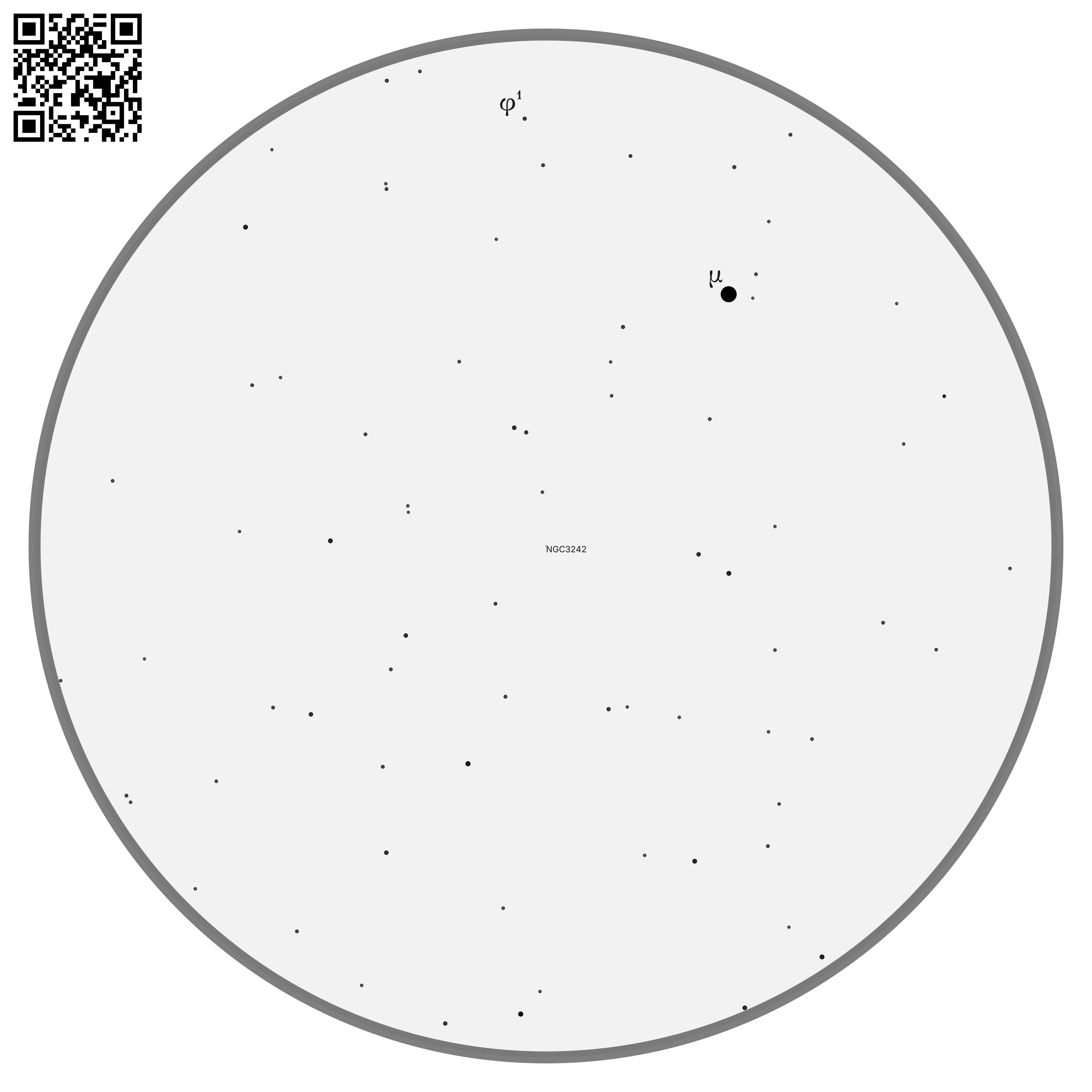
Finder scope & binocular view of NGC 3242
| Property | Value |
|---|---|
| Common names | Ghost of Jupiter, Eye Nebula |
| Catalog names | C 59, NGC 3242, PGC 3441331, PK 261+32.1, PN G261.0+32.0, … |
| Type | Evolved Star |
| Subtype | Planetary Nebula |
| Coordinates | 10h 24m 46.13s, -18° 38’ 32.30” |
| Season | February - April |
| Best month | March |
| Beginner friendly | Yes |
| Visual reward | High |
| Filters required | OIII, UHC |
| LP tolerance | High |
| Minimum equipment | Small telescope |
| Optimal equipment | Medium telescope |
| Magnitude | 7.7 |
| Size | 1.07 arcminutes x 1.07 arcminutes |
| Constellation | Hydra |
Observation Notes
Naked Eye
Not visible.
Binoculars
Not visible as a nebula; at best appears stellar in very large binoculars under excellent skies.
Small Telescope
In 4–6 inch apertures, appears at low power like a slightly out-of-focus star, but at moderate magnification it resolves into a small, bright, distinctly non-stellar disk. A pale blue or green tint is often noticeable.
Medium Telescope
With 8–12 inches, the elliptical shape of the bright inner shell becomes apparent. An O-III filter greatly enhances contrast, causing the nebula to stand out strongly from the background. The central star may be glimpsed intermittently during moments of steady seeing.
Large Telescope
In apertures of roughly 14 inches and larger, careful observation reveals a clear distinction between the bright inner shell and a much fainter, more extended outer envelope. The central star is more readily visible, and under excellent conditions subtle brightness variations may be suspected within the inner shell.