NGC 6826
4-8 inch Telescope • Planetary Nebulae Detailed
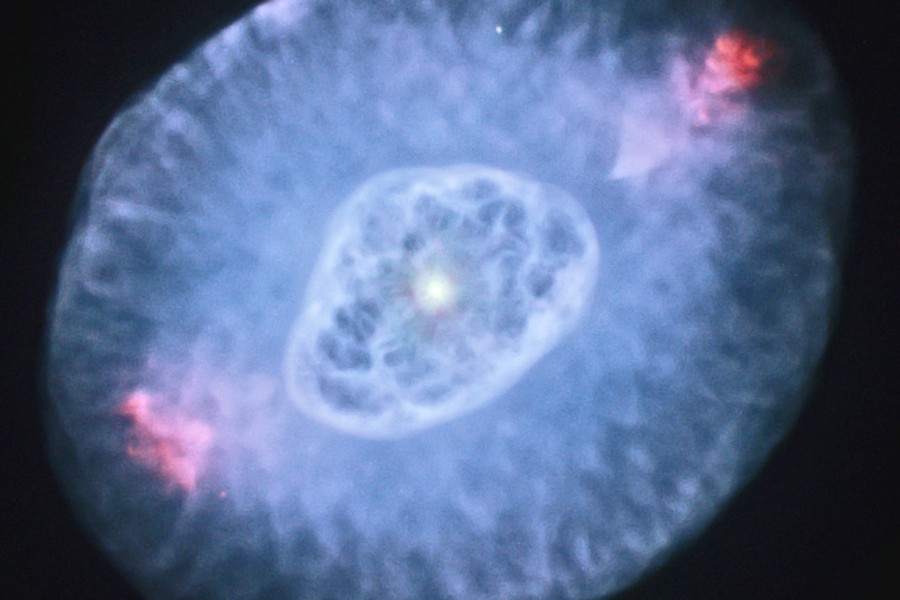
Image: Judy Schmidt
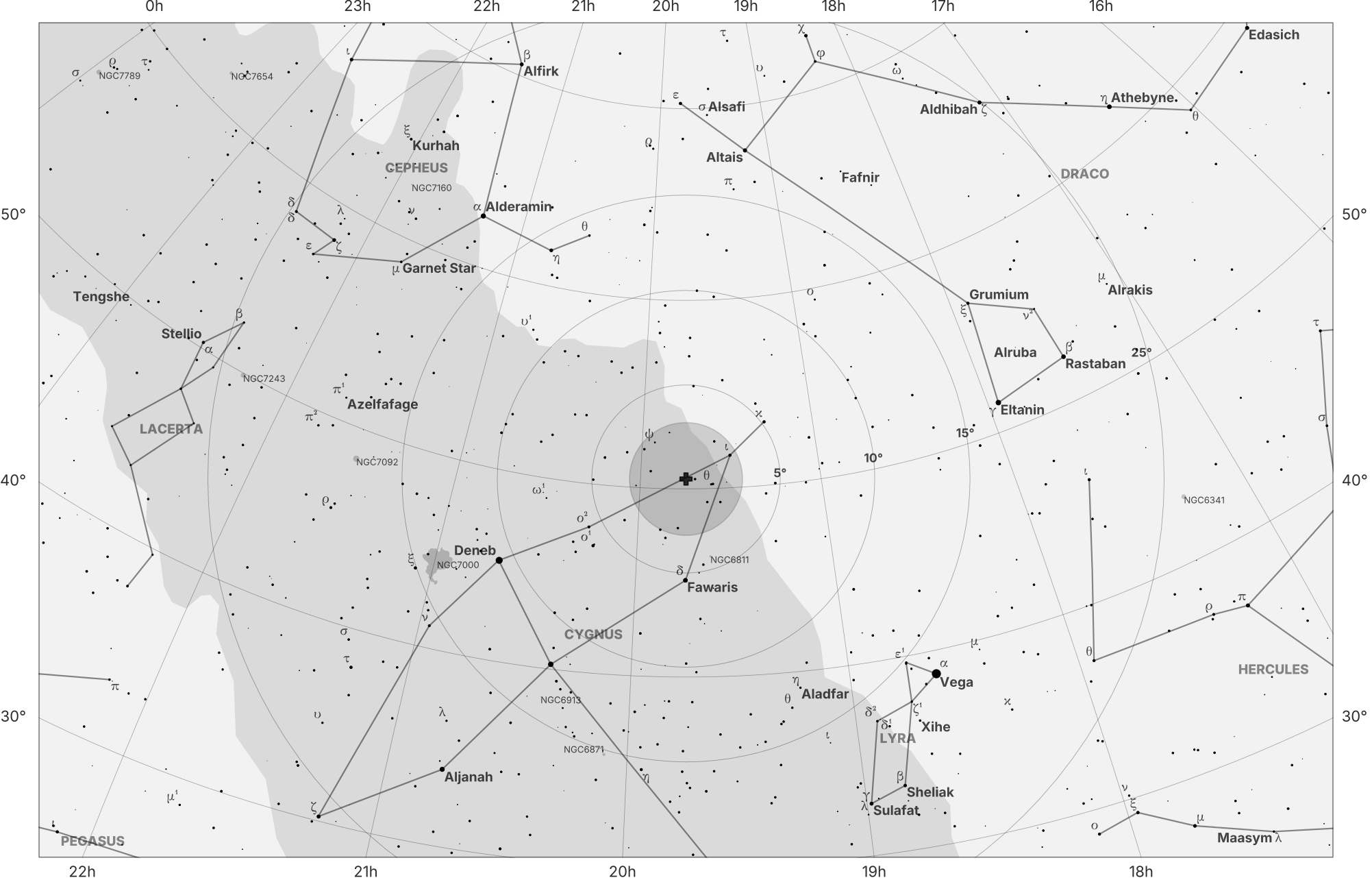
Finder map for NGC 6826
A famous and beloved object in the amateur astronomy community, often used as a showpiece to demonstrate the quirks of human vision and the utility of nebula filters. Best observed when high in the sky to reduce atmospheric extinction and improve contrast. The primary visual challenge is experiencing the famous “blinking” effect, which becomes apparent when alternating between direct and averted vision as the bright central star dominates the view. Much fainter structural features such as low-ionization knots detected in images lie beyond the visual reach of 4–8 inch telescopes.
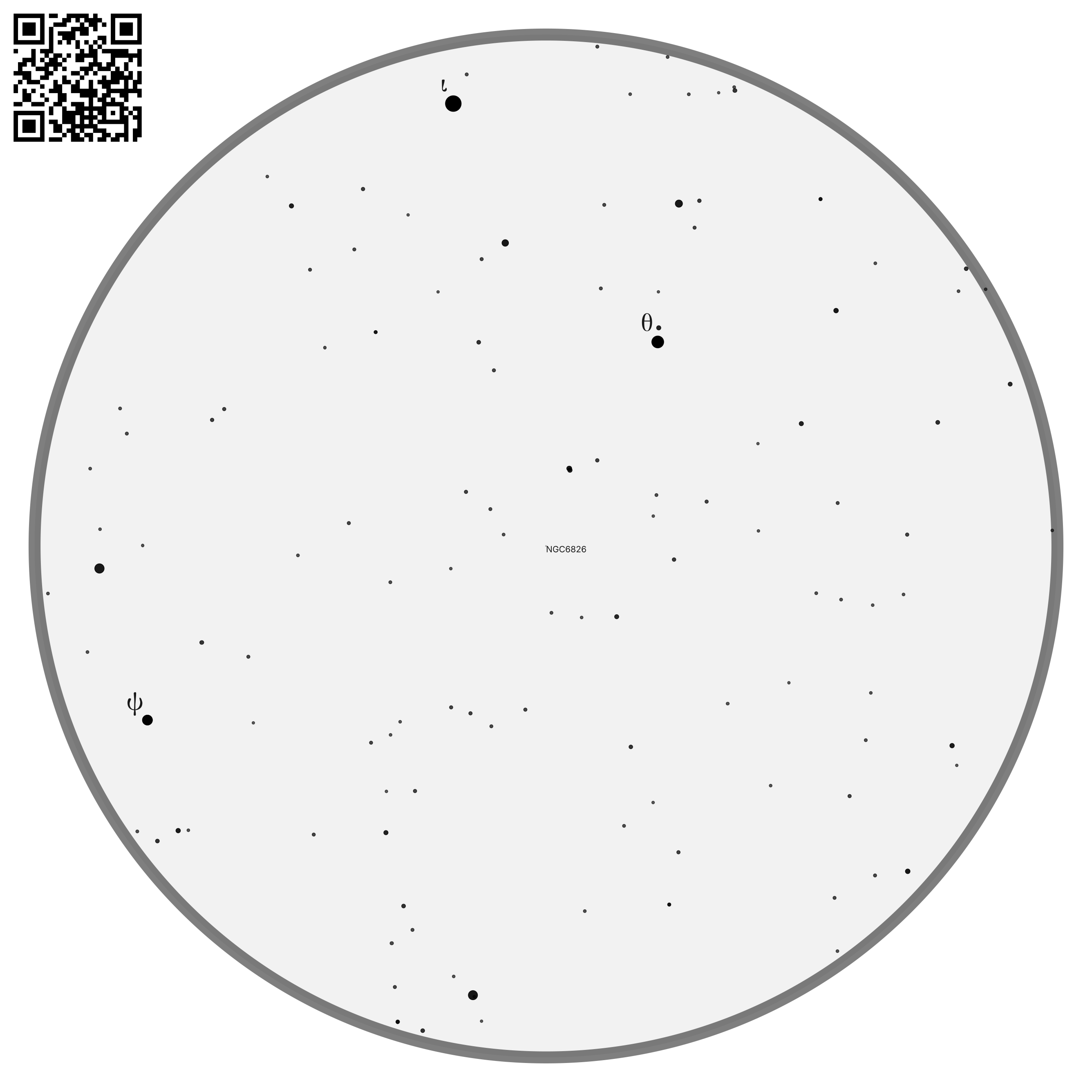
Finder scope & binocular view of NGC 6826
| Property | Value |
|---|---|
| Common names | Blinking Planetary Nebula, Blinking Nebula |
| Catalog names | C 15, NGC 6826, PGC 2906369, PK 083+12.1, PN G083.5+12.7 |
| Type | Evolved Star |
| Subtype | Planetary Nebula |
| Coordinates | 19h 44m 48.15s, +50° 31’ 30.25” |
| Season | June - August |
| Best month | Mid-July |
| Beginner friendly | Yes |
| Visual reward | Moderate |
| Filters required | OIII, UHC |
| LP tolerance | High |
| Minimum equipment | Small telescope |
| Optimal equipment | Medium telescope |
| Magnitude | 8.8 |
| Size | 0.6 arcminutes x 0.6 arcminutes |
| Constellation | Cygnus |
Observation Notes
Naked Eye
Not visible.
Binoculars
In very dark, transparent skies, large binoculars (around 70 mm or larger) may show it as a faint, star-like point; it does not appear nebular at binocular magnifications.
Small Telescope
In 4–6 inch apertures, appears as a slightly out-of-focus “star” with a noticeable greenish tint. The characteristic blinking effect is readily apparent, and at higher magnification the object resolves into a tiny, fuzzy disk.
Medium Telescope
With 8–12 inches, the blinking effect is very pronounced. The small disk is clearly defined, the central star is sharp and bright, and the green coloration is often obvious. An O-III filter enhances the nebular disk while dimming the central star, increasing contrast.
Large Telescope
In apertures of roughly 14 inches and larger, high magnification and good seeing reveal subtle unevenness or a slightly annular appearance within the disk, while the central star remains prominent. Under excellent conditions, the extremely faint outer halo may be suspected with averted vision; an O-III filter enhances the nebular shell and suppresses the central star.