Helix Nebula
4-8 inch Telescope • Planetary Nebulae Detailed
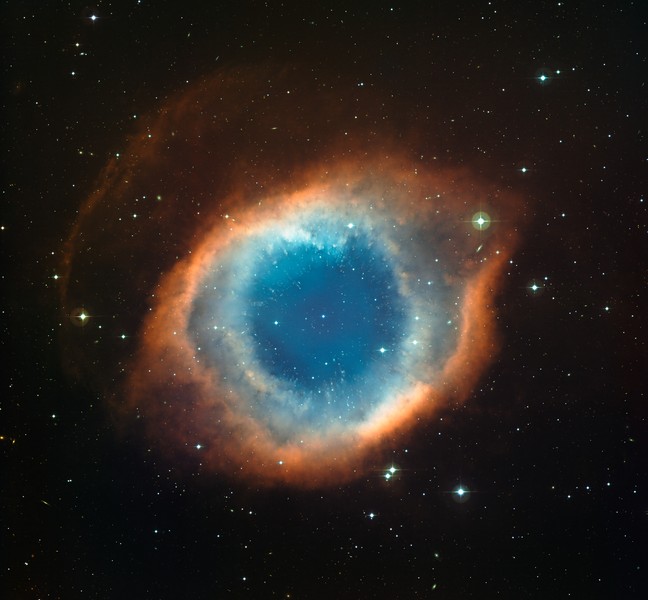
Image: ESO
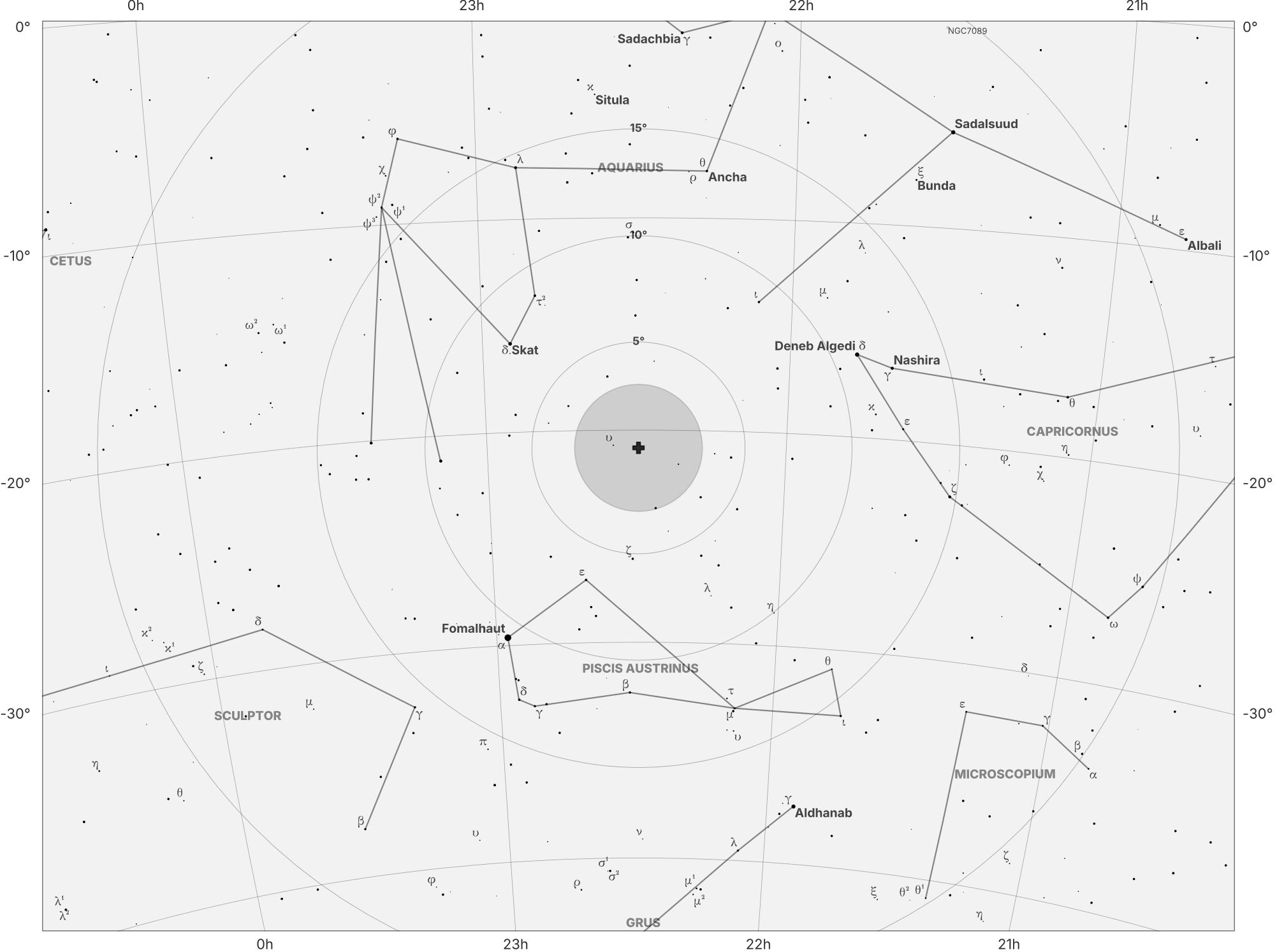
Finder map for Helix Nebula
One of the most famous planetary nebulae in modern astronomy, the Helix Nebula is widely recognized for its eye-like appearance in deep images and is frequently featured in popular astronomy media. Best observed when high in the sky to counter its very low surface brightness. Its extremely low surface brightness makes the Helix Nebula difficult or impossible to detect from light-polluted locations. In 4–8 inch telescopes, observers may glimpse the brighter inner ring under very dark, transparent skies, while the much fainter outer halo seen in images lies beyond reliable visual reach.
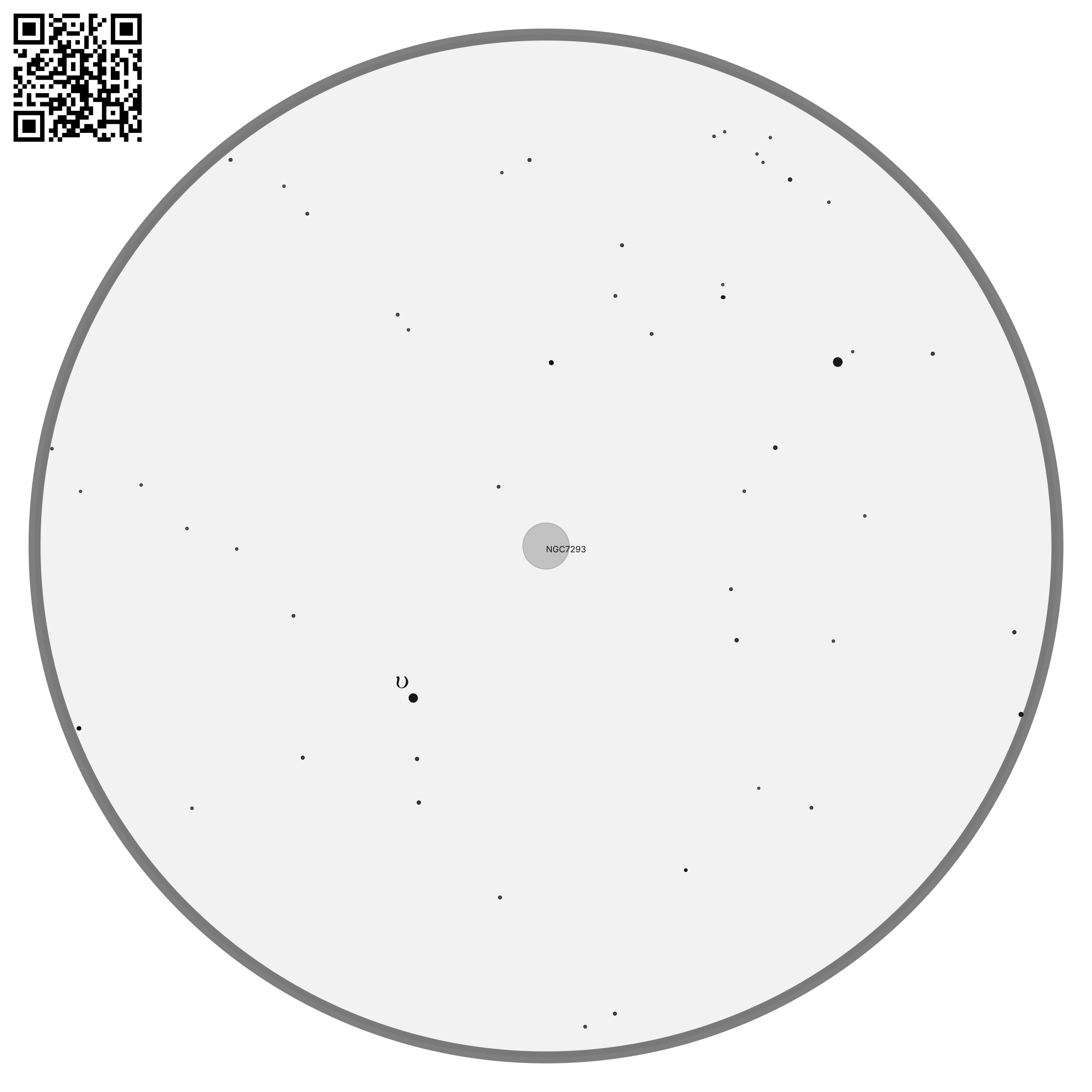
Finder scope & binocular view of Helix Nebula
| Property | Value |
|---|---|
| Common names | Eye of God, God’s Eye Nebula |
| Catalog names | C 63, NGC 7293, PGC 3517825, PK 036-57.1, PN G036.1-57.1, … |
| Type | Evolved Star |
| Subtype | Planetary Nebula |
| Coordinates | 22h 29m 38.55s, -20° 50’ 13.75” |
| Season | August - October |
| Best month | September |
| Beginner friendly | No |
| Visual reward | Moderate |
| Filters required | OIII, UHC |
| LP tolerance | Low |
| Minimum equipment | Binoculars |
| Optimal equipment | Medium telescope |
| Magnitude | 7.3 |
| Size | 17.57 arcminutes x 17.57 arcminutes |
| Constellation | Aquarius |
Observation Notes
Naked Eye
Not visible.
Binoculars
Under exceptionally dark, transparent skies, appears as a very large, extremely faint, circular gray patch with low surface brightness; averted vision is essential, and the object is easily overlooked.
Small Telescope
In 4–6 inch apertures, appears as a large, very faint, diffuse disk with little contrast against the background sky. An O-III or UHC filter is strongly recommended, transforming the view into a ghostly, smoke-ring–like glow.
Medium Telescope
With 8–12 inches and an O-III filter, the annular structure becomes more apparent, with a darker central region and brighter outer ring. The central star, near magnitude 13.5, is an intermittent and difficult sight, requiring excellent conditions and careful technique.
Large Telescope
In apertures of roughly 14 inches and larger, subtle brightness variations and faint internal structure within the main ring may be detected under excellent skies. The central star becomes easier, but fine details remain low contrast; cometary knots are not visible visually.