Alpha Persei Cluster
Naked Eye • Clusters
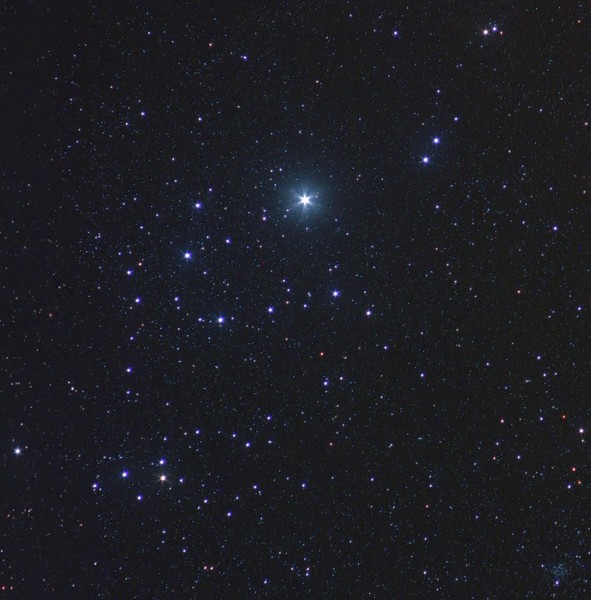
Image: Martin Gembec
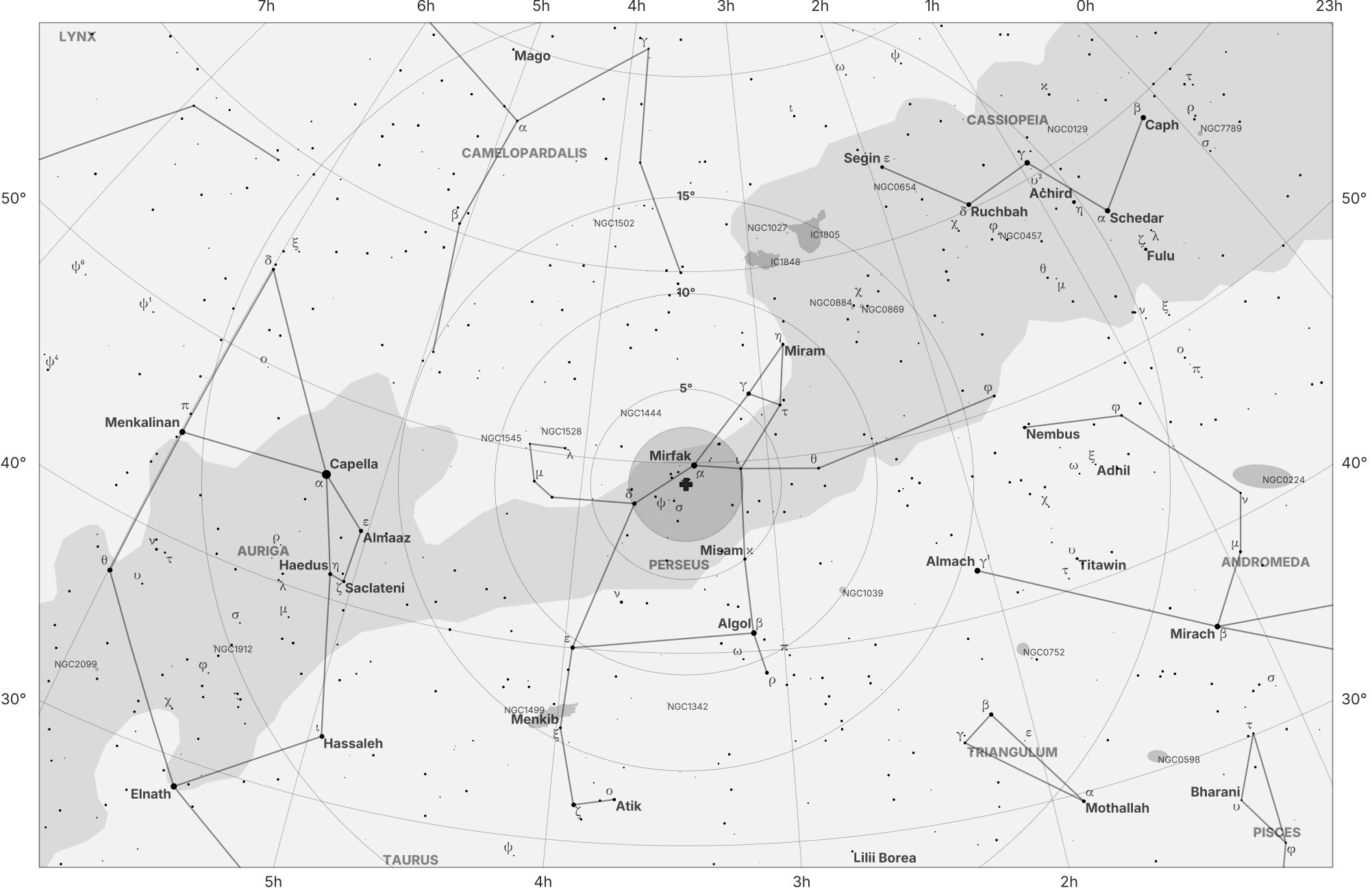
Finder map for Alpha Persei Cluster
The cluster is centered on Mirfak (Alpha Persei), a prominent star of the Greek mythological constellation Perseus the Hero. The name Mirfak derives from the Arabic al-mirfaq, meaning “the elbow,” reflecting traditional star lore rather than the cluster itself. Best viewed from the Northern Hemisphere, where it climbs high and can pass near the zenith. From the Southern Hemisphere it remains low in the northern sky and is poorly placed for observation. Its extremely large angular size makes it difficult to recognize as a single coherent cluster with the naked eye, especially under light-polluted skies. Appreciating its full extent requires a wide field of view, making binoculars more effective than telescopes.
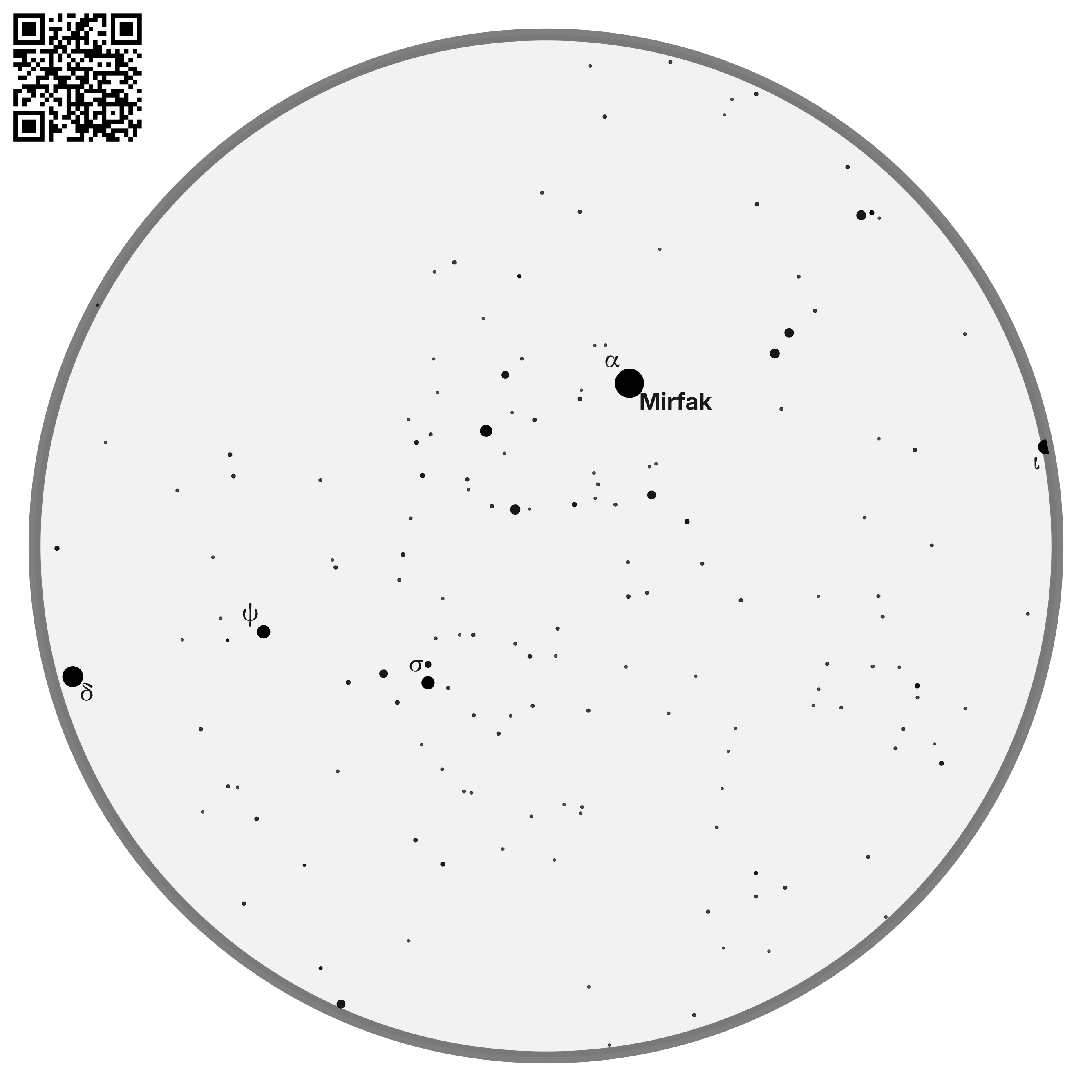
Finder scope & binocular view of Alpha Persei Cluster
| Property | Value |
|---|---|
| Common names | Melotte 20, Persei OB3, Al-Sufi’s Cluster |
| Catalog names | - |
| Type | Association of Stars |
| Subtype | Moving Group |
| Coordinates | 3h 26m 50.60s, +48° 51’ 48.00” |
| Season | October - December |
| Best month | Mid-November |
| Beginner friendly | Yes |
| Visual reward | Moderate |
| Filters required | None |
| LP tolerance | Medium |
| Minimum equipment | Naked eye |
| Optimal equipment | Binoculars |
| Magnitude | 1.2 |
| Size | 366.0 arcminutes x 366.0 arcminutes |
| Constellation | Perseus |
Observation Notes
Naked Eye
Easily visible as a very large, loose grouping of stars centered on the bright star Mirfak (Alpha Persei). Several members are of moderate naked-eye brightness, forming a noticeable concentration despite the cluster’s low density. It stands out clearly even though it is not embedded in a rich Milky Way star field.
Binoculars
The ideal instrument for this cluster. Dozens of blue-white stars are scattered across several degrees, forming graceful arcs and loose chains against a relatively uncluttered background. The sense of scale and association is particularly strong.
Small Telescope
Best viewed at the lowest possible magnification using a wide-field or finder eyepiece. A rich-field telescope frames portions of the cluster attractively and reveals numerous fainter members, but the entire cluster still exceeds most telescopic fields.
Medium Telescope
Generally too much magnification to appreciate the cluster as a whole. Better suited for examining small sub-groupings, attractive double stars, and individual members rather than the cluster’s overall form.
Large Telescope
Not appropriate for viewing the cluster as a single object. Can be used for detailed study of individual stars within the association, such as splitting close doubles or examining faint companions, but offers little added aesthetic value for the cluster itself.