NGC 2362
4-8 inch Telescope • Open Clusters Rich
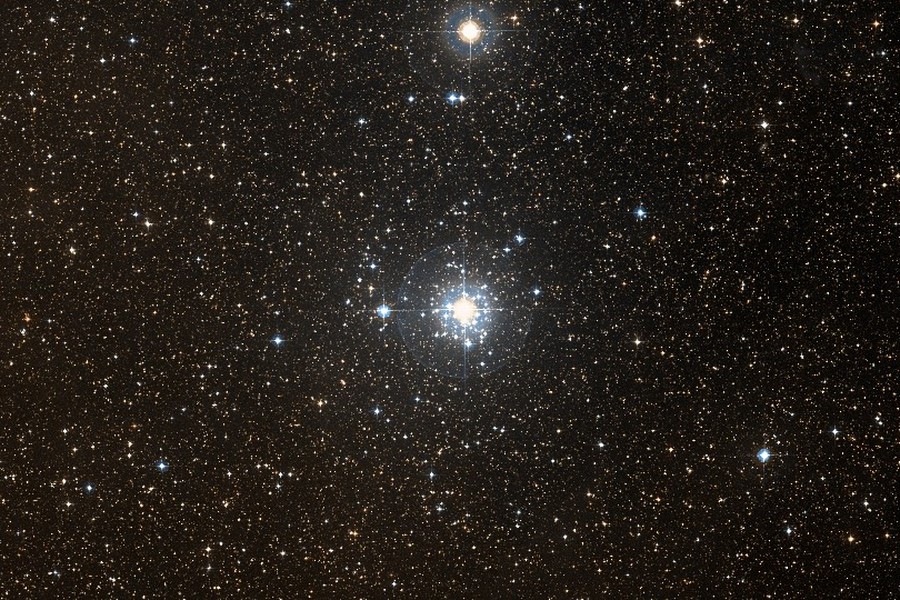
Image: COSMOdixi
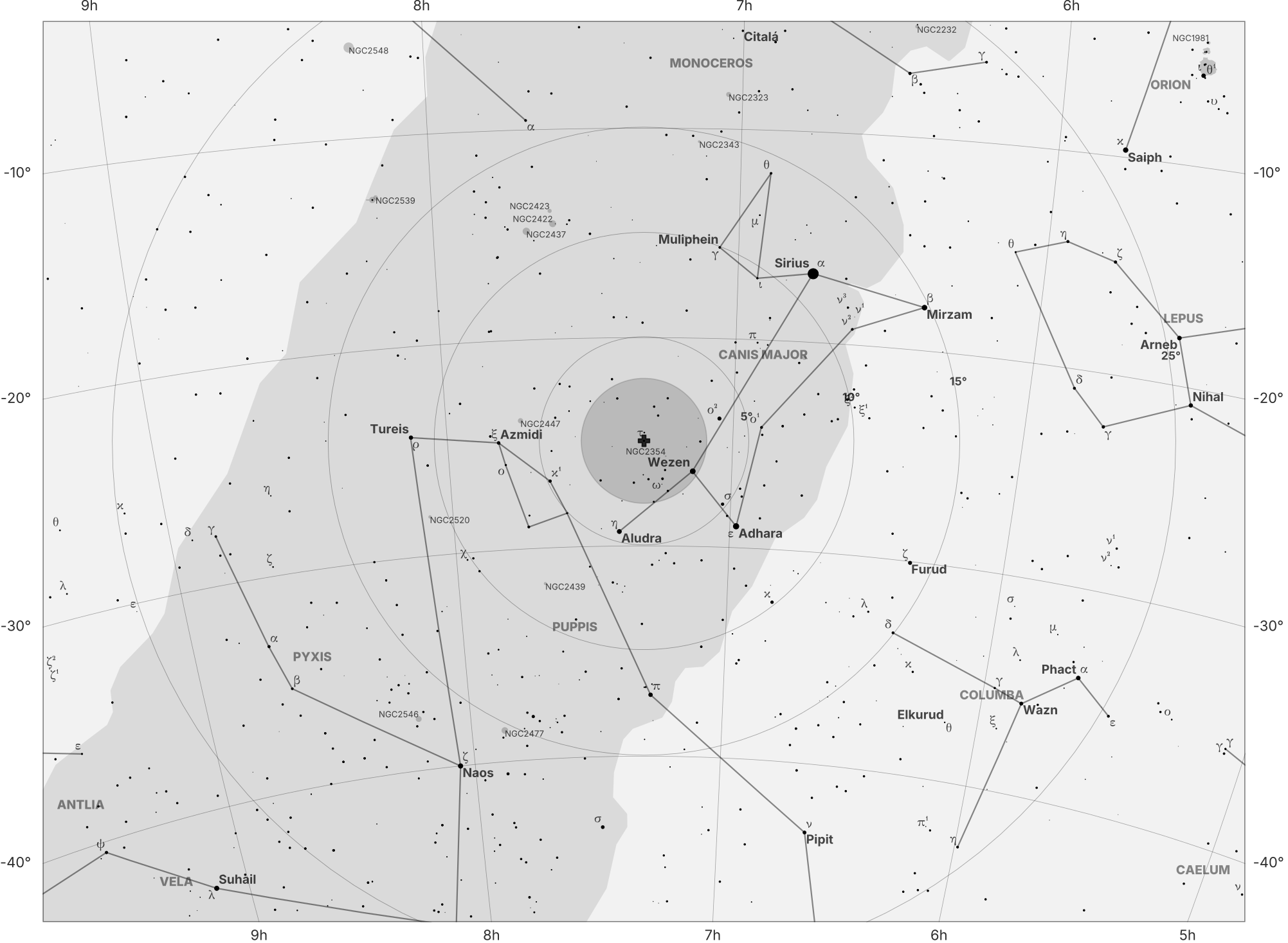
Finder map for NGC 2362
Known among amateur astronomers for its striking appearance and extreme youth, NGC 2362 is dominated visually by the brilliant star τ Canis Majoris. The intense glare of this star can create a curious visual effect in which surrounding faint cluster members seem to appear and disappear with changes in eye placement. Best observed when high in the sky. It is a southern object, so northern hemisphere observers require a clear southern horizon. The main challenge is resolving the fainter cluster members against the intense glare of the bright central star τ Canis Majoris, which dominates the field.
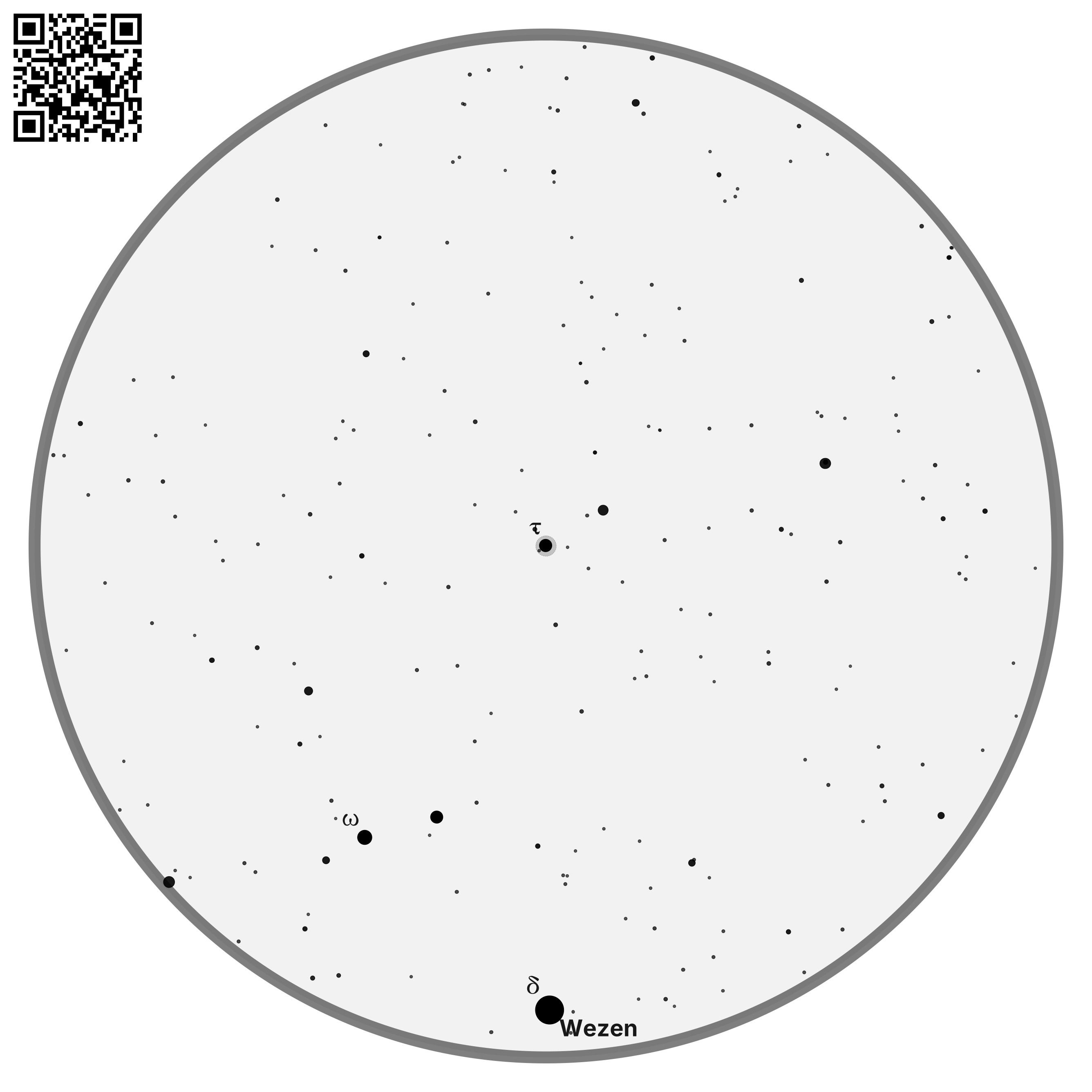
Finder scope & binocular view of NGC 2362
| Property | Value |
|---|---|
| Common names | Tau Canis Majoris Cluster, Mexican Jumping Star, Caldwell 64 |
| Catalog names | C 64, NGC 2362, Cr 136, Mel 65 |
| Type | Stellar Cluster |
| Subtype | Open Cluster |
| Coordinates | 7h 18m 41.90s, -24° 57’ 08.00” |
| Season | December - February |
| Best month | Mid-January |
| Beginner friendly | Yes |
| Visual reward | Moderate |
| Filters required | None |
| LP tolerance | High |
| Minimum equipment | Binoculars |
| Optimal equipment | Small telescope |
| Magnitude | 3.8 |
| Size | 6.0 arcminutes x 6.0 arcminutes |
| Constellation | Canis Major |
Observation Notes
Naked Eye
The bright central star Tau Canis Majoris is visible as a single magnitude +4.4 star; the surrounding cluster is not detectable without optical aid.
Binoculars
Shows Tau Canis Majoris as a brilliant blue-white star accompanied by a small, compact, unresolved glow caused by the surrounding cluster members.
Small Telescope
In 4–6 inch apertures, reveals a tight, compact group of stars clustered closely around Tau Canis Majoris. A few dozen faint members may be resolved, though glare from the central star dominates the view and limits contrast.
Medium Telescope
With 8–12 inches, additional faint members are resolved, increasing the cluster’s richness while retaining its very compact appearance. The strong brightness contrast between Tau Canis Majoris and the surrounding blue stars is a defining feature.
Large Telescope
In apertures of roughly 14 inches and larger, many faint member stars are resolved within the tight core, especially at higher magnification. The intense glare from Tau Canis Majoris remains a challenge, requiring careful magnification and observing technique to fully appreciate the cluster.