NGC 2099
4-8 inch Telescope • Open Clusters Rich
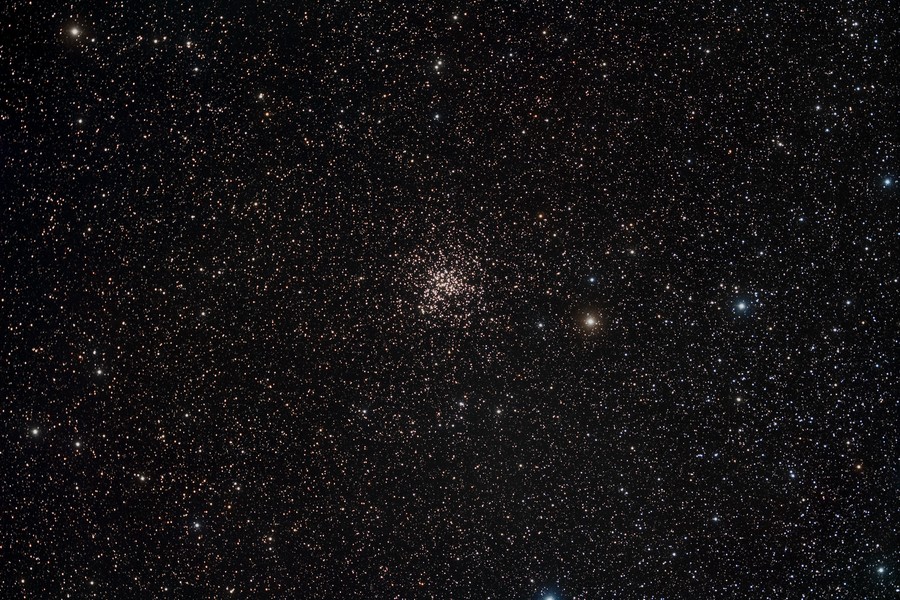
Image: Stephen Rahn
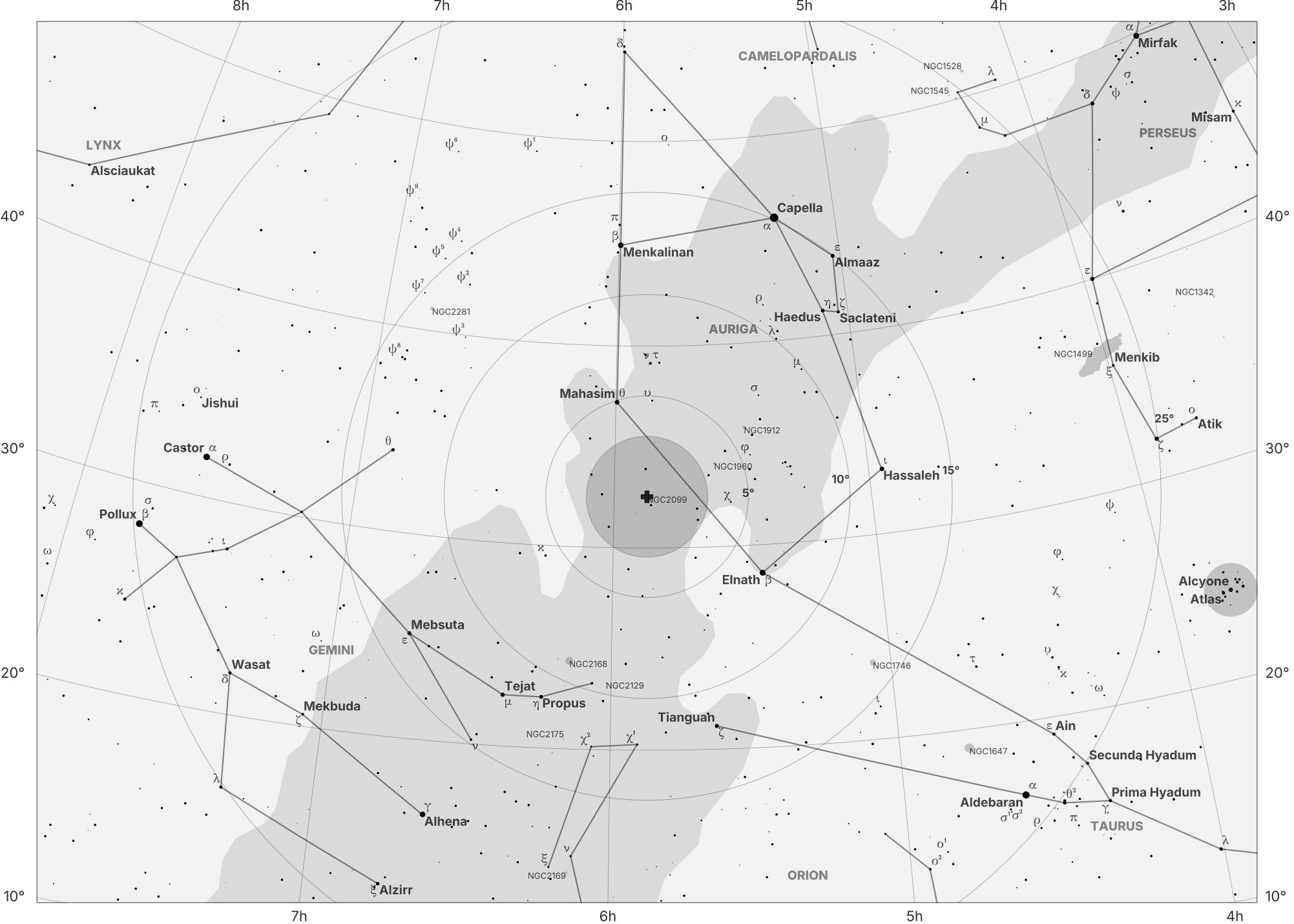
Finder map for NGC 2099
A classic ‘showpiece’ open cluster and a highlight of the Messier catalog. It is a very popular target for amateur astronomers during the winter months in the Northern Hemisphere. Best observed when high in the sky to reduce atmospheric extinction and improve contrast, which helps in resolving the cluster’s dense central regions. The main challenge is resolving as many stars as possible in the densely packed central region. Noticing the contrasting color of one of the prominent reddish-orange giant stars near the center adds to the visual interest.
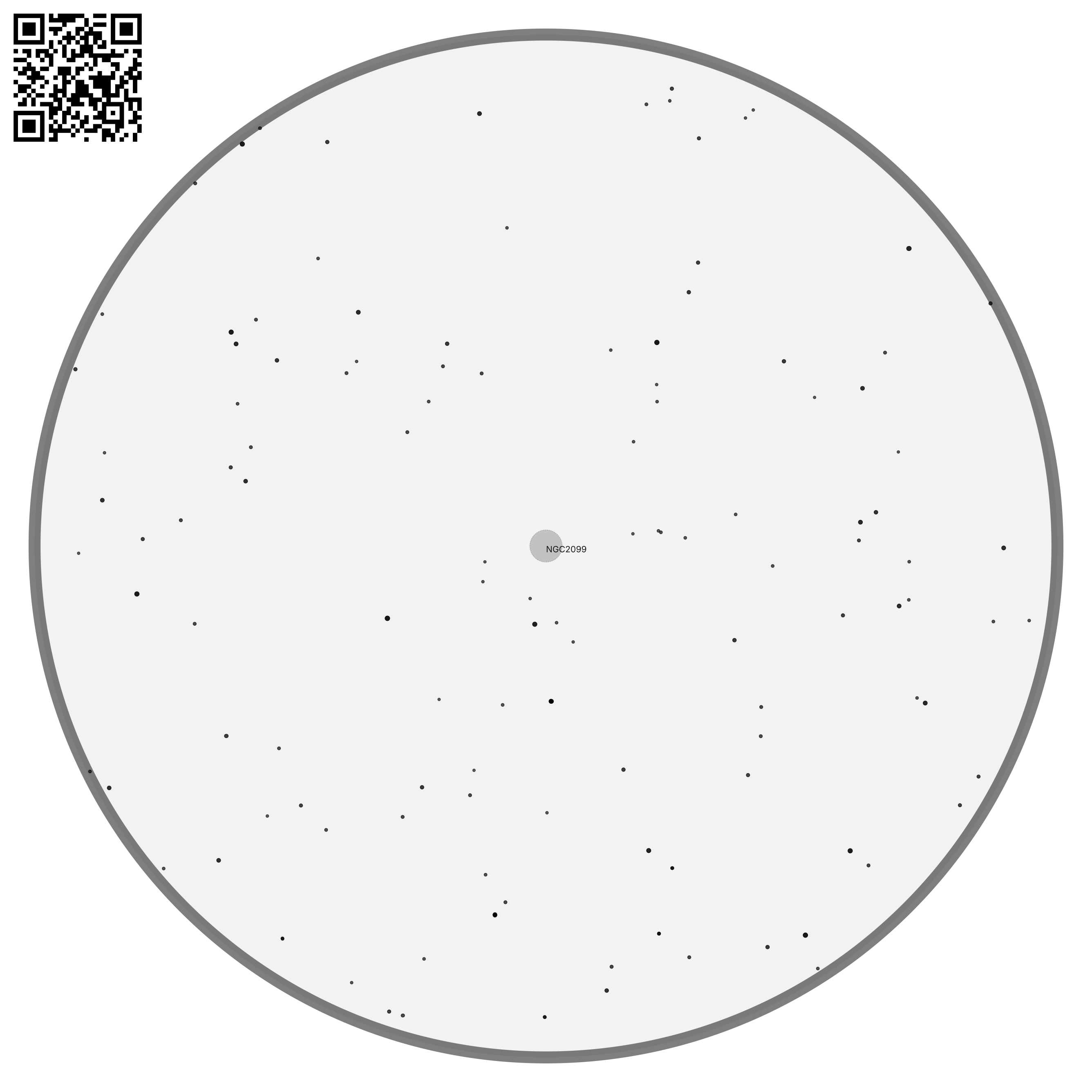
Finder scope & binocular view of NGC 2099
| Property | Value |
|---|---|
| Common names | Messier 37, M37 |
| Catalog names | M 37, NGC 2099, Cr 75, Mel 38 |
| Type | Stellar Cluster |
| Subtype | Open Cluster |
| Coordinates | 5h 52m 18.60s, +32° 32’ 36.00” |
| Season | November - January |
| Best month | Mid-December |
| Beginner friendly | Yes |
| Visual reward | High |
| Filters required | None |
| LP tolerance | High |
| Minimum equipment | Small telescope |
| Optimal equipment | Medium telescope |
| Magnitude | 5.6 |
| Size | 15.0 arcminutes x 15.0 arcminutes |
| Constellation | Auriga |
Observation Notes
Naked Eye
Not visible.
Binoculars
Easily visible in 7×50 or 10×50 binoculars as a bright, round, unresolved cluster, appearing as a compact glow set against the surrounding star field.
Small Telescope
In 4–6 inch apertures, the cluster begins to break up into a fine, granular texture of faint stars, with its overall circular outline clearly defined.
Medium Telescope
With 8–12 inches, the cluster resolves into a very rich field of stars spread across the entire disk, with a mild central concentration rather than a true core. A prominent orange giant near the center is readily noticeable and adds color contrast.
Large Telescope
In apertures of roughly 14 inches and larger, the field becomes densely populated with stars across the full extent of the cluster. Numerous stellar chains and density variations are visible, but the cluster retains an open, non-condensed appearance rather than showing a sharply defined core or true dark lanes.