Hyades
Naked Eye • Clusters
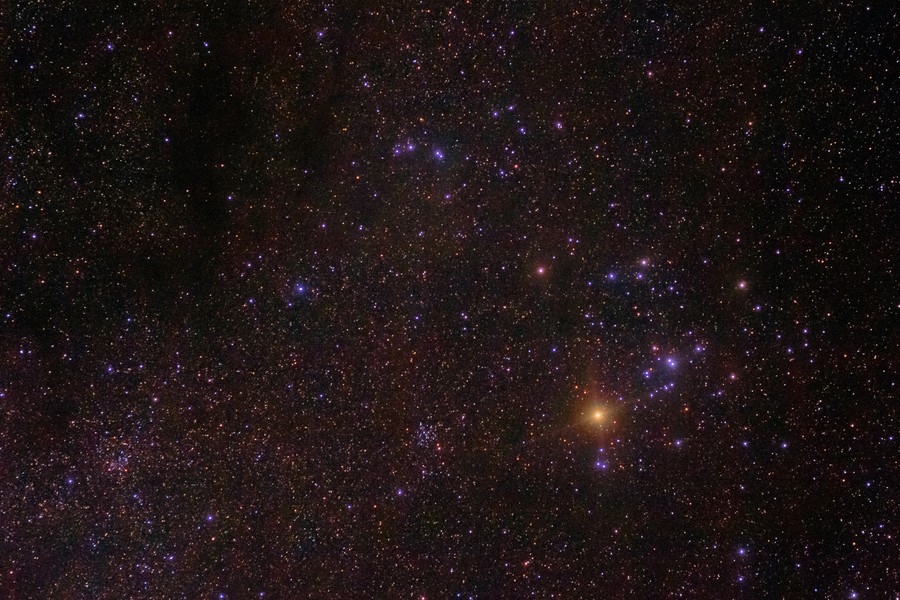
Image: Hypatia Alexandria
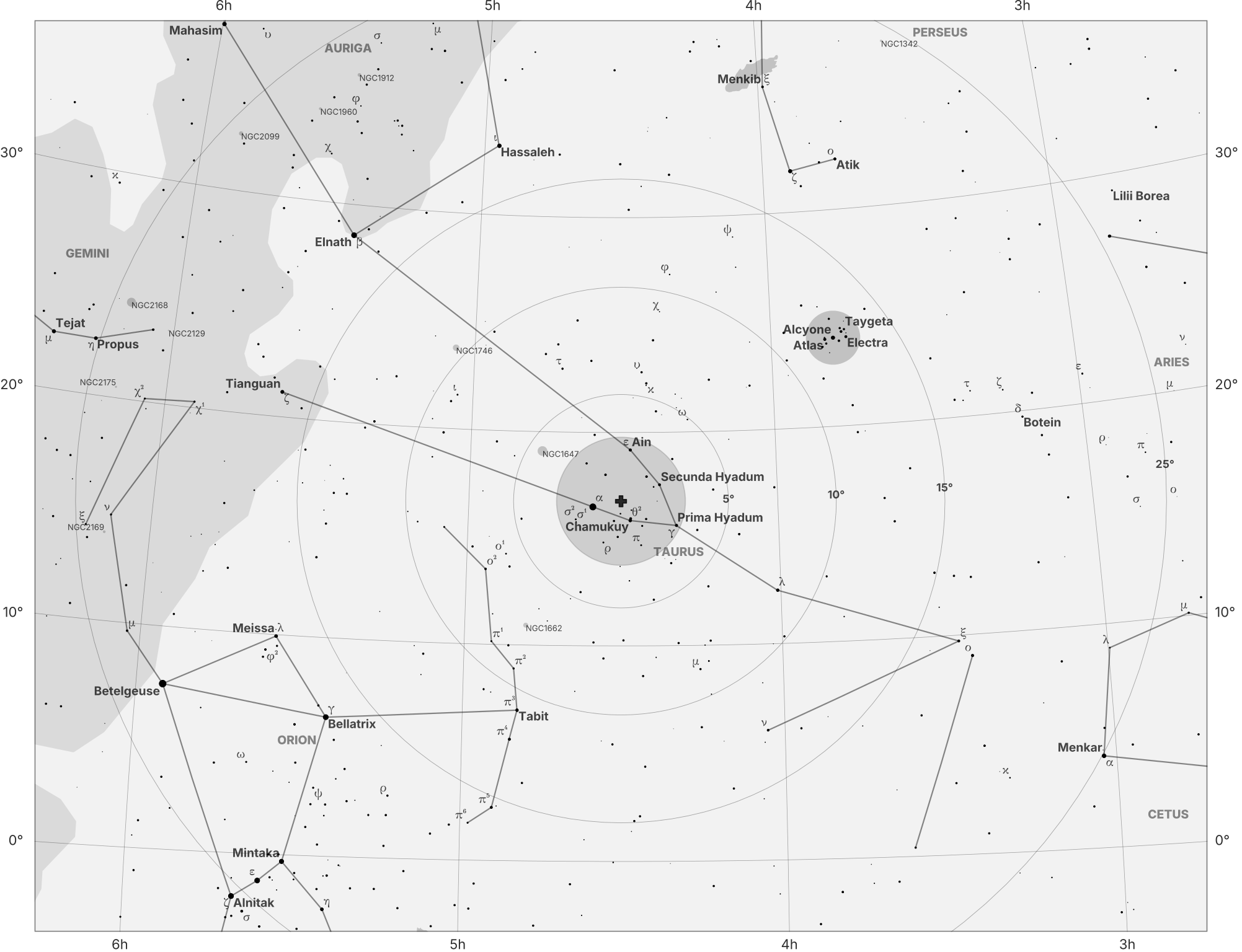
Finder map for Hyades
In Greek mythology, the Hyades were the five daughters of Atlas and half-sisters to the Pleiades. Their name is associated with rain, as their rising and setting times coincided with the rainy seasons in ancient Greece. Best viewed when high in the sky to appreciate its full extent, though its brightness makes it visible even at lower altitudes. Its very large angular size makes the Hyades difficult to perceive as a single cluster with the naked eye, especially under light-polluted skies, where it can dissolve into a loose scattering of bright stars. Recognizing the distinctive V-shaped pattern is the primary naked-eye challenge.
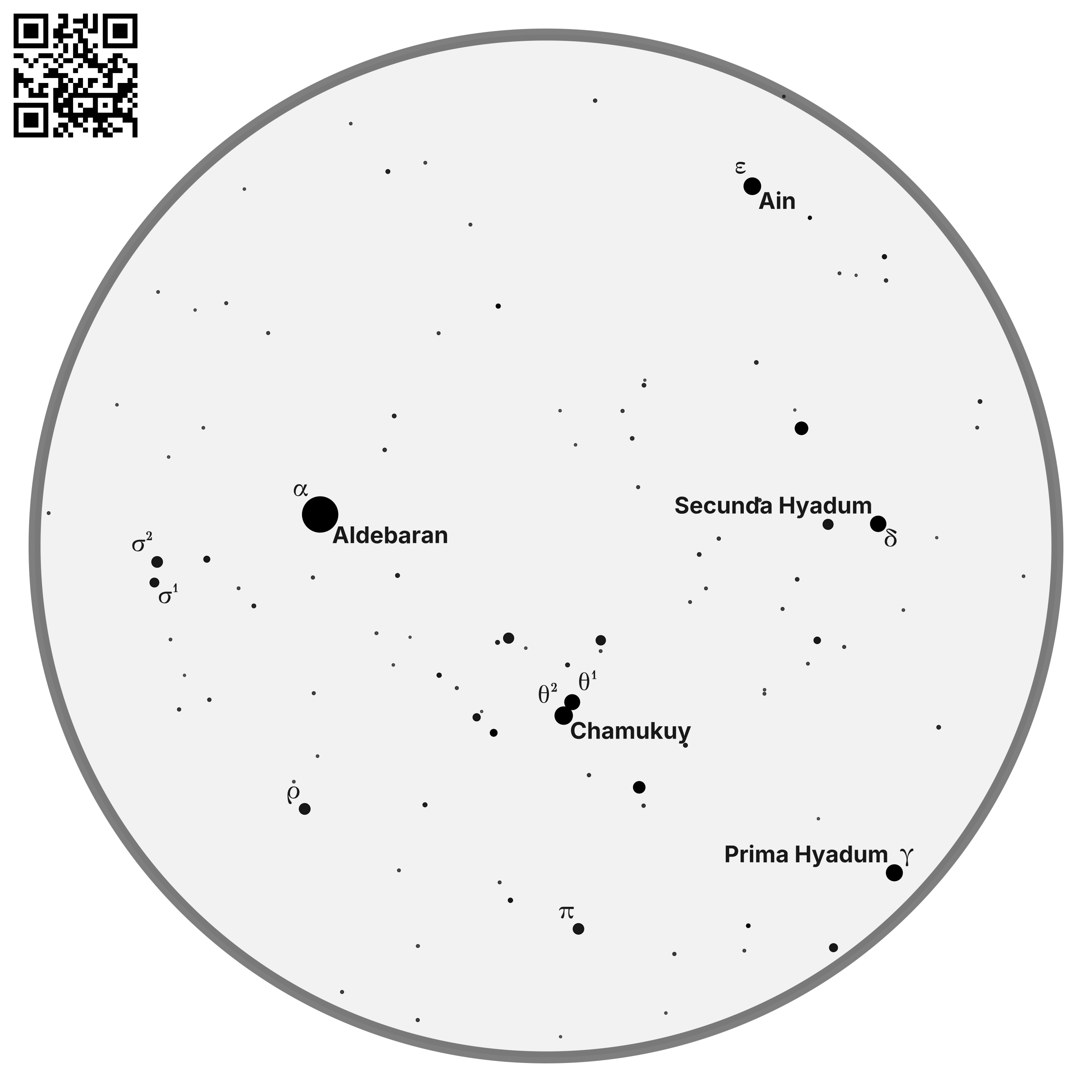
Finder scope & binocular view of Hyades
| Property | Value |
|---|---|
| Common names | The Hyades, The V-shaped Cluster, The Rainy Stars |
| Catalog names | C 41, Cr 50, Mel 25 |
| Type | Stellar Cluster |
| Subtype | Open Cluster |
| Coordinates | 4h 30m 27.40s, +16° 46’ 43.00” |
| Season | November - January |
| Best month | December |
| Beginner friendly | Yes |
| Visual reward | High |
| Filters required | None |
| LP tolerance | High |
| Minimum equipment | Naked eye |
| Optimal equipment | Binoculars |
| Magnitude | 0.5 |
| Size | 330.0 arcminutes x 330.0 arcminutes |
| Constellation | Taurus |
Observation Notes
Naked Eye
Easily visible as a prominent V-shaped grouping of stars forming the head of Taurus the Bull. The bright orange star Aldebaran is an unmistakable guidepost, though it is a foreground star and not a physical member of the cluster.
Binoculars
The ideal instrument for observing the Hyades. Binoculars frame the central region well and reveal dozens of stars of varying brightness, with subtle color differences becoming apparent. The overall V-shape and loose, nearby nature of the cluster are most effectively appreciated at this scale.
Small Telescope
Generally too much magnification to show the cluster as a whole, offering instead a “porthole” view of small sections. Best used to explore individual star groupings and wide double stars within the cluster. A rich-field telescope at very low power provides the most satisfying telescopic views.
Medium Telescope
Well suited for examining individual members, subtle color contrasts, and resolving fainter stars and tighter double systems embedded within the cluster.
Large Telescope
Not appropriate for viewing the cluster as a unified object. Provides little added visual benefit beyond allowing detailed study of individual faint members or close stellar pairs.